




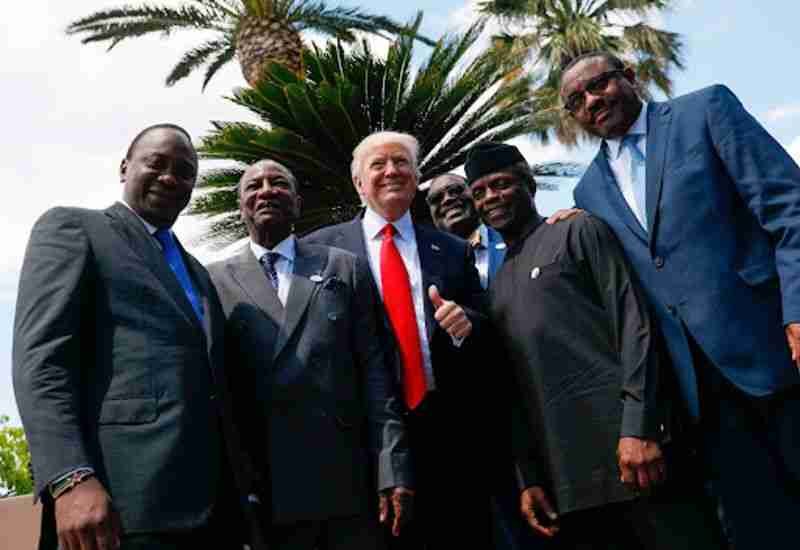
It has been a spectacular six weeks of drama and seismic global policy shifts since Donald Trump assumed office. The businessman-cum-politician has looked at the US balance sheet and decided it cannot be business as usual.
In his address to the joint session of Congress on the 4th of March, President Trump declared: “America is back!… America’s momentum is back. Our spirit is back”. His party representatives chanted in agreement: “USA! USA! USA!”
The speech captured the essence of the actions Trump had taken via over 100 executive orders covering illegal migration, global trade, local manufacturing, cutting red tape, balancing the budget, securing energy and mineral resources and making America secure. It was a blunt and belligerent message to the world. Europe should pay its “fair share” of defence spending within the North Atlantic Treaty Organisation (NATO) especially in relation to the military support to Ukraine against Russia. Not only that, foreign aid and grants should be radically decimated.
Where previous administrations would have argued on the importance of soft power via aid and grants, especially with the rise of China and India, President Trump says: “America first.” And so has begun the journey of retreating from the World Health Organisation, the Paris Climate Accord and the United Nations Human Rights Council.
What does it all mean?
The Democrats were foaming at the mouth during Trump’s address, very much like they have been doing on X and on CNN when their fave, Brother Volodymyr Zelensky, was humiliated by the tag team of Trump and JD Vance. The Europeans are hopping mad as knowing making all sorts of braggadocious statements on defending Ukraine, but they know their impotence without their soul brother from across the Atlantic.
In all this riveting soapie, Africans have been sitting on the sidelines munching their popcorn, posting half-baked opinions on X and while others wonder what this all means for Africa.
But maybe this why history should be a compulsory subject in school. Understanding the arrangements of the Western powers after the Second World War goes a long way to explain what this Trump moment is disrupting.
Francis Fukuyama and The End of History – A Prophecy betrayed
In 1989, American political scientist Francis Fukuyama wrote an article entitled “The End of History?” in which he argued that the political evolution of society had ended with the triumph of liberal democracy:
“The triumph of the West, of the Western idea, is evident first of all in the total exhaustion of viable systematic alternatives to Western liberalism. In the past decade, there have been unmistakable changes in the intellectual climate of the world’s two largest communist countries, and the beginnings of significant. But this phenomenon extends beyond high politics, and it can be seen also in the ineluctable spread of consumerist Western culture in such diverse contexts as the peasants’ markets and colour television sets now omnipresent throughout China, the cooperative restaurants and clothing stores opened in the past year in Moscow, the Beethoven piped into Japanese department stores, and the rock music enjoyed in Prague, Rangoon and Teheran.”
In 1992, Fukuyama would turn his article into a full book as he celebrated the fall of the Soviet Union seeing in it the end of the Cold War and the collapse of the “totalitarian communist empire”. The West had won. Cde Fukuyama triumph stated that humanity has reached “not just … the passing of a particular period of post-war history, but the end of history as such, that is, the end-point of mankind’s ideological evolution and the universalization of Western liberal democracy as the final form of human government.”
Our professor did not see the rise of right-wing governments in Western Europe, especially in Germany, and the emergence of Trump. The pressing issues for Europe right now are migration, climate and energy security as the posturing on democracy and human rights is over. On the up is rearmament with United Kingdom defence spending rising to 2.5% of GDP by 2027. These folks have never had to spend this much since 1945 when the Second World War ended, and Uncle Sam took the lead in their security.
Across the ocean, the United States of America, a nation founded on the genocide of the First People and on transatlantic slavery, has declared itself to be a country that speaks one official language (English), recognises two genders and believes affirmative action is “reverse racism”. The Bible is also back with a bang. Over to you, Professor Fukuyama.
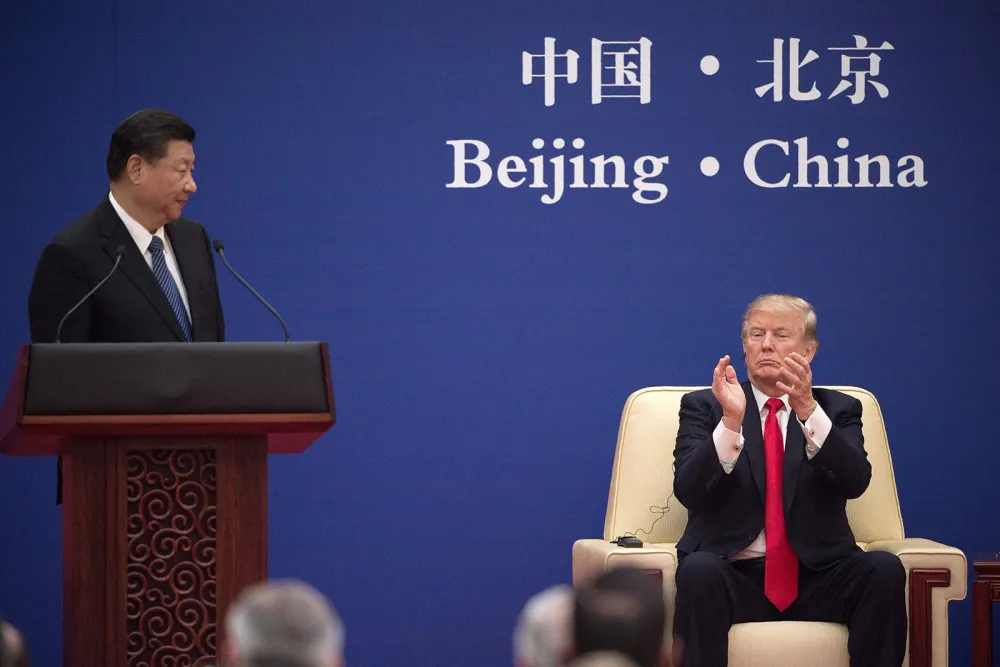
Enter the Dragon – lessons from the People’s Republic of China
China is normally restrained in communicating its public position on international relations but on Thursday 6 March the country declared in an extraordinary post on X:
The U.S. needs to realize that China is NOT a mirror image of the hegemonic U.S. The U.S. should stop viewing China-U.S. relations with an outdated Cold War mentality…Whatever kind of war it is, a tariff war or a trade war, a cold war or a hot war, they should not be fought and cannot be won.
Unlike Africa, China is ready to confront the USA if it comes to that. Deep Seek, the AI side hustle of some young Chinese captured the state of China today – a creative, innovative and confident country. Deep Seek tripped America’s AI industry by exposing some lies – you could build and train AI using a fraction of the financial and infrastructural resources that Nvidia and the Open AI folks had been claiming you needed. Overnight $500 billion – read that again – overnight $500 billion was wiped out of the market capitalisation of Nvidia. Sam Altman of Open AI could only mumble some incoherent stuff about Deep Seek having plagiarised their model. Quite rich coming from dudes who use other people’s data without compensation or respect for copyright to build their Large Language Models.
And what about Africa?
The African Union recently held its 38th Summit but South Africa is learning the hard way that every country is driven primarily by its own national interest. Gone are the days of the clarity offered by Julius Nyerere, Kenneth Kaunda, Samora Machel and Robert Mugabe. Whilst South Africa gets punished for its case against Israel at the International Court of Justice, Zimbabwe’s so-called Second Republic says it is “friend to all, and enemy to none”.
Mugabe would never have articulated foreign policy in that way, but this is where we are with the Chief Scarf and the Confederacy of Dunces (madununu). One dununu who is associated with the looting at the Public Service Medical Aid Society, hee-hawed with delight at the closure of USAID’s funding to Zimbabwe. This in a country where, a few weeks prior, road accident victims had their fractures covered in cardboard paper and sellotaped. Go figure.
Return to an organic struggle?
It is possible there could be an upside to the Trump wake-up call. The shifting donor funding landscape could spell the death of the professional NGO funded by the West. In its place could rise a new model that mobilises internal resources and it may turn out to be a grassroots movement more connected with its constituencies. In that lies the possibility of movements that will grow organically, may be via a single interest issue, but morph in something that challenges power at local and national levels.
The foundations of our own billionaires will have to expand their support and even fund not-for-profit organisations. The latter part might bring them into direct conflict with a hostile predatory state. Other key support would have to be found for investigative journalism because we have seen the impact of the Al Jazeera documentary on the Gold Mafia which is now being used by the South African Revenue Services to pursue some of the culprits. We do not expect a compromised Zimbabwe Anti-Corruption Commission or the entire captured and feckless and craven justice system to follow suit, but truth should still be revealed and kept as a record. Looters and fraudsters should not feel safe.
Tough times ahead of us, but we have to think and strategise at the nation-state level as well as at the continental level.
READ MORE FROM CHRIS |
What is a Zimbabwean? Who are we? A nation still searching for an identity
Mutengesi – a short history of the African sellout



