



By Tatenda Mashanda
In the hushed silence of morning assemblies at Nyachuru Secondary School, our headmaster, Mr. Thomas Kavhai, would stand before us, a figure of passion and developmental fervour.
His voice, deep and resonant, would rise above the last notes of the national anthem, transforming the routine into a reverent moment of reflection. “This is not merely a song,” he would declare, “it is our nation’s prayer.” He implored us to feel the anthem in our bones, to understand its depth beyond the melody. Mr. Kavhai often recited a particular line from the anthem, “Navatungamiri Vavenenduramo/ Abakhokheli babe lobuqotho/May leaders be exemplary,” urging us to internalise its charge.
As teenagers, we sometimes joked about it, wondering if Solomon Mutsvairo could hear our youthful voices from his resting place down the road. We found repeating that line tedious, but in hindsight, I see the old man’s point. It took years for me to grasp the profound link between our national anthem and the solemn oaths our leaders take upon assuming office.
Rituals permeate modern political life, shaping and reflecting our historical and political realities. From the grandeur of a national anthem to the solemnity of a presidential inauguration, rituals act as powerful symbols, reinforcing power relations and legitimising state authority. These performative acts are not mere formalities but essential tools in the construction and reinforcement of national identity and authority.
A rite of passage, and more
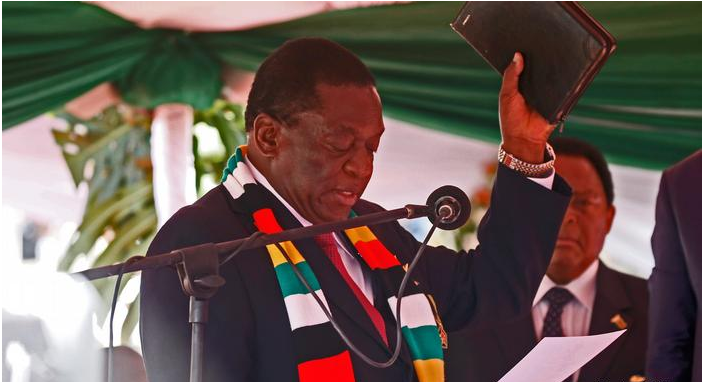
In Zimbabwe, the presidential inauguration stands as a crucial rite of passage that symbolises both the transition (or continuation) of power and the nation’s allegiance. This ceremony encompasses a range of rituals—including oath-taking enshrined in Zimbabwe’s Constitution. These rituals, formalised as part of Zimbabwe’s constitutional framework, have evolved to reflect the state’s historical and political transitions. They embody what Eric Hobsbawm describes as “invented traditions”—constructed practices that assert continuity with the past while legitimising contemporary governance. The ritual of oath-taking stands as a powerful affirmation of the public servants’ commitment to democratic integrity and the rule of law. From the President to local councillors, each official solemnly pledges to uphold the Constitution, reflecting a deep-seated loyalty to the nation’s legal framework. These oaths emphasise a shared commitment to public service, integrity, and an unwavering adherence to Zimbabwe’s democratic principles.
The history of the Oaths and Affirmations in Zimbabwe is deeply intertwined with the country’s colonial past and the influence of the British parliamentary system. The presidential oath symbolizes the harmonious interplay of the nation’s executive, judiciary, and military under the aegis of constitutional sanctity. The ritual, solemnised by the Chief Justice, transcends mere formality, embodying the collective conscience of the republic. Before Rhodesia became a republic in 1970, its leaders swore allegiance to the British Crown, a reflection of lingering colonial authority. This oath symbolised Rhodesia’s delicate balance as an internally self-governing colony. The break with Britain in 1965 and the declaration of a republic marked a pivotal moment, as the country began to assert its own identity and authority. The inaugural oath taken by Clifford Dupont in 1970 was a modest affair, yet it laid the cornerstone for the nation’s ceremonial heritage. “I, Clifford Walter Dupont, do swear that I will be faithful and bear true allegiance to Rhodesia, and observe the laws of Rhodesia, so help me God,” declared Dupont, under the watchful eye of Acting Chief Justice MacDonalds. This pivotal moment crystalised new traditions that would endure through the transition to Zimbabwe’s sovereignty.
The evolution of this ritual is marked by continuity and change. As the nation evolved, so did the oath, mirroring the nation’s journey. It reveals a story of shifting allegiances and state transformation. In 1979, Prime Minister Abel Muzorewa’s oath— “I, Abel Tendekai Muzorewa, do swear that I will well and truly serve Zimbabwe-Rhodesia in the office of the Prime Minister, so help me God”—echoed Dupont’s pledge, yet signaled a nation on the cusp of independence. With the dawn of 1980, Chief Justice MacDonalds bore witness to Canaan Banana’s commitment to the newly minted Zimbabwe, a promise mirrored by successors Robert Mugabe and Emmerson Mnangagwa. Each recitation of the oath at presidential inaugurations has been a resonant echo of Zimbabwe’s foundational principles.
Continuity, and change
The persistence of a near-identical oath across the eras of Rhodesia, Zimbabwe-Rhodesia, and Zimbabwe highlights the enduring power of rituals as vessels of continuity. These oaths, though seemingly traditional, hold deep significance by anchoring the nation’s journey from colonialism to independence, offering stability in changing political landscapes. Yet, this continuity also invites reflection: what does it mean for a sovereign Zimbabwe to carry forward a ritual from its colonial past? Can what ritually worked for a colonial regime serve the same purpose in a sovereign nation? What do rituals—political or otherwise—truly do for a nation’s identity and authority? While these questions may not have simple answers, they are essential to consider as we reflect on how these rituals continue to shape our evolving national identity.
The “Oath or Affirmation of Presidents and Vice-Presidents,” enshrined in the Zimbabwean Constitution, is a carefully crafted pledge that instils a profound sense of duty and integrity in the nation’s leaders. Its solemn language, with phrases like “swear” and “solemnly affirm,” highlights the gravity of the commitment, underscoring personal and official accountability that is both legal and moral. By vowing to “be faithful to Zimbabwe” and to “obey, uphold, and defend the Constitution,” the oath delineates a clear framework for ethical governance, reinforced by judicial oversight. The inclusion of “So help me God” lends a spiritual dimension to the commitment, though it is optional for those who prefer a secular affirmation.
This solemn pledge weaves together Zimbabwe’s historical narrative, serving as both a mirror to its evolving identity and a cornerstone of its national story. The enduring nature of the oath symbolises a powerful continuity, yet it remains dynamic, addressing the nation’s current challenges and aspirations. Our leaders, in taking this oath, assume a role greater than mere authority; they become custodians of a sacred promise to the people. This promise calls for introspection and utmost sincerity.
The efficacy of these oaths in promoting governmental accountability and transparency is often questioned. Despite their symbolic importance, a significant gap often exists between the promises made and the actions taken, highlighting persistent challenges in political commitment and the realization of constitutional ideals. As these oaths move from constitutional texts to the realm of governance, they face the difficult task of transforming symbolic gestures into meaningful action. Ultimately, the true impact of these oaths depends on whether political leaders align their actions with the ethical standards they pledge to uphold.
I am indebted to Mr. Kavhai for instilling this understanding. As every citizen joins in singing the national anthem, let the words Navatungamiri vavenenduramo serve as a solemn reminder of our collective duty to hold leaders accountable. May the weight of their oath be the compass that steers their service.
Tatenda is a Rhetorician and Zimbabwe political history enthusiast. He can be reached on his Twitter at @tatendamashanda. Read more from Tatenda here:
The ‘Second Republic’: The Expediency of False Narratives