

Pedestrian Opinion with Mike Murenzvi
The four-way stop is staple road control feature in South Africa. It brings a level of sanity to uncontrolled intersections by requiring every vehicle approaching to completely stop before proceeding through the intersection once its time has come.
It sounds so simple and is executed with such elegance that it becomes second nature to them when a traffic light isn’t working.
The Zimbabwean phenomenon
The road rules in Zimbabwe have, for the longest time, employed a right-of-way system where those who feel are travelling on a more major road automatically assume right-of-way at an uncontrolled intersection. Further to this, we have also been ingrained with the “give way to traffic from your right” principle. Altogether, these principles have worked fairly well for us, until they didn’t.
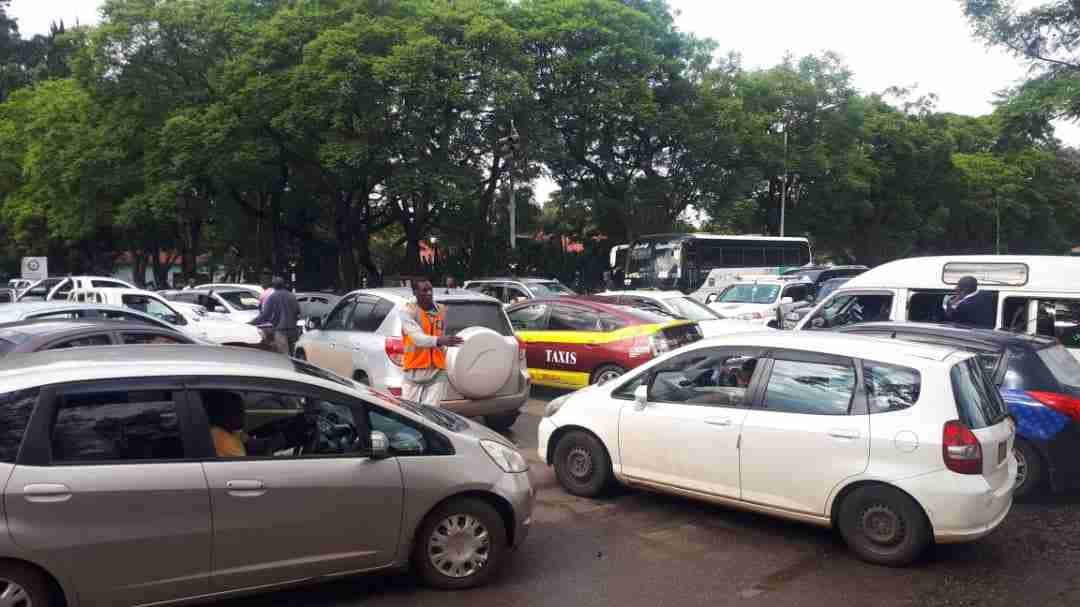
The regular power cuts and vandalism of traffic lights mean that, more often than not, traffic lights are out of order and vehicles approaching such intersections must apply a different set of rules that now often result in chaos.
Traffic from the “lesser” road, is subjected to long waiting times before being able to move through the intersection. The alternative applied is to bulldoze one’s way through and force cross traffic to stand still and give way.
Without the aid of traffic police or a caring citizen who directs the flow of traffic at some of these heavy crossing points, it’s usually a case of going nowhere slowly.
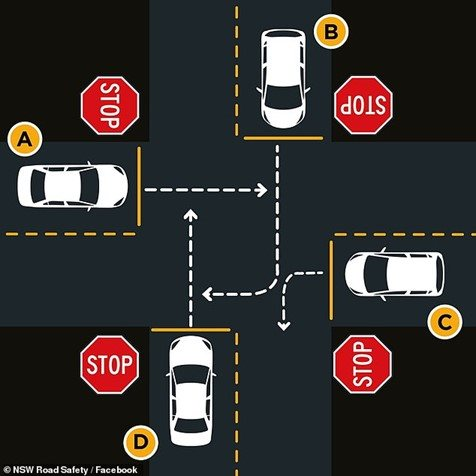
What is a 4-way stop?
For the uninitiated, a 4-way stop is a road intersection where vehicles converge from 4 different directions and come to a complete stop before proceeding through. The vehicles process through the intersection on a first-in, first-out basis, that is, the first vehicle to reach the intersection is the first to go through regardless of which direction it is going. Put differently, the driver of a vehicle approaching a 4-way stop shall stop and remain stationary until every other vehicle that arrived at the intersection before him has cleared the junction.
An old paradigm shift still to be implemented
SI 41 of 2016, the Road Traffic (Traffic Signs and Signals) Regulations, 2016, brought with it a harmonisation of road traffic signs and signals with the rest of the Southern African community. Our road signs began to change and resemble those of our neighbouring countries. The approach to traffic light-controlled intersections where the traffic light is out of order also changed, on paper.
Unbeknown to many drivers, embedded in the painted road markings at a traffic light-controlled intersection is a STOP sign. Imagine that, a whole stop sign in the paint. This stop sign works in two ways, to regulate where the vehicle must stop when it has reached the intersection and the traffic light is red AND when the light is out of order. Is your mind blown?
The painted stop sign employs a solid thick white line across the lane and a solid lane divider. These are the hallmarks of the road markings at a traffic light-controlled intersection with the addition of a pedestrian walkway in front of the stop line.
What does this all mean?
When a traffic light is out of order, the intersection automatically becomes a 4-way or 3-way stop, as the case may be, and drivers should then proceed accordingly by giving each other room to manoeuvre through the intersection freely without blocking it.
Something to think about the next time you find a traffic light out of order.
_______________________
Mike Murenzvi writes in his personal capacity and his views are not associated with any organisation he is, or may be, affiliated with.