





Zimbabwe’s tobacco industry is heading into the new growing season with a sharp warning sign: far fewer farmers are registering to grow tobacco after last season’s collapse in prices.
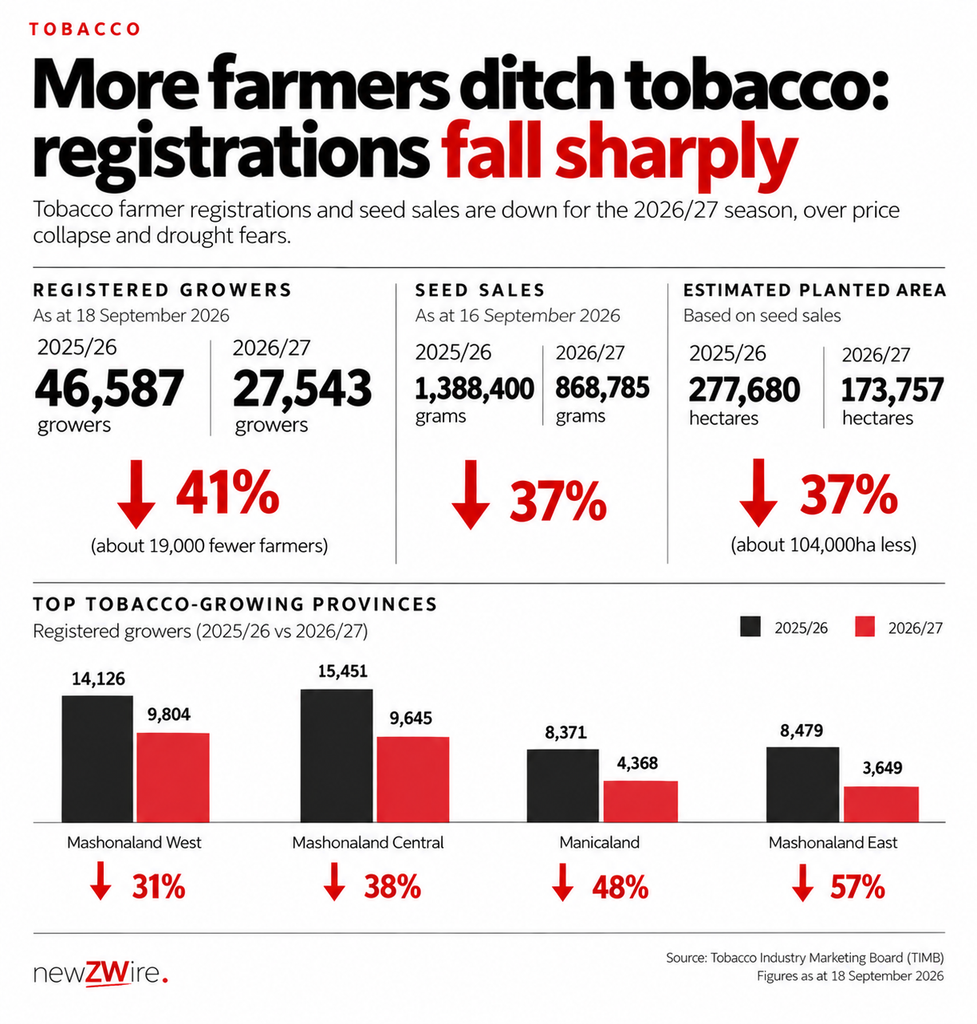
By 18 September, only 27,543 growers had registered for the 2026/27 season, down 41% or about 19,000 farmers less than the 46,587 at the same point last season, according to data from the Tobacco Industry and Marketing Board (TIMB).
The planted area is falling just as sharply. Seed sales are down 37%, from 1.388 million grams to 868,785 grams, pointing to estimated hectarage of about 173,757ha, compared with 277,680ha last season. That’s a potential loss of nearly 104,000ha of tobacco production area in the new season.
In the 2025/2026 season which ended in July, Zimbabwe sold about 355 million kg of tobacco, almost at par as the previous year. But while farmers produced a strong crop, they made less money. The average price dropped from US$3.32/kg to US$2.49/kg, a 25% fall. In total, sales value fell from US$1.18 billion in the previous season to US$894 million.
The number of farmers, even in traditionally strong tobacco-growing regions, is falling. Mashonaland West is down 31%, from 14,126 to 9,804. Mashonaland Central is down 38%, Manicaland 48%, and Mashonaland East 57%. With lower tobacco prices and uncertain weather, many farmers may this year look to other income sources, including swelling the numbers of small scale gold miners.
TSL, one of the biggest players in tobacco trading and logistics, is also providing signals of a tough season ahead. Apart from low prices, tobacco farmers are also worried by drought forecasts. In its latest trading update, it says growth in the quarter to July was “constrained by subdued demand for tobacco seedbed packs ahead of the anticipated Super El Nino”.
According to TIMB data, tobacco contract sales remain dominant, accounting for 91% of sales. Only 31.7 million kg went through auction. Much of the tobacco is contracted by foreign agents, which means a lot of the earnings leave the country.
Tobacco plantings start in September for the irrigated crop, with rain fed fields mostly planted from October.
ALSO READ | FEATURE | How Zimbabwe’s tobacco boom hides the ‘bondage’ of poor contract farmers