






In Harare, some of the city’s most historic buildings are being demolished or altered beyond recognition, making way for informal retail spaces. Darius Mutamba asks what happens to the stories left behind.
There is a particular kind of grief that arrives without warning. It catches you mid-stride, in the middle of an ordinary Thursday afternoon on Robert Mugabe Road.
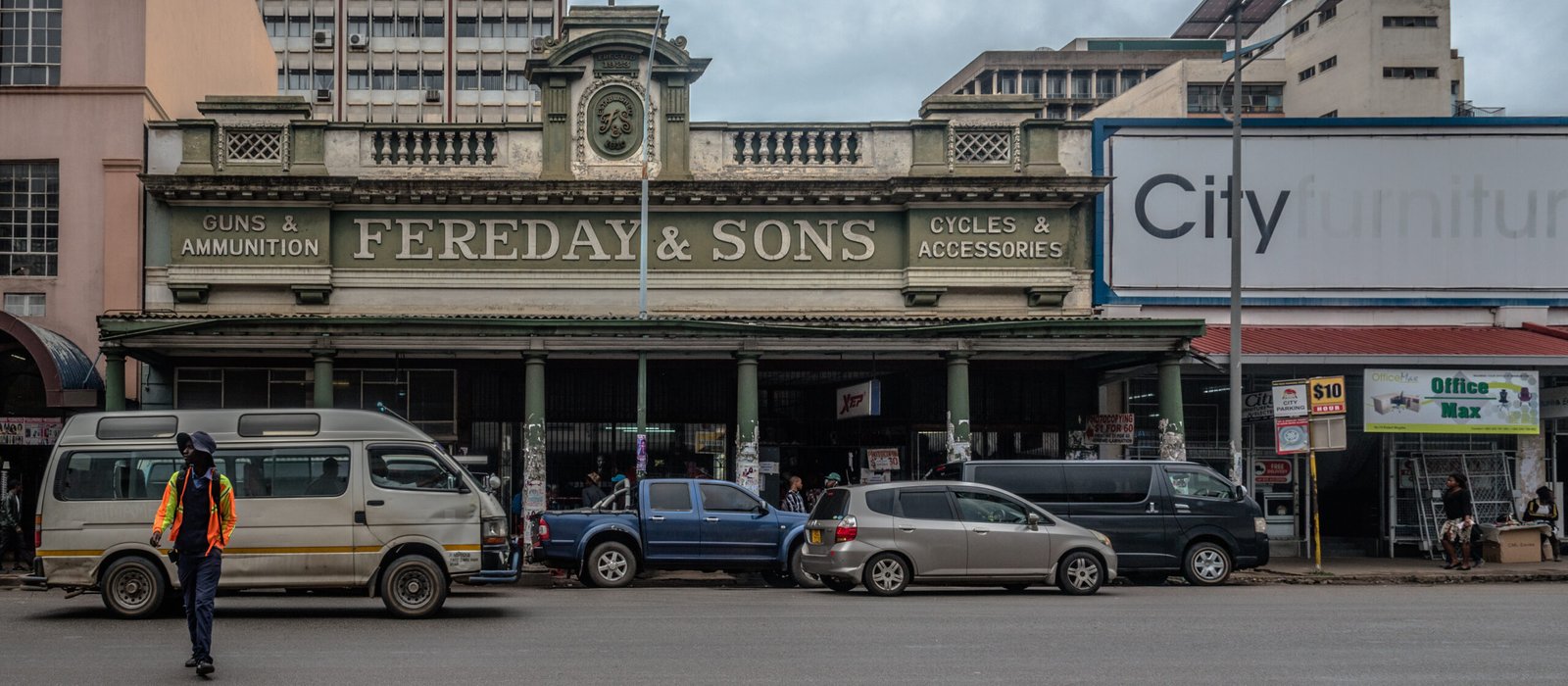
I was passing the corner of First Street and Robert Mugabe Road, formerly Manica Road, when I stopped. Where CT Stores once stood, where its distinctive roofline once met the Harare sky with three ogee-curved pediments, there was black tarpaulin. Rough timber scaffolding ran the full length of the verandah. The upper structure was gone. The facade stripped. Brick exposed to the winter sky. And around me, the city moved exactly as it always does, pedestrians weaving past in both directions, unhurried, uninterrupted, not one of them breaking stride.
No one else stopped. No one else appeared to notice.
In 1982, the late Dr Eddison Zvobgo, then Minister of Local Government and National Housing, made a statement whose clarity has never been surpassed. It was recorded four years later by historian and author Peter Jackson in his foundational work Historic Buildings of Harare (1890-1940), published by Quest Publishing in 1986, the most comprehensive architectural survey of this city ever produced, and a book that documented CT Stores among its subjects.
Dr Zvobgo said: “Nations who go about destroying their old buildings are in danger of destroying their own heritage.”
He was not a colonial nostalgist. He was a liberation movement intellectual, a minister in independent Zimbabwe, speaking two years after the country had claimed its sovereignty. His warning was not about sentiment. It was about the relationship between physical space and national identity, the understanding that a people who cannot read their own built environment have lost a language they may never recover.
Forty-four years later, I am standing on Robert Mugabe Road watching black tarpaulin move in the winter wind, and I am thinking about what Dr Zvobgo knew that we have not yet fully understood.
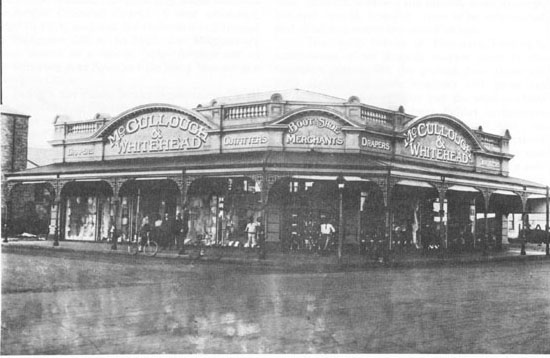
CT Stores was constructed in 1908 to a design by architect S.D. Le Roux for the firm McCullough & Whitehead, drapers and outfitters, and built by J & R McChlery, at what was then the most commercially significant corner in early Salisbury. Its claim to architectural permanence rested not in age alone, but in thirteen elaborate, fluted and floreated cast-iron columns manufactured by W. MacFarlane’s Saracen Ironworks of Glasgow, perhaps the world’s most celebrated producer of prefabricated architectural ironwork, whose castings graced cities and colonies across three continents. MacFarlane’s name was cast proudly into each column.
The ones on CT Stores were among the finest surviving examples of their craft in sub-Saharan Africa. The parapet above them carried three ogee curved pediments. The corner where First Street meets Robert Mugabe Road was, by any considered assessment, one of the most characterful urban spaces in the entire city.
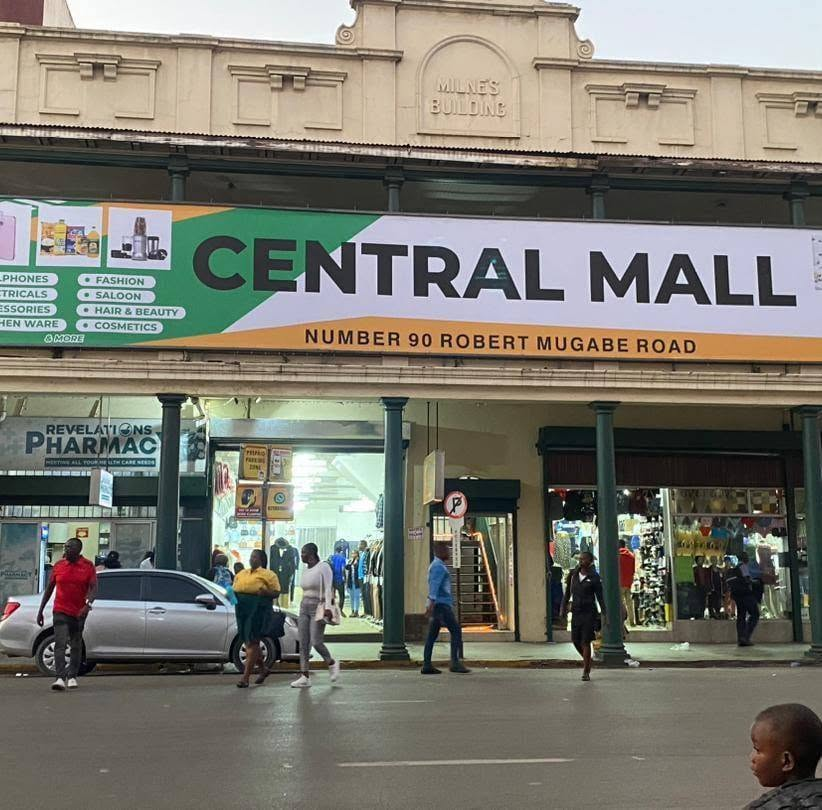
Was. Past tense now.
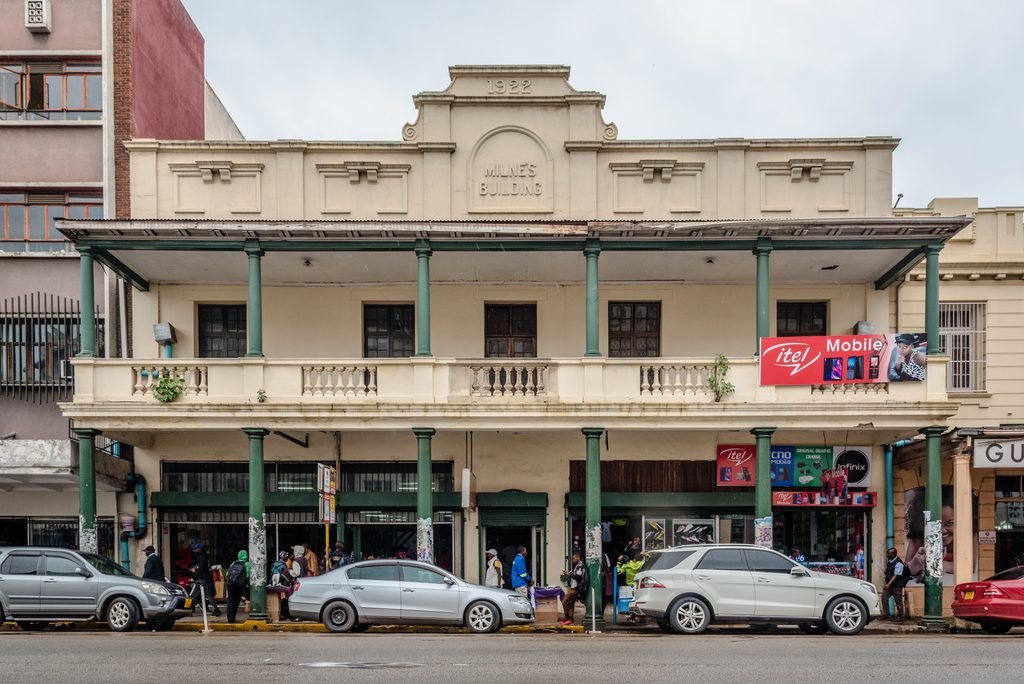
Under the National Museums and Monuments Act, anyone wishing to alter or demolish a protected historic structure is required to notify the relevant authorities at least fourteen days before work begins. The law exists. The mandate exists. But protection on paper and protection in practice are two different countries, and it is not the first time Zimbabwe has learned this the hard way. Conservationists have spent decades raising the alarm about Harare’s vanishing architectural fabric, watching buildings fall to development pressure, economic neglect, and the quiet absence of enforcement.
When we talk about the loss of CT Stores, we are not only talking about the loss of a physical structure, extraordinary as that structure was. We are talking about the loss of intangible heritage. And intangible heritage, as UNESCO’s framework recognises, is not a secondary concern. It is the living substance of cultural identity, the oral traditions, the social memories, the community knowledge, the layered human experience that accumulates inside and around physical spaces across generations.
CT Stores was not simply a building. It was a site of memory. It held the commercial history of early Salisbury at its most concentrated corner. It held the memory of who was permitted inside and who was turned away, because at certain periods of this city’s history the doors of such establishments were not open to all.
It held the knowledge embedded in MacFarlane’s ironwork itself, a craft tradition that no longer exists in the form that produced those columns. It held the visual identity of a corner that every generation of Hararians has navigated, consciously or not, as part of their understanding of where they are in this city.
When the wall falls, all of that goes with it, unless something else exists to hold it.
It is precisely why the Shepherds Foundation Trust established the Preserve Zimbabwe repository. Not as a romantic exercise in nostalgia. Not as an argument that nothing should ever change. But as an act of pre-emptive memory — the understanding that we cannot always stop the demolition, but we can ensure that what the building knew, what it witnessed, what it embodied across 118 years, survives in a form that future generations can access, study, interrogate, and build from.
Think of it this way. A grandmother carries within her the recipes, the proverbs, the songs, the land boundaries, the family histories that no document has ever recorded. When she dies, if no one has listened, all of that dies with her. The building is the grandmother. The repository is the act of sitting down, and listening.
The repository at preservezimbabwe.org holds the photographic archive, the historical narratives, the architectural documentation, and the cultural significance assessments for over two hundred buildings across Zimbabwe. CT Stores is in there. Its columns are photographed. Its history is written. Its place in the urban geography of this city is on record. When the physical structure is altered beyond recognition, as appears to be happening now, that digital archive becomes the last keeper of what the building knew.
The intangible heritage that lived inside the tangible one.
There are people alive today who remember CT Stores as it was. Who remember the feeling of walking under those iron columns on a hot Salisbury afternoon. Who remember the shade the verandah cast, the particular quality of light that fell through the ornamental ironwork onto the pavement below. Those memories are intangible heritage. They are real, they are irreplaceable, and they are as much a part of Zimbabwe’s cultural identity as any monument gazetted under any act of Parliament.
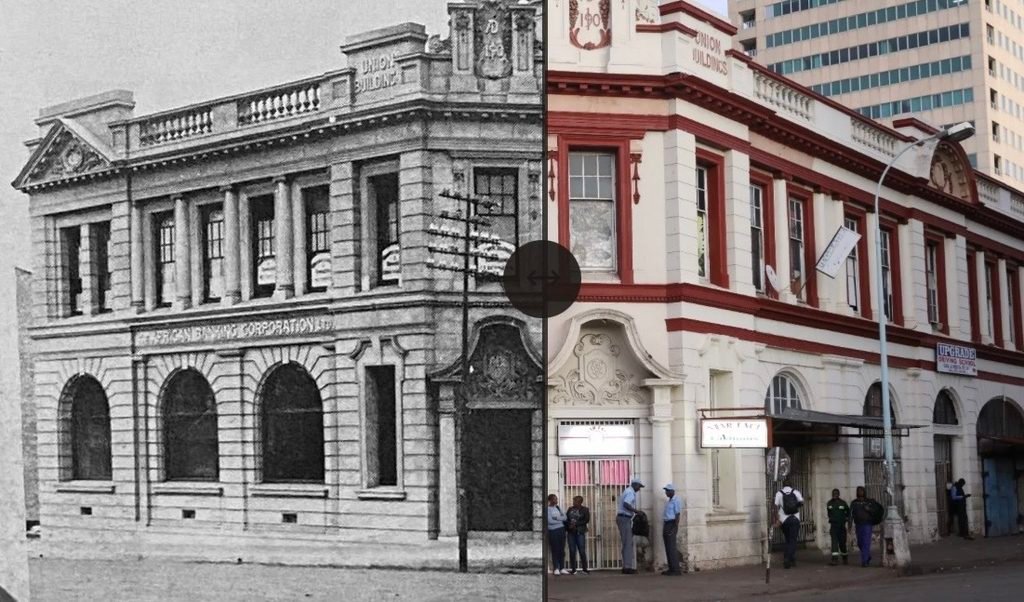
Zimbabwe has ratified UNESCO’s Convention for the Safeguarding of the Intangible Cultural Heritage, which recognises that the living expressions people inherit, the stories, the knowledge, the skills, the practices bound up with places and objects, are as worthy of protection as the objects themselves.
Silent Walls was built on exactly this understanding. The photography is the record of the tangible. The historical narrative and oral histories are the record of the intangible. Together, they constitute a living archive, one that does not end when the building ends.
Peter Jackson understood this in 1986 when he published Historic Buildings of Harare. He was not simply cataloguing structures. He was preserving memory in the only form available to him at the time, the printed page. The Preserve Zimbabwe project is the continuation of that work, updated for a digital age, expanded to a national scale, and made accessible to anyone with an internet connection anywhere in the world.
When Silent Walls opened at Autoworld Zimbabwe in February this year, the Deputy Minister of Sport, Arts and Culture, Emily Jesaya, was in the room. So was National Gallery curator Raphael Chikukwa, historian Jonathan Waters, writer Chirikure Chirikure, visual artist Moffat Takadiwa, and diplomats from Greece and Serbia. Curator Rodney Badza described the exhibition not as a conclusion but as an awakening, a provocation designed to ignite exactly the conversation that might prevent exactly what I was now witnessing on Robert Mugabe Road.
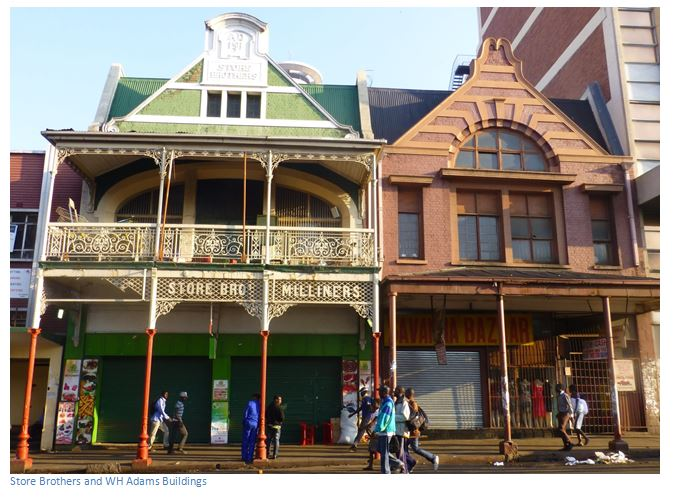
Four months later, the scaffolding is up on CT Stores.
We cannot always win the battle to preserve the physical. Cities grow, economic pressures, and buildings are sometimes lost despite every effort. But what we can do, what the Preserve Zimbabwe repository is built to do, is ensure that the intangible heritage enclosed within the physical is never simply buried under rubble and forgotten. That the stories survive the structures. That the memory outlasts the mortar.
Dr Zvobgo warned us in 1982. Peter Jackson documented what we stood to lose in 1986. The buildings Jackson photographed are still disappearing, four decades later, behind tarpaulin and scaffolding on busy streets where no one stops to look.
The walls have been speaking for 118 years. The repository is listening, even when the city is not. And when the last column is gone and the last pedestrian has walked past without turning their head, what the wall knew will still be there, waiting for the generation that finally asks.
Mutamba is a journalist, documentarian and Director of the Shepherds Foundation Trust, the institution behind the Silent Walls national architectural heritage documentation project.



