



I doubt that Evans Mawarire knew how #ThisFlag campaign would shake the ZANU PF regime to the core when he launched it by accident in 2016. What had just begun as a video post on Facebook by a disgruntled citizen over the failure of his government to deliver basic services to its people, transformed itself into a moment in which people literally claimed ownership of the Zimbabwean flag.
The hashtag #ThisFlag had many citizens feeling they had a stake in the fate of their country. For a moment they felt they belonged to that which had been stolen in 1980 by a cartel masquerading as a liberation movement. The citizens were Ali Baba, and the 40 Thieves were holding the country hostage as they shamelessly pillaged the Reserve Bank, minerals, land and private companies.
As #ThisFlag fizzled out, the regime regained control of the narrative of being the custodians of the values of the liberation struggle. Post November 2017, the 40 Thieves decided that the flag could never be allowed to be reclaimed and in came the hideous and ubiquitous scarf. The incongruity of looting your country and claiming to be patriotic could now be on display daily on national TV, social media and in newspapers.
When two flags meet
On 18 April 2008, I found myself at Gwanzura Stadium in Highfields where the capital city was celebrating Independence Day led by the Dear Leader, the Man of Zvimba. It was a curious celebration because at that time the Zimbabwe Electoral Commission was busy massaging the election results. The ruling party was in a corner, but it would not give up. The paranoia pervading government and the ruling party was visible in the number of roadblocks from the city centre right into Highfields as well as in the police, army and plainclothes officers roaming within and outside the stadium. The one thing that struck me as I witnessed the thousands waving their small flags was how the ZANU flag blended so easily with the national flag – green, yellow, red, black. To complement the atmosphere, many people were dressed in party regalia. The nation and the Party were one.
The upstart Morgan Tsvangirai could only be labelled as an enemy out to subvert the sovereignty of our “people”. In that very labelling of the opposition leader and his supporters, a larger issue was at play. It was, and remains, about our national identity as “Zimbabweans”. What makes one Zimbabwean? Are other people more Zimbabwean than others?
Mugabe and his definition of Zimbabwean identity
An ancient text asks a rhetorical question: “Can a country be born in day or a nation be brought forth in a moment?”
Eminent historians Alois Mlambo and Sabelo Ndlovu-Gatsheni have written extensively on the challenges of developing a national Zimbabwean identity given the complexity of our history, and the ethnic and racial make-up. During the liberation war, we had to push a narrative that pioneer settlers had interrupted our connection to glorious and blissful kingdoms and states such as Rozvi, Mutapa and Mapungubwe. But the white man, so we argued, could not kill our spiritual connection to Zimbabwe hence the myths of Mbuya Nehanda and Kaguvi during the Second Chimurenga. To ensure that the myths survived we had to pretend that someone called King Mzilikazi did not arrive in the same territory in 1840. We did not want the Nguni connection to dilute the purity of our lineage.
If we had been paying close attention, we should not have been surprised by ZANU PF post-independence and the national identity they sought to impose. Professor Mlambo quotes Mugabe stating in 1977 that a future, independent Zimbabwe was a ‘natural Shona nation’ whose roots lay in pre-colonial polities and that:
“the distinguishing features of our nation, cultural homogeneity, our biological and genetic identity, our social system, our geography, our history, which together characterise our national identity, also combined in producing out of our people a national, vigorous and positive spirit which manifests itself in the consistently singular direction of its own preservation.”
We know already from Gukurahundi what Mugabe thought of the citizenship and identity of Ndebele-speaking people in a country called Zimbabwe.
Identity and a few minutes of glory
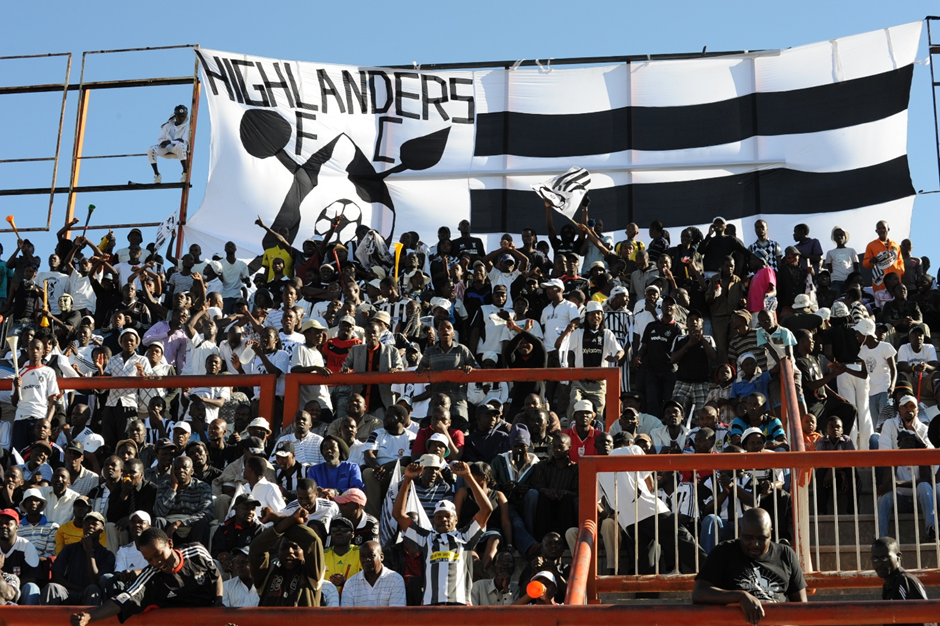
Having failed dismally to create an inclusive society with a coherent identity, ZANU PF lives with the reality that it only holds power via repression. For the majority of the people, the lived reality of being Zimbabwean is anxiety. We are anxious about tomorrow. We are anxious about our children. We are anxious about our parents. We are anxious about our future. The physical brokenness of infrastructure is now mirrored by the brokenness of our people – the chaos, the vulgarity, the crass materialism, the corruption, the estranged families, the mental health issues…
Our few moments of glory are largely in sport. Marshall Munetsi, Tawanda Chirewa and other soccer players plying their trade in England and Europe give us so much to be proud of. Munetsi’s recent debut for Wolverhampton Wanderers (Wolves) was one in which we willed him to do well. Even if he had only played two minutes, we would have voted him Wolves’ Player of the Match. That is how Zimbos roll outside of the witchcraft that is ZANU. International cricket teams to Harare know that playing our Chevrons means a full house and electric and frenetic atmosphere of song and dance. Despite the carnage caused by government thieves to our sports administration and infrastructure, we want our boys and girls to win. We want them to be rewarded handsomely.
Long road ahead to a national identity
In our celebrations of our heroics in sport, some unresolved questions linger. Is Sikandar Raza, our beloved ODI cricket captain, Zimbabwean enough? If he was not a sportsperson and posted “Alhamdulillah” (praise be to God) would we tolerate such a tweet? Or would our amazingly pious “Christian and Zionist Nation” be up in arms with this praise of Allah?
Where do the descendants of migrant workers from Malawi, Zambia and Mozambique fit in? Yes, those “totemless” people residing in Mbare, Mufakose and Mabvuku. And those of Indian and Asian descent? And the remaining white folks?
It shall take a different type of leadership to build a Zimbabwe in which the state treats all citizens as deserving of dignity, recognition, and the provision of basic social services (health, education, water and housing).
Professor Alois Mlambo has the last word:
Zimbabwe still has to transform itself from the geographical expression established arbitrarily by British colonialism in 1890 and enthusiastically imagined by the anticolonial nationalists of the 1960s into a true nation with a common identity, common values and a shared vision for the future.
__
More from Chris Kabwato
What would Jesus the Radical say about today’s Papa Prophet the Thief?
A nation trapped between intellectually empty rulers and a confused society



