



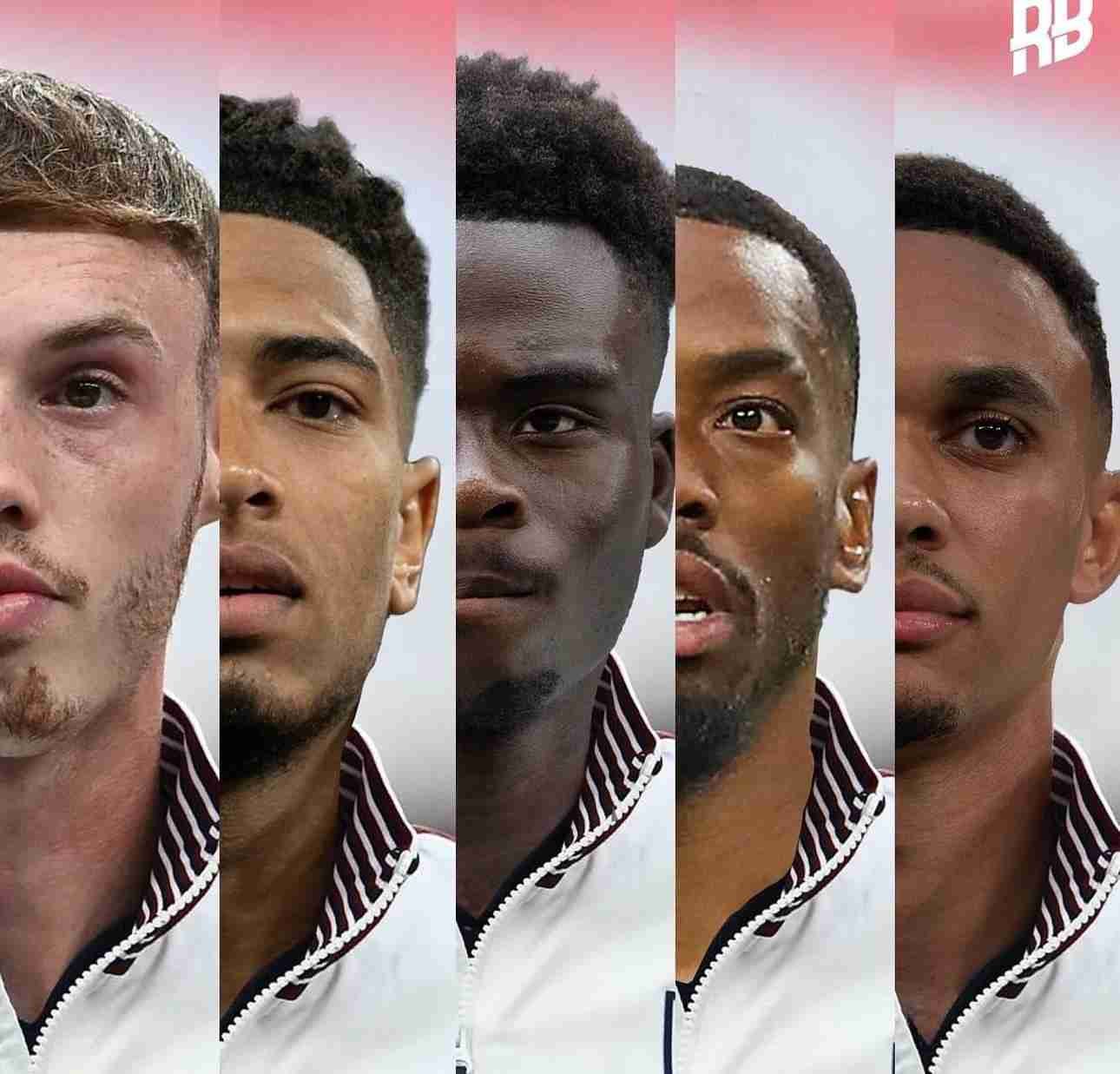
On Saturday, 6 July, England forced Switzerland into extra time at the UEFA Euro 2024 football tournament. Let me rephrase that; on 6 July 2024, a young black player called Bukayo Saka scored in the 80th minute to force the game into extra time.
Three days later, a 16-year-old youth playing for Spain scored a goal that Sid Lowe of the Guardian UK described in superlative terms:
Can’t drink, can’t smoke. Can’t drive, can’t vote. Can curl a football into the top corner. On the big stage and in the biggest game for a generation. His generation, and maybe this really will be his. Step forward, Lamine Yamal Nasroui Ebana, son of Sheila from Equatorial Guinea and Mounir from Morocco, raised in Rocafonda, Mataró: postcode 08304. Forward, to the left, to the right, to the left again. And then, that: a for ever moment that carried a country into a final and a new era.
Spain went on to defeat a French soccer team with names like Mbappé, Kante, Tchouaméni, Camavinga, Dembélé, Saliba and more. The team did not have many names that sounded like Macron, Chirac or Mitterrand. It was the children of migrants who were carrying the hopes of a nation that had an ambivalent attitude towards them.
What does it mean?
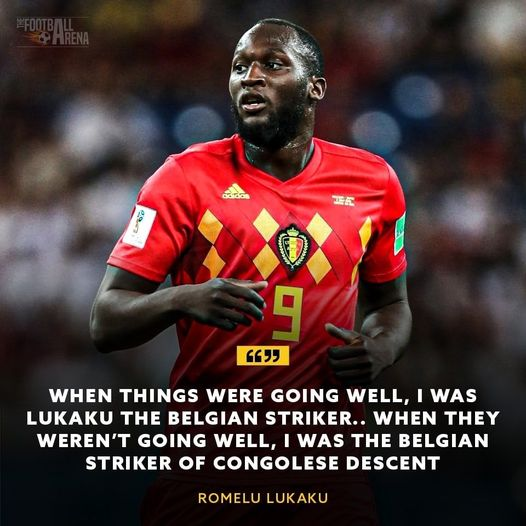
A few years ago, the Belgian football player Romelu Lukaku said: “When things were going well … they were calling me Romelu Lukaku, the Belgian striker. When things weren’t going well, they were calling me Romelu Lukaku, the Belgian striker of Congolese descent.”
Before Bukayo Saka forced the game into extra time, one journalist described how some white English guy in a German pub had begun to scream an obscenity directed at the black players. You can imagine our horror when the England-Switzerland had to be decided on penalties. The whole black world was holding its breath. We knew that players of our colour would never get the pass that Phil Foden, Harry Kane, Luke Shaw or Kieran Trippier would get. As if trolling us, England manager Gareth Southgate lined up five players with black heritage: Cole Palmer, Saka, Jude Bellingham, Ivan Toney and Trent Alexander-Arnold.
Our fears were not mere paranoia. We had vivid memories of the racist vitriol that was directed at Saka, Marcus Rashford and Jadon Sancho at the Euro 2020 final when they missed their penalty kicks against Italy. One racist called Jonathan Best even livestreamed himself on Facebook letting his tongue loose.
Fast forward to Euro 2024. “It’s a set up,” I seethed. The relief when all five English penalty-takers delivered, was palpable. Afterall, it had come in the same week that Lewis Hamilton had won his first Formula 1 race after close to three years. We had cried with Lewis. We knew what he’d had to battle with – from the thieves who cheated him of an eighth world title to that entitled and dangerous Red Bull driver.
The politics of identity
In the background to Euro 2024 were elections in the United Kingdom and France. Whilst the European politicians postured on all sorts of issues, the constant was migration – precisely the migration of Africans, Asians and Arabs from their continents into the land of the colonisers. In the talk by the UK’s Nigel Farage and France’s Marine Le Pen of stopping the boats and securing borders, there is no sense of irony from the folks who arrived in Africa without passports. Whether it was the Dutch on the so-called Cape Peninsula in 1652 or the Pioneer Column of 1890 that marched into what was renamed Salisbury, none of these robbers, thieves, liars and enslavers went through legitimate processes. Gunpowder and the Gatling gun were the passports, strengthened by the 1885 Berlin Conference and the convenient cover of the Bible and a divine mission to civilise.
A century later, the descendants and beneficiaries of the plunder of minerals, black labour, artefacts and more dare to tell us to stay in the continent that they have looted and conspired against for decades. This at the same time that the Global North faces a crisis of falling birth rates and serious shortage of labour (health care, social services, artisans). When the same folks were flocking to the United States of America in the early 1900s, they were framed as ambitious people looking for opportunity – the noble search for the American Dream.
The irrational fear of blackness
It is at this point that you realise that the issue is not migration. Rather, it is about saving the white race. It is the fear of hyphenated identities, of shades of colour, of biracial babies. Blackness invokes the worst of nightmares of the right-wingers and their pseudo-science of eugenics with its stress on racial purity and superiority.
The cleverness of the oppressor is to frame the problem as if it is solely our problem. You go around executing anti-people coup d’etats, lumbering countries with odious debt, holding countries to ransom in trade, bombing countries under all sorts of pretexts and propping dictators, and still expect business as usual?
The boats will not stop boating
Spain’s coach, Luis de la Fuentes, who seems like a decent fellow, said of Yamal: “I celebrate the fact that he is Spanish and in our team, and I hope we can enjoy him for years to come.”
It is a sensible approach. Europe has to live the principles they have preached to us: diversity, inclusion and opportunity. They have no choice, as Salif Keita declared in his 1989 song Nous Pas Bouger when Paris contemplated mass deportation of migrants sans papier (without papers): “We are not budging, Cde Mitterrand,” was Salif’s defiant message.
If Salif were a Zimbo in Harare North (London) the phrase would have been emphatic HANDIENDE!
READ MORE from Chris Kabwato
The Black List: Why does the UK press hate black footballers?
In search of the donkey’s horns
The Chris Kabwato Column | Bullies in the office: Every employee’s nightmare