




A long time ago, when rabbits had horns, we lived in what was called a monomedia society. There were two sources of news and information – the newspaper and the radio. We called the radio the wireless. At first it was a 30cm x 20cm battery-powered box with two main knobs – one for tuning and the other for volume. The wireless sat proudly on top of the sideboard as if it knew that only your father had the right to turn it on at the top of every hour to listen to the news. For the children, the chance would come only when the parents were away.
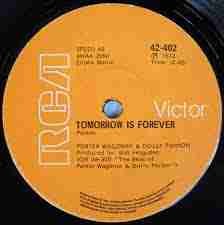
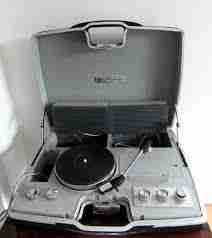
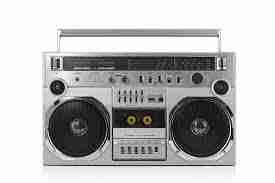
Later, the wireless grew up a little bit and became a briefcase-like record player. You could carry that novelty outside and play your singles and long-play vinyls. For me, the interesting bit was playing records off-tune, like setting an album at 78 rpm when it was supposed to be played at 331⁄3. For example, I could play Dolly Parton and Wagoner’s single Run That By Me One More Time not at 45 rpm but at 78 rpm and roll with laughter at the squeaky voices:
Run that by me one more time
To make sure that I heard you right
I hope you don’t expect me to believe that line
I might be crazy, but I aint not dumb
And I know a lie when I hear one
Would you run that by me one more time?
Without money to buy my favourite records, there was a fantastic outlet to assuage my hunger for music. The mothers of my two friends, Richard Chaguma and George Mujati, owned record bars in downtown Mutare. I would jump on the Rhodesia Omnibus Company’s bus for 5c and rock up at one of the record bars. I would request to listen to a single that I had no money to buy. Oliver Mtukudzi’s Ndiri Bofu or Thomas Mapfumo’s Bhutsu Mutandarika. That whistling and the brass madness on the latter song would make me delirious with joy. After the listening session I would grab a packet of fried chips swimming in vinegar by a shop close to paMudzviti, which was owned by a gregarious Greek man everyone called Vhuramatoporosi (Raftopoulos). But I am digressing as usual. This article is supposed to be about the meaning of radio and a show called the Reggae Session that used to be flighted on Radio 3 in the 80s and 90s.
Irie nation and not-so-irie school authorities
The story of how reggae became our music in Zimbabwe has been told many times. Let me not go that route again. Rather, let me talk about how the combination of radio and reggae put me on a collision course with school authorities.
First, let us lay out the context. In high school, I was called “Migratory Bird” because I went to three different institutions – my first two years were at St Dominic’s in Mutare and then the next two at Marist Brothers Nyanga. My A-levels were at Mutare Boys High School. I arrived Marist Brothers in June 1984, armed with two trunks, one big one with my outfits and a smaller one with my “provie” – provisions of tinned beef, baked beans, peanut butter and Mazoe Orange. My parents had seen the direction I was taking and decided to send me to the military barracks of the Marist Brothers, but they wanted to cushion the blow, hence the goodies. Armed with such contraband, everyone wanted to be my friend, including a fellow who everyone called Brer Rabbit and the Peanut Butter because of his penchant for stealing that same bread spread.
I soon discovered the horrible restrictions that were in place at this Catholic school that had a stellar reputation when it came to examination results. The one that traumatised me the most was called “Silence Time.” At 8pm every day, we moved from study time, flocked into the hall for prayers and then went to our respective dormitories. From that moment until 6am you were not allowed to speak or make any noise. You could not even whisper. Absolute silence was demanded. The silence would only be broken the next morning with a prayer at 6am in that same hall. It was proper BS, but the prefects and the Society of Jesus Brothers (Emmanuel and Leggo) enforced this with frightening zeal.
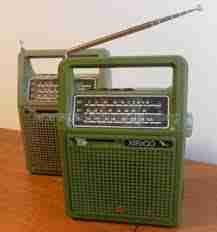
I had brought to Marist Brothers my little radio from Mozambique with the funny name of Xirico. That wireless was my connection to radio presenter Mike Mhundwa as he presented the reggae session every Thursday night. I could not let Silence Time deny me a listen to Bunny Wailer’s upbeat album Rock n’ Groove, which had favourites like Ballroom Floor and Another Dance. I could not miss Freddie McGregor’s Big Ship:
Big ship sailing on the ocean
We don’t need no commotion
Big ship sailing on the ocean
Get ready ’cause we’re moving
Big ship sailing on the ocean
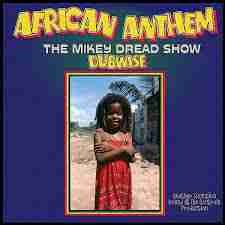
Was I to also miss out on listening to songs from the ultimate dub album African Anthem by Michael Campbell (Mikey Dread/Dread at the Controls)? No!
I was to pay the price repeatedly for this infraction. The punishment was hell. Your whole Saturday was spent cleaning up the dining hall and the chimney whilst others did sport. But reggae was not just music to me. There was deeper meaning in the lyrics. A philosophy. My bushy hair had not been trimmed for ages. The headmaster had once grabbed a comb and pulled my hair, but I would not cut that lovely pushback. My brother Rex had designed a t-shirt for me with the Rasta colours (green, gold and red) and the legend DUB MASTER. I figured I was King Tubby, the legendary reggae producer, and on late Saturday afternoons I would borrow a friendly teacher’s radio and tape deck to play some music in the hall. It was the boys’ few hours of glory in the prison school as we rocked to the British group The Specials’ Free Nelson Mandela and other music I had recorded on tape. Burning Spear, Ijahman Levi, Misty in Roots, Yellowman, Steel Pulse…
After my eighteen months at Marist Brothers, I only returned to collect my O-level certificate and bade the place farewell forever. Anyway, I will always love reggae, and I am grateful for this thing called YouTube. I just wish radio presenters had kept the impeccable standards of old when the medium was alive and riveting.
Now, with everyone armed with data and a microphone, it’s a royal mess on the internet.
READ MORE FROM Chris Kabwato
A harvest of thorns: the spectacular failure of ZANU PF, ANC and Frelimo
From Chopper Thursdays to Viscose Sundays: Chimbetu and the soundtracks to our riotous youth



