




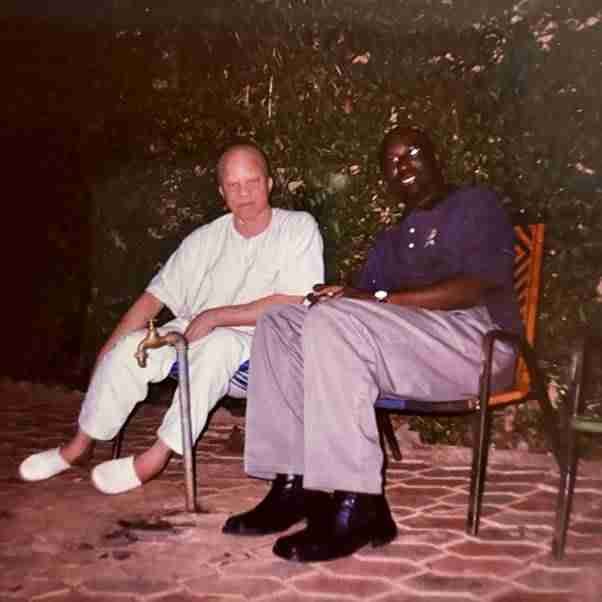
In early 2004, I travelled with media colleagues Luckson Chipare (Zimbabwe) and George Christensen (The Gambia) to Bamako, Mali, to attend a conference on what we called then “the information society”. The conference was part of a series of global initiatives that sought to address, among other things, the governance of the internet. On the one hand were national governments who felt best placed to be stewards of this amazing communications system, on the other hand were private companies that thought a lighter touch in regulation would allow innovation to thrive. For the activists, both governments and the private sector were suspect – one for trying to muzzle freedom of expression under the guise of cybersecurity and the other for trying to profiteer from something that had become a common good.
We arrived in Bamako early evening and were received by some very courteous UNESCO staff. As we carried our bags out of the airport terminal, I asked one of our hosts a question in my very questionable French:
“Is Salif Keita around?”
“Which Salif Keita? The footballer or the musician or the…” I did not catch the third option. It was clear that the name Keita was as ubiquitous as Moyo or Dube in Zimbabwe. I was tongue-tied and regretted the fact that in 1995, I had dropped out of French language classes at the Alliance Francaise. Macron’s people had offered anyone in the film and television industry free evening classes twice a week. I did attend a couple of lessons, but it was too bad for me and my buddies (Garikayi and Obert) as a club called Rumours had just opened in downtown Harare, livening up our normally boring Tuesday evenings…
But I digress as usual.
Before I identified which Salif Keita I had apparently come all the way from Southern Africa to see, one of the hosts handed me her mobile phone. “Salif is on the line.”
It was THE Salif Keita. You could not mistake that clear, firm and warm voice. I tried to explain that there was a misunderstanding:
“I simply asked if you were in Mali, and my good host here thought we knew each other…”
Salif would not hear my apology. He asked how my schedule for the next day was like. Of course, I was in town for serious advocacy meetings on the serious internet governance matters that needed serious attention. But that could wait. I informed Luckson and George that my plans had changed because of a more serious agenda.
The very next day, just before noon, a black SUV pulled up by my guest lodge. It was Salif’s team. I was driven to the man’s house.
Encountering Salif Keita’s music
My first encounter with Salif Keita’s music was in Harare in 1995 at a record and crafts shop called Ndoro Trading, which was located on First Street (between Samora Machel and Kwame Nkrumah). That shop was so ahead of its time and sold an eclectic range of music CDs and VHS tapes, including Ali Farka Toure, Fela Kuti, Tuku and more. You could also buy Zimbabwean films there – Jit, Neria, Everyone’s Child…
Around the same year, I watched a documentary on Salif done by South African filmmaker Chris Austin (the same dude who tried to do a doccie on Dambudzo Marechera’s return to Zimbabwe in 1982). Titled Salif Keita – Destiny of a Noble Outcast, it is both a documentary and a docudrama. You can view it online for free, but I should caution that Salif told me he did not like the film. I promised I would explore the possibility of doing a more representative documentary – I have never been short of making promises when I am excited, but I am going ahead of our story…
Austin’s doccie tells us the story of the boy born with albinism in 1949 in a royal Keita family who trace their lineage to Sundiata Keita, founder of the Malian Empire. From birth, Salif is an outcast, and it gets worse when he decides to become a musician. For the royals of the Mandinka culture, griots/poet-historians are inferior. The Muslim school and the herding of cattle out in the fields by himself shape Salif’s voice and singing. The young man leaves his village of Djoliba in 1967 to find his purpose in the capital city, Bamako. Through twists and turns, Salif breaks on the international scene as a solo act with the album Soro.
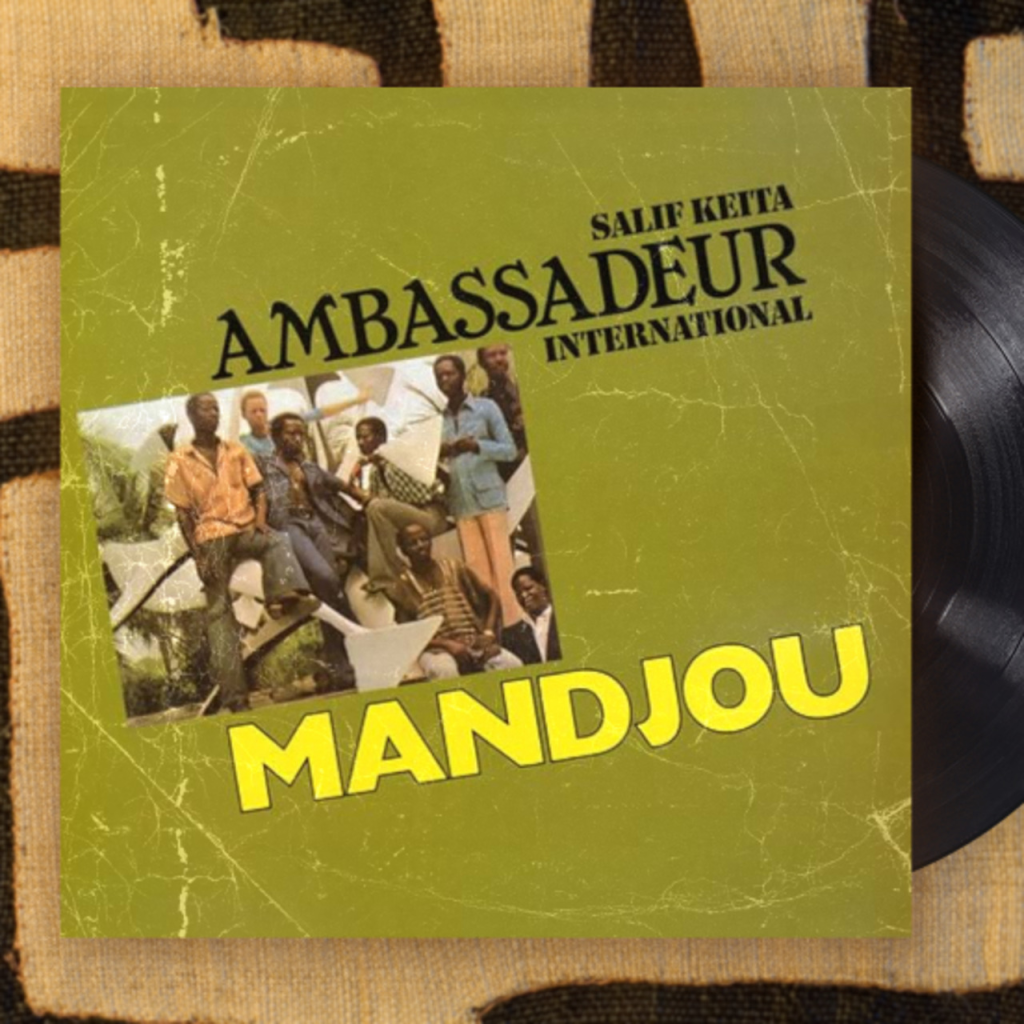
I had a friend called Jotham Nengomasha who had a habit of dishing out nicknames to all in his circle. In 1995, he renamed me Mandjou. I used to play Salif’s album Retrospective, and amongst my favourite songs was the 14-minute Mandjou. It is a song that drips with emotional transitions both in the vocals and in the sound – calm, pleading, loud praises. Salif wrote the song in 1976 as a tribute to Ahmed Sekou Toure, the founding president of Guinea-Conakry. I think that great scholar of the Shona language, A.C. Hodza, would have been impressed by the song’s resemblance to his work on praise-poetry, clan praises and boasts of valour.
The Retrospective album has other gems such as Souareba, Sina and Ignadjidje. It also has Nous Pas Bouger, which speaks to the time in the 80s when France contemplated the mass deportation of African migrants sans papier (without papers). “We are not moving”, was Salif’s defiant message in the song.
An afternoon with Salif
When I arrived at Salif’s house, the man himself was decked in white attire. Seated in his garden together with his team and the lady who had arranged for our meeting, he had the regal aura. In the pool in front of his table was a mid-sized crocodile just chilling with its mouth wide open.
As I sipped my Fanta, the conversation rolled like a stream meandering towards some big river. In my dubious voice, I recited some of my favourite Salif songs, and the UNESCO lady joined in. Salif spoke of his friend Hugh Masekela and his forays into Johannesburg. We chatted about the Chris Austin documentary, which he felt had not told his story well enough.
The next time I met Salif Keita again was at the Harare International Festival in 2015. At the press briefing at the Crowne Plaza, I reminded him of the hospitality he had extended to me.
When you have ploughed your patch
In 2019, The Guardian (UK) reported that 75-year-old Salif Keita had done his very final studio album but would continue to tour. I give thanks to this descendant of the Mansa of Mali, Sundiata Keita of the Mandinka people, for mesmerising generations with his music that infuses the kora, balafon, djembe, ngoni, Afro-Cuban rhythms, jazz and pop. Long may he live.
READ MORE FROM CHRIS
A tribute to the unsung African family heroes: the grave digger, the goat slaughterer
Once upon a Rhumba: Of ESAP, and the Congolese music that stole our hearts



