



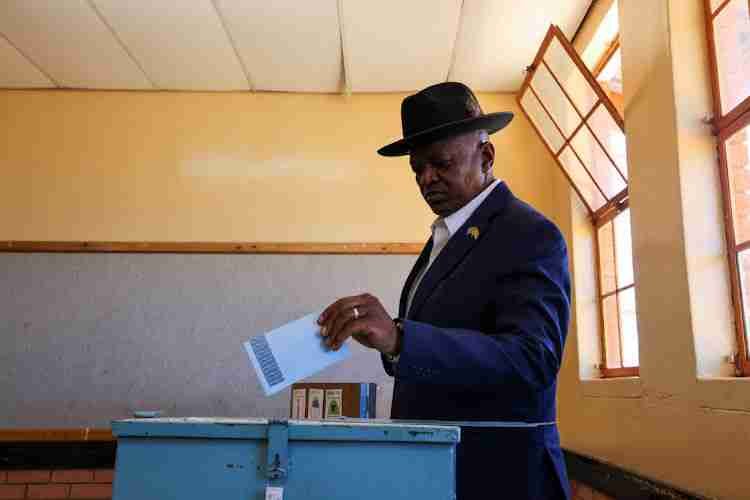
Botswana’s governing party has lost its Parliamentary majority, losing power for the first time in 60 years as voters responded to the economic impact of a diamond price slump.
By early Friday, 31 of the 61 seats in Parliament had been shared between opposition parties, denying President Mokgweetsi Masisi’s Botswana Democratic Party (BDP) a majority for the first time.
Tallies showed Umbrella for Democratic Change, led by lawyer Duma Boko, held 20 seats and could go past the 31 seats, according to local media. The Botswana Congress Party, led by economist Dumelang Saleshando, had won seven. Boko, who is running for the third time, has urged his supporters to “maintain vigilance and discipline”. Botswana Patriotic Front, established by followers of former President Ian Khama after his exit from the BDP, had five seats.
Under Botswana’s constitution, MPs choose a new President. This means the President will need 31 votes in Parliament to be elected. If a party wins more than half of the seats, its candidate will become president. If not, the parties will likely form a coalition and decide on a president.
Diamonds and elections
A global downturn in demand for mined diamonds, which account for more than 80% of Botswana’s exports, has taken a toll on the economy.
Botswana is the second biggest producer of natural diamonds, behind Russia, and has been responsible for all the biggest rough gems found in the past decade. But sales of rough diamonds at Debswana, the company that Botswana’s government jointly owns with the De Beers Group and a critical source of state revenue, were down nearly 50% in the first half of 2024.
Economic growth is expected to slow to 1% in 2024, according to the International Monetary Fund, down from 2.3% last year and 5.5% in 2022, while unemployment has risen to 27%. Government employees have received their salaries late as a result of the tight financial situation, taking the shine off of Botswana’s reputation for efficient government. This stoked anger among voters, already concerned over a perceived increase in corruption in a country seen as one of Africa’s cleanest.
De Beers gets about two-thirds of its diamonds from Botswana, and the country negotiates sales agreements with the company every 10 years. Masisi won praise last year for renegotiating the share of earnings, but the drop in diamond prices slowed down the economy. Previously, Duma Boko said he intended to seek “much fairer and more equitable” deal with De Beers.
Ahead of the election, Masisi said he would focus more on processing mineral resources for new revenue streams. He ran a social media campaign showing how he was building agriculture for a country that has long depended on South Africa for its vegetable imports.
Agencies/newZWire
ALSO READ | Botswana Elections: Meet the candidates in the race



