







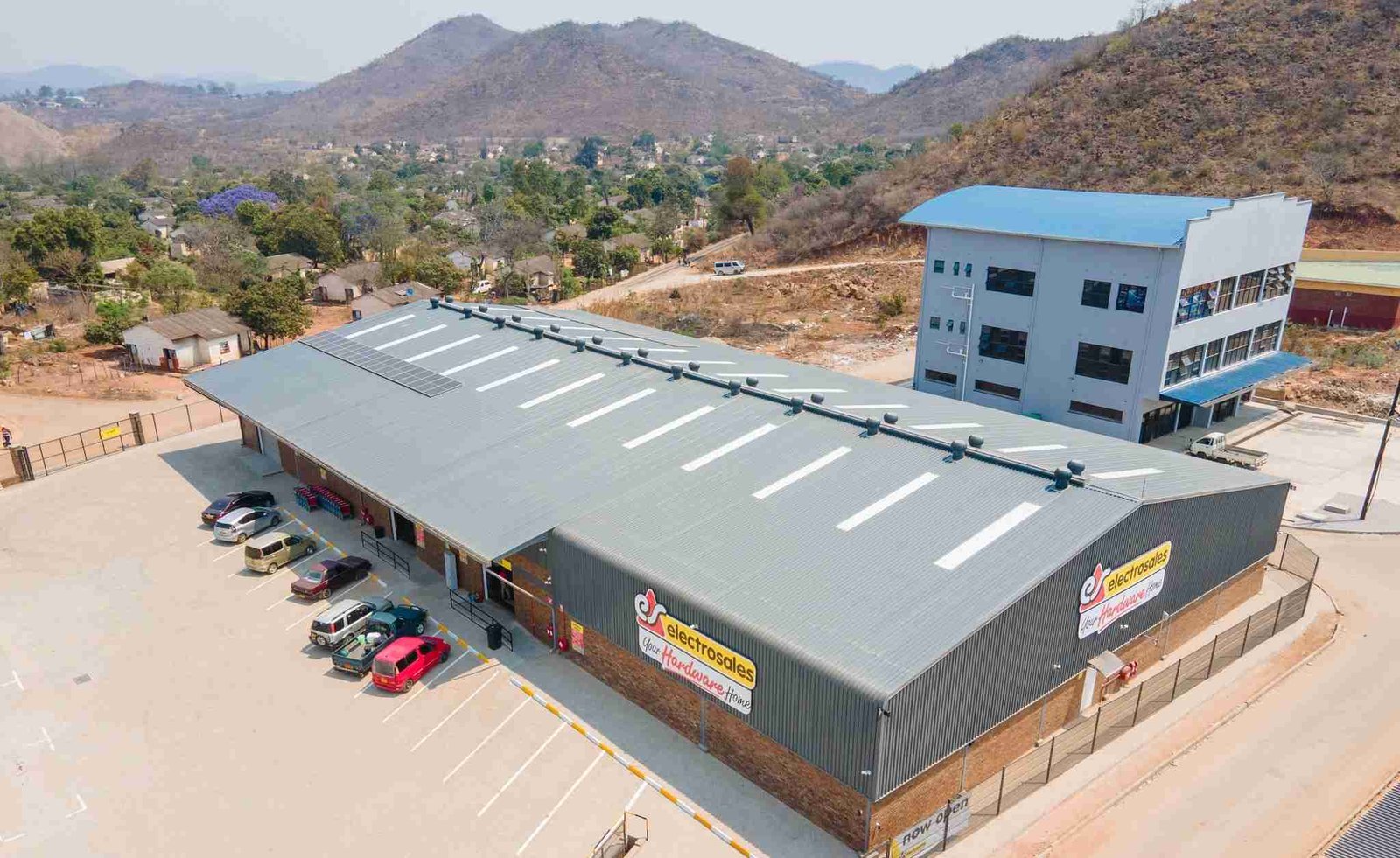
Powerspeed, the owner of hardware retail chain Electrosales, says its expansion plans could move at a faster pace if there was certainty on the future of Zimbabwe’s currency policies.
The company is growing its retail footprint and investing in new business segments, including timber processing. However, the multicurrency system allowing trade in US dollars is due to end in 2030, and this has kept some banks from lending long-term, making it harder for businesses to invest in growth.
“One significant gap in our product offering has been timber, and a decision was taken to rectify this. During the year we created a new division known as Electrosales Timber, and we have begun the trade in timber and related products,” Powerspeed says in its annual report. “Although still small, we can see the potential and we expect significant growth over the coming years. We are investing in a timber processing plant in Mutare which will facilitate value addition and the production of a variety of timber products.”
In Harare, Electrosales is building new outlets, including at Westgate and at Cardinal Corner, a new complex on Harare Drive and Enterprise. But the company says it could be doing more, if it could access long-term funding.
“Access to capital to fund our expansion program has been a significant problem. Zimbabwean banks and financial institutions continue to struggle with liquidity and cannot be relied on to provide capital while interest rates remain inordinately high driven by perceived country risk,” Powerspeed says.
“Another problem is the uncertainty over the functional currency and the future use of the US Dollar, this prevents any form of long-term borrowing which is vital to fund construction and expansion programs.”
Powerspeed has turned to alternative sources for funding. The company’s long-term borrowings increased from US$392,000 in 2023 to US$3.28 million in 2024. Among its lenders are fund managers Imara and Msasa Capital, as well as private investors, including businessman Grant Hewlett. These have granted long-term loans at 10%, while Powerspeed’s short-term bank loans are around 25%.
Powerspeed left the ZSE in 2020, saying the exchange was unhelpful in raising capital and that the market undervalued the business.
Among the company’s major shareholders are Careful Investments – in which CEO Hilton Macklin as an interest – with 18.5%, Mega Market (13.12%), and employees with 10.3%.



