






By Perry Munzwembiri
There has been a rather perplexing decoupling between the booming property and construction market for both individual home builders and the commercial segments in Zimbabwe, and the chronically persistent financial and operational struggles of its upstream construction material suppliers.
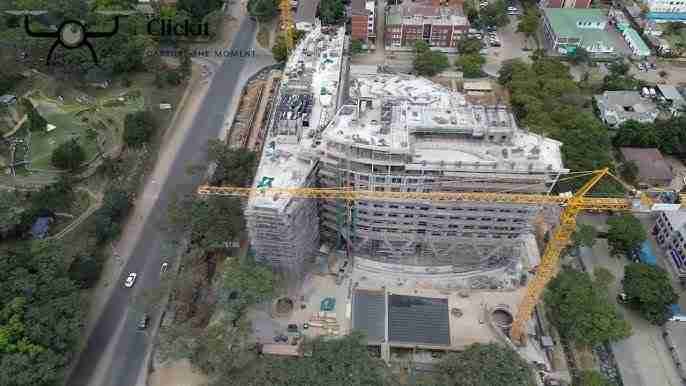
In part, diaspora remittances and a flight to hard assets, given the country’s inflation and exchange rate troubles, have fuelled a surge in real estate development. But here is the kicker; while developers are cashing in, the producers of essential construction materials are failing to capture this value. Welcome to Zimbabwe’s great construction paradox, where a real estate boom coexists with a material supplier bust. How can a construction and property boom leave its suppliers in the dust?
Property boom, supplier gloom
Willdale, a listed brickmaker, while acknowledging the strong demand in the construction and property sectors, reported a 30% drop in its sales volumes, accompanied by a 48% plunge in revenues for its latest half year trading period. Worse, the brick manufacturing company saw a 26% slump in average prices, due to cutthroat competition, resulting in a nearly $2 million dollars loss.
Then there’s Turnall Holdings, providing concrete evidence of the sector’s challenges. This manufacturer of fibre cement and concrete products saw a 4% drop in turnover in 2024, with gross margins shrinking from 23% to 19% and a loss of $3 million over the same period. Turnall’s latest Q1 report? An 18% drop in sales volumes and an 11% revenue decline. Turnall insists shockingly though, that this drop in volumes was a function of low economic activity and liquidity challenges in the market. Go figure!
Meanwhile, Khayah Cement (formerly Lafarge), is under corporate rescue notwithstanding the strong demand of cement in the market even by its own admission. It cited a long ‘rap sheet’ which included the influx of cheaper imported cements, equipment breakdowns, and soaring imported raw material costs among other factors.
A similar fate has also befallen brick maker, Beta Bricks. The company was placed under corporate rescue after failing to make good on loans in the order of US$10 million. At the time of filing for rescue, the company reported that, it was in severe financial distress due to a lack of working capital to sustain production, since April 2023.
But not everyone is struggling. Cement manufacturer, PPC Zimbabwe, seems to have bucked this trend and has escaped whatever ghosts its other peers on the market are facing, unscathed. The company has recently paid a US$13 million dividend to its parent company, remains debt free, and as of 31 March 2025, had close to US$10 million in free hard cash. Taking PPC Zimbabwe out of the picture, why are others left in the rubble?
Macro mayhem: currency woes and cost crunches
Zimbabwe’s dual currency system is a minefield for manufacturers. To the extent that construction sector companies receive payments in ZWG, there exists a revenue and cost mismatch. Though highly contested, RBZ data places locally denominated transactions at a 40% share of the total transaction volume in the market. If this metric were to be loosely applied as a proxy for the currency mix construction companies receive, then it’s not too difficult to see how this mismatch can create big problems.
Producers face a crippling “scissor effect.” Costs for imported raw materials – clinker for cement manufacturers say, machinery spares for the brick makers, and fuel are largely denominated in or indexed to the US Dollar. And when a chunk of their revenue is in the volatile and oft inflationary ZWG, especially for any government related projects, there can be severe margin compression especially given that government is notoriously late with paying its dues.
Earlier this year, Masimba Holdings had to take a decision to scale back on government projects due to delayed and inconsistent payments, in favour of private sector projects, which now account for about 92% of its order book.
The foreign currency access conundrum
No doubt most companies in Zimbabwe are generally now generating a considerable amount of foreign currency internally through sales, much in sync with the prevalence of the US dollar in the market. However, a common feature of doing business in Zimbabwe over the years, which has hamstrung their operations, is the inconsistent access to foreign currency through official channels, effects of which have compounded over time.
Modern kilns, crushers, chemicals, automation systems and various other spares equipment and raw material inputs, essential in production of construction materials require foreign currency to be imported. This contrasts sharply with property developers who transact almost exclusively in US dollar cash. The entire property value chain, from land purchase to construction contracts to final sale, is predominantly transacted in US Dollars. This provides a natural hedge against local currency depreciation and inflation. The variability in timeous, and efficient access to foreign currency through official channels forces producers to the pricier parallel market to procure essential inputs, directly eroding profitability.
Power struggles
Energy is the largest single cost line for cement and bricks. Picture this, on average, a cement kiln, which manufactures clinker, the main raw material input in cement production requires continuous operations at about 1,450 °C, and may take days to warm up to these levels. Any power supply interruptions inevitably are not only expensive, but they disrupt production, and quality. By some estimates, startup costs following any power disruption can exceed $50,000 per incident, while alternative generator power can push up costs by an order of up 60%.
Load shedding, disrupts brick firing cycles, resulting in higher product defects and rejection rates. All this is before factoring in the actual cost of power, which is higher than regional averages -taking into account diesel, coal, electricity. No doubt then, that all these power supply related challenges, severely disrupt production schedules, reduce plant utilization, and increase costs due to reliance on expensive diesel generators for these manufacturers, even in the face of surging demand for products.
Capital punishment: high costs, low liquidity
Lending rates in Zimbabwe are generally punitive, making working capital and capital expenditure financing virtually untenable. This has largely been a result of a hawkish grip on monetary policy by the RBZ, which has seen prohibitively high interests, of anything between 15-25% when loans are even available. Bank’s limited balance sheet capacity often means generally low-ticket sizes for loans. Alternative funding is practically speaking, inexistant. Equity markets in the country are incredibly thin, and sometimes illiquid, while bond markets are virtually non-existent for corporates. This limits the avenues by which these producers can raise critical funding to re-tool, upgrade equipment, buy spares and raw material inputs.
In stark contrast, most private developers and individual homebuilders are financed through informal channels or have access to offshore financing, bypassing the dysfunctional local credit market. A significant driver of residential construction activity for instance, is the steady flow of remittances from the diaspora, which are in hard currency and often channelled directly into building projects. This self-financing, bypasses local banks, something which construction materials firms have largely failed to do.
Internal cracks
While there are broader macro forces at play, an unfortunate cocktail of internal weaknesses has conspired against local manufacturers in this space. For one, the local players face limited pricing power. Major developers can, and often negotiate volume discounts. Despite high demand in the real estate industry, producers cannot easily pass on their escalating costs to buyers, because competitive dynamics prevent full recovery of input cost inflation. The market also remains price-sensitive, and attempts to price exclusively in USD have often been met with customer resistance and regulatory hurdles.
Additionally, decades of chronic underinvestment have left most producers with aged, inefficient equipment. These internal cracks amplify the external pressures, creating a perfect storm of frequent breakdowns, energy hungry equipment and sub-optimal production levels.
The disconnect: a paradox
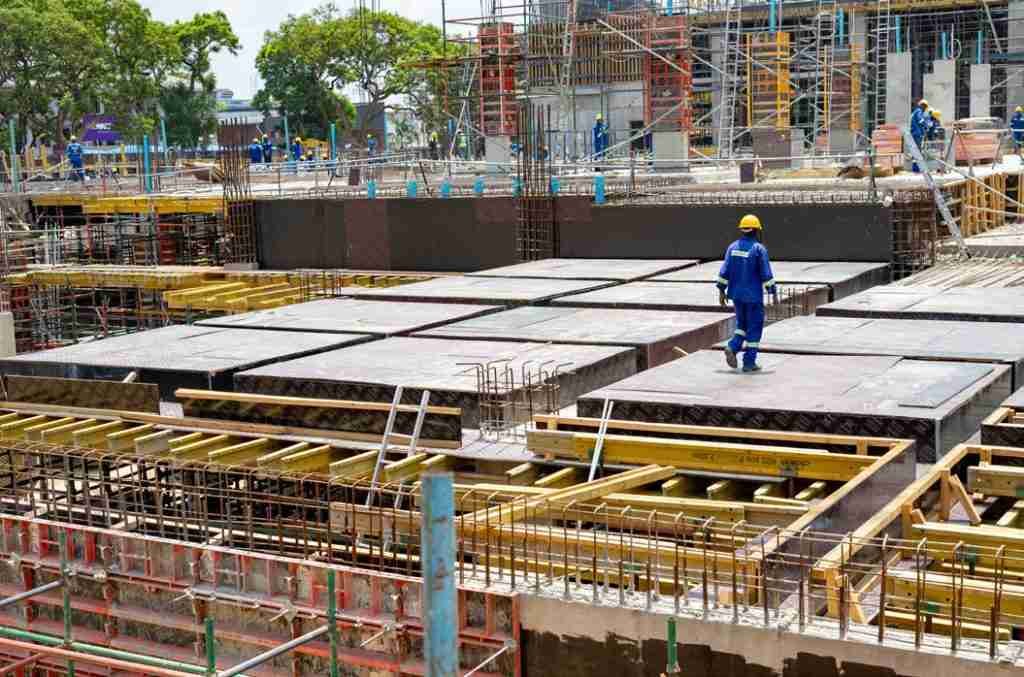
While all these challenges have beset local producers, the real estate sector itself has seen an unmitigated boom, with real estate being seen as key for capital preservation in a market often characterised by monetary instability. Some larger developers have tapped South African or diaspora-linked financing, strengthening their position relative to local input suppliers.
The diaspora also provides a significant burst of demand for property, and US dollar liquidity for real estate in the market, which combined with the already existing housing backlog in the country, drives up real estate prices to levels that some observers deem overvalued.
There is no denying, however, that there is a fundamental decoupling where there is now a hard-currency-funded, inflation-hedged demand sector being supplied by a local-currency-constrained, inflation-exposed industrial sector. This inevitably leaves the door open for imports to flood the market and fill in the supply gap left by these local producers.
Zimbabwe is not alone in this phenomenon. Between 2014 and 2017, property boomed in Lagos and Abuja due to oil-fuelled liquidity, but local brick and cement producers struggled under foreign currency shortages and power constraints. This surge in high-end real estate development, outpaced the capacity of local material producers, leading to a heavy reliance on imported finishing materials.
Nairobi’s real estate also expanded rapidly with diaspora funding, while Athi River Mining a cement manufacturer succumbed, buckling under the collective weight of debt, governance, and high input costs.
The road ahead
The core issue is structural. Zimbabwe’s industrial base requires a stable macroeconomic framework, consistent energy supply, and access to affordable long-term capital to thrive. The current property boom is not driven by these fundamentals; it is largely a defensive, speculative response to macroeconomic instability. It represents a flight to safety for capital rather than a broad-based, sustainable economic expansion that would naturally pull the industrial sector along with it.