



In 1991, I inherited some lodging place kumaStand in Highfields, Harare. What happened was that my brother Rex and his buddy Amos Mahundi moved out of a room in Fiyo, and I became the new “mukoma wekuseri”.
My rent was a massive Z$70, but deducted from my princely salary of Z$990, I could afford to walk with a swagger into Mushandirapamwe Hotel. Sales House was chasing me to come and open an account. Standard Chartered Bank was insisting I open a cheque account and obtain a cheque card (a guarantor of sorts of my liquidity). I pretended to ignore both pleas but then took them up later as if I was doing my creditors a favour. I loved nothing than when I signed a cash cheque for $20 to aid our inebriation whether at the Whistle Stop (Manica Hotel) or Wine Barrel (Monomotapa). There were no automated teller machines yet so if you ran out of cash you could write out a cheque and the hotel manager gave you the money in good faith (yes, sounds like something from Genesis 1:1).
But I am digressing as usual.
So here I was in Highfield, and I quickly marked out the critical geographic landmarks for a young single man in possession of a fortune.
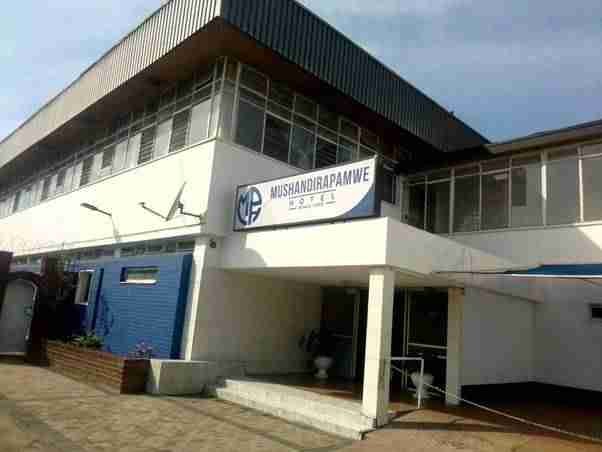
Mushandirapamwe Hotel. Club Saratoga. KumaStones.
It was around these three spaces that I would live a rather riotous life. I had no commitments except to myself. My good friend Eugene Marange was in his final year at the Harare Polytechnic. Although we had nicknamed him “the German Tank” because of his capacity to consume Babylon waters, I could comfortably accommodate him in my Delta beverages budget. One lesson I had been taught by some bad character was that “salaries must not meet in the bank account.” It made sense, and the struggle was to burn as much as possible before the 25th day of the month. The Prodigal Son would have been very proud of me.
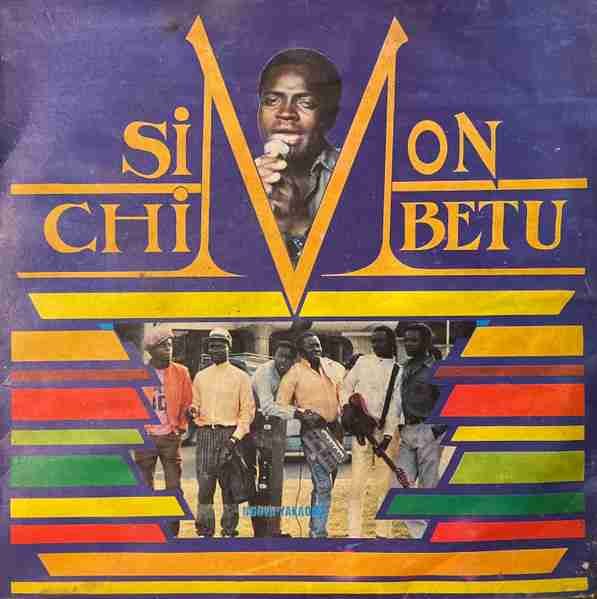
Kumbetuka at Simon Chimbetu’s shows
I soon discovered that Simon Chimbetu played every Thursday at Mushandirapamwe Hotel. He also played every Sunday at Club Saratoga. Those gigs were cast in concrete and were as good as a band residency. Chimbetu’s drummer was my Dangamvura big “brother”, Clayton Kagonegone. Clayton was not just someone I knew well as a senior, but he was a “Nyasarendi” like me, so my bond with him went into the fuzzy realm of “hama”. When we were growing up, all MaBhurandaya in Dangamvura and Sakubva found ways to be related until it was all Tete, Maiguru, Sekuru, Mukoma, etc. We also called him Clyton, not Clayton – very much along the lines of the Malawian pronunciation of the phonetic “a”.
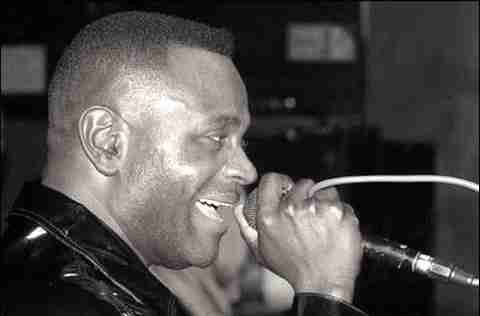
Having paid to enter a Chimbetu show at Mushandirapamwe, Clayton introduced me to Simon. From then on, I never paid to enter a Chimbetu show. I watched Chopper in action twice a week – on Thursdays when Mushands (the hotel) was buzzing and Club Saratoga on Sundays when we were winding down the weekend and cursing a looming Monday.
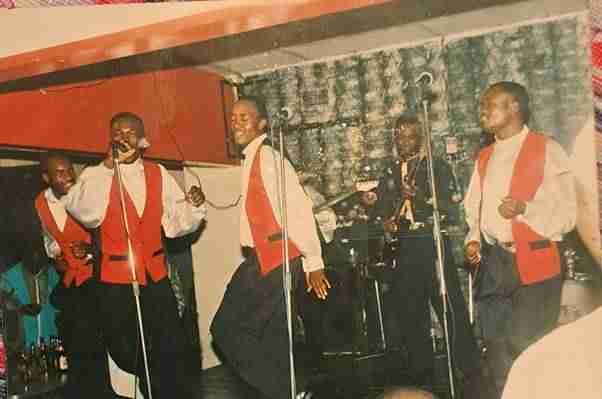
Whilst it sounds crazy to overdose on an artist like this, Chopper’s stage presence, energy and technical brilliance meant that you were always assured of a great time. The audience also could vary, although there are some hardcore fans like me. I never danced at the shows – not for lack of trying, but the colonialists certainly did a number on my hips. I hung by the wall, soaking in the atmosphere and watching the maestro showcase his impeccable oeuvre of songs – One Way; Spare Wheel… Ever the showman, my brother Clayton would be beating the drums with a flourish, a permanent smile on his face. He was a jolly fellow, our Clayton.
For some reason, the Fiyo pickpockets had concluded I was one of them, and on the odd night, one could mutter to me: “Nhasi hapasi kubatika.” I would grunt in agreement. The association was good for me as after the show was done, I would often walk alone in the dark through some open veld with Gwanzura Stadium to my left. Ah, to be young and stupid.
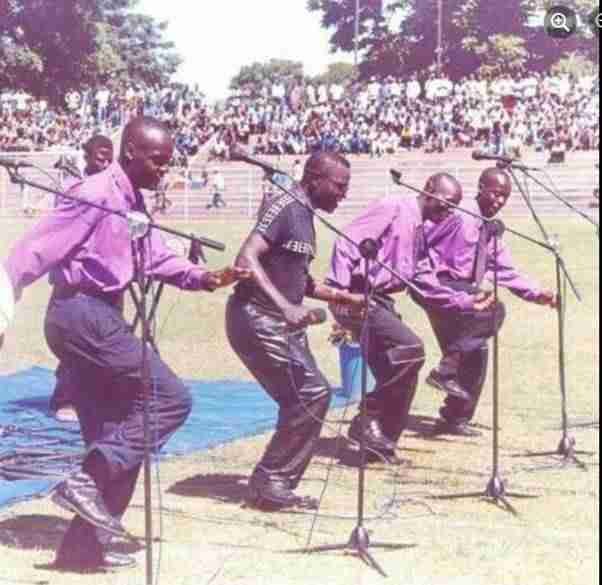
Simon Chimbetu belts out an anthem
Let’s rewind to 1990, a year before my relocation from the jacarandas of Mount Pleasant to Highfield. On June 16, that year, my maternal grandmother passed away. I had been very close to my Mbuya. It was the same year that Chopper released Samatenga, and the words seemed to speak to my personal loss.
The song was everywhere – in the jukebox at Nyamanhindi Hotel, the jukebox at the Council bar (Muchigomba) and Masawara Tavern. Every WRS, Tempest, and Blue Bird stereo in the T area, kumaTwo Rooms, kuB and kuVillage seemed to scream nothing but that one national anthem.
I think it was more the melody and the lyrics rather than the rhythm that made the song a hit. It compelled you to listen rather than dance.
The first stanza is quite blasphemous – a bereaved one is challenging God to reveal the fate of the departed. Where have they been placed? Why is the creator giving us such a hard time?
Toubvunza mubvunzo uya kumatenga
Isu toubvunza chete toubvunza
Kuti sei Mwari muchitipa nguva yakaoma?
Koo hama dzedu dzinotisiya dziripiko?
Imi munovaisa nyika ipi iri kure?
The second stanza envisions the desire of the departed to inform those who remain on how they travelled into that great unknown. The stanza also startles by moving from the philosophical to the particular – a very specific clothing item. The instruction is clear – “please retain that multi-coloured dress of mine”. Why? Because I am negotiating with the authorities in that netherworld for my return.
Uko kwavanogara vasingagone kutaura nesu
Uko kwavanosvika vasingagone kunyora tsamba
Kuti hama dzangu ndakafamba zvakanaka
Nyika yandiri ndigere hangu zvakanaka
Asi rokwe rangu remavara chengetai
Just when we are thinking the return is to fetch that dear dress, there comes a different motivation. And here comes the contentious part:
Nokuti ndiri mushishi kukumbira kuvatongi
Kuti vandipe gwara ndidzokere kwandakabva
Nokuti ndakasiya vana vangu vese
(Hona) ndasuwa mwana wangu gotwe
(Inini) ndasuwa mwana wangu gotwe
(Hona) ndasuwa mwana wangu gotwe, eeh
“I miss my youngest child.” The whole song, the changes in the beat, the chants, the lead guitar making popcorn, ride on this discriminatory refrain. Every time I play the song, I ask myself: so what must happen to first-borns and middle children? Did Chopper have to be this unfair?
Although urban legend says Chimbetu got the moniker Mr Viscose from his silky rayon shirts, I have a different theory. In 1990, male viscose shirts were a big craze. I got mine courtesy of my fashionista cousin-brother Sinoni Tambula. In singing Chimbetu’s Samatenga that year, people changed the “rokwe remavara” to “rokwe rangu reviscose”. It injected some humour into a sombre song that reminded us of our mortality. I stand by this conjecture until Simon himself returns to clarify.
Forgiving Chopper
When Saina came out, it coincided with my dubious opportunity to be part of two different weddings as a sidekick to the groom. For both weddings, I was a disaster kumasteps, but I soldiered on until I had crammed a few moves. Saina was our entry song at Queen’s Hall Mutare in 1995 at the wedding of a dear friend who was a teetotaler, but had friends who had a deep relationship with firewater – Morgan “Moggoman” C, Steve “Flight” C, Chris M and yours truly. Despite not having slept at all, I still want to believe we wowed the crowd with electric moves that Chopper would have approved (hahaha).
Thank you for the music and memories, Simon Chopper Chimbetu.
READ MORE FROM CHRIS:
When Kenya’s troubles became Zimbabwe’s gain: A tribute to Ngũgĩ wa Thiong’o
Mbinga rent seekers: 142 years after he died, here’s why Karl Marx is still alive



