





It was jarring listening to Finance Minister Mthuli Ncube’s sickening pomposity as he dished out more pain to the people. To his credit, Mthuli did not look for a modest vehicle to use to arrive at Parliament to present his 2025 National Budget. He alighted his Range Rover with all the crassness and vanity of his cabinet peers. This gang is a lost cause.
No need to waste my breath on this Barbican Bank founder – we know how that institution collapsed. The beauty of the Vene Republic is how your past is cleansed and you become a “born-again”. That happens when a country is a permanent crime scene, and the cops are paid to look the other way.
Rather than blame Mthuli who is a mere symptom of a bigger system, I looked back to the promises of the liberation struggle and their betrayal by the rogues who now feast on the carcass of the state.
When we dared to dream
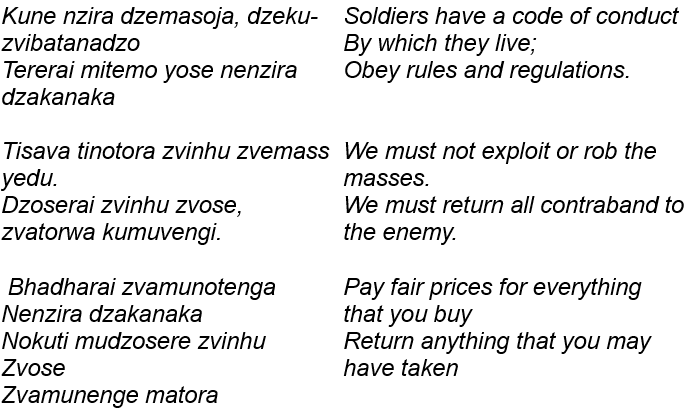
For those who witnessed the birth pangs of Zimbabwe, there are some songs that remain indelible in our minds. The joy and euphoria of 1980 is now a distant memory, but a song like Nzira Dzemasoja/A Soldier’s Code of Conduct (translated here by Professor Alec Pongweni) reminds us of what could have been had the ZANU PF thieving elite chosen to tread the path of virtue:
When we agreed on who was a sellout
The fact that ZANU PF has turned out to be the biggest sellout of the people is ironic because ZANLA had a history of fighting sellouts of our just struggle. One such sellout was Morrison Nyathi who was once a ZANLA guerilla but turned and led Rhodesia’s Selous Scouts in the raid on Nyadzonia refugee camp in Mozambique. His actions resulted in the deaths of over a thousand Zimbabweans. We all agree that Nyathi was a sellout who caused the death of many non-combatants including children and old people.
The psychology of the sellout
A sellout is a person who betrays a cause. A traitor. An askari. The motivation of a sellout is mostly a combination of self-preservation and financial gain. Think Mr Judas Iscariot and the 30 pieces of silver – dude was a bit on the cheaper side as those bits of silver would be worth about US$120 today. The Africans who ended up as slaves and forced on ships that sailed across the Atlantic to the Americas were rounded up by our own people – sellouts who were driven by financial gain, trinkets (necklaces, rings and mirrors), alcohol and guns.
The sellouts in postcolonial Africa have tended to be pawns of Western interests and local political ambitions. Joseph-Désiré Mobutu was the Chief of Staff of the army of Zaire when he engineered a coup d’etat against the newly elected government of Patrice Lumumba in 1960. Foreign interests had found their man in this evil and anti-people thief and murderer.
As president of Zaire, it was ironic that in 1974 he threatened the national football team, the Leopards, if they did not do well at the World Cup in Germany. Having been promised their bonuses for qualification but seeing not a single penny, the Leopards were not motivated to play and lost 0-9 to Yugoslavia. Chief Mobutu fumed and threatened them with arrest. On their return to Kinshasa after losses of 0-2 to Scotland and 0-3 to Brazil, the team found an army truck waiting for them. They were driven to the presidential palace for a roasting by the Il Supremo who added: “Next time, I will throw you in jail”. The punishment was still severe: they could not leave the country again, scuppering any chances of playing overseas.
Compared to Lumumba, those players were lucky. Lumumba was captured by Mobutu and handed over to the Belgians and the Katanga separatists, led by sellout Moise Tshombe, who tortured and executed him. Not happy with just killing him, this bloody alliance of betrayers dissolved Lumumba’s body in acid. Only a single tooth of that great patriot remains.
Betrayal of Cabral and Sankara by close buddies
One of the most haunting photographs I have come across is of Amilcar Cabral, then secretary-general of the Partido Africano da Independência da Guiné e Cabo Verde (African Party for the Independence of Portuguese Guinea and Cape Verde) or PAIGC, standing next to a comrade called Inocencio Cani.
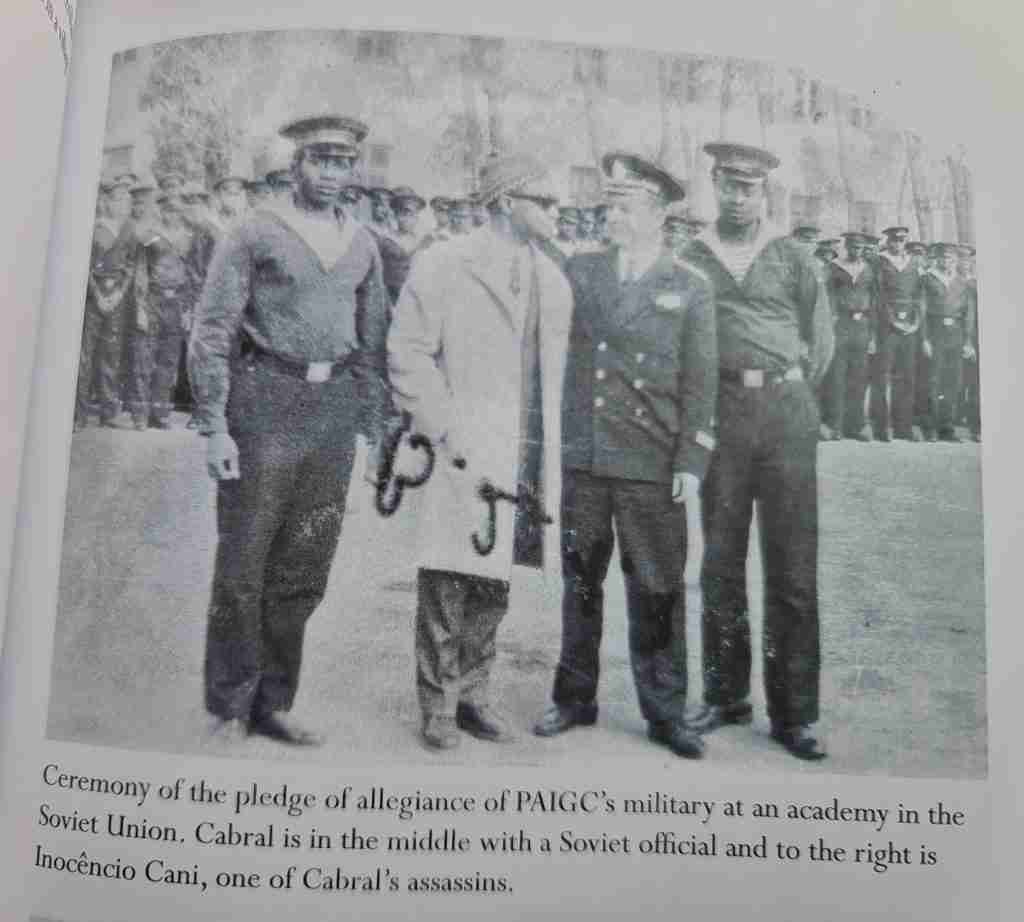
In this undated photo, they are in the Soviet Union at a military parade of the comrades of the PAIGC. In 1973, just some eight months before the independence of Guinea-Bissau, Cabral was assassinated. Among his assassins was the alleged ringleader, Inocencio Cani. The fingerprints of PIDE, the then Portuguese intelligence agency, are somewhere in this despite the decades of whitewashing.
Inocencio Cani was to be imitated by Blaise Compaore who assassinated his close friend and comrade Thomas Sankara in 1987 to take over as leader of Burkina Faso.
From Jonas Savimbi of UNITA in Angola, propped by South African and American money as a defender of the “free world” against communism, to the bandit Alfonso Dhlakama, whose RENAMO was sponsored by Ian Smith, we have never been short of sellouts.
The new sellouts
The sellouts of the past would be very happy to know that their ideas live on. Harare’s political thieves have opened the floodgates for the robbery of the state. They engineer tenders, inflate prices, and do not deliver service to the government and the people. They loot our minerals and smuggle them out of the country. They print money and buy foreign currency. They seize land from resettled people. They mock the people daily as they display their ostentatious lifestyles and insult us. These are the saboteurs of our national dream – the true modern-day sellouts.
READ MORE from Chris Kabwato:
‘Boy, where’s my change’: A lesson in accountability from our mothers to our leaders
Africa’s political thieves and the hijacking of youth’s dreams
The Magic Scarf of Munhumutapa: Celebrating the glorious history of our leader



