



By Christivel Zulu
As a Zimbabwean by birth, I understand the deep-rooted expectation of hunhu—moral uprightness—imposed on women within our society. From a young age, girls are moulded to conform to behaviours that preserve their virtue. In a phallocentric society, a woman’s worth is often measured by how she dresses, talks, and behaves. Cultural norms such as musha mukadzi—which loosely translates to “a woman is responsible for building the home”—reinforce the idea that women must uphold moral values, while men are expected to provide, protect, and lead.
Historically, Zimbabwean women have played crucial roles in national issues, from the liberation struggle to their ongoing contributions in various sectors. Figures like Thenjiwe Lesabe and Mbuya Nehanda are testament to the power and resilience of Zimbabwean women, who have fought for the country’s freedom and continue to strive for its progress. Women in Zimbabwe are not mere objects or tools for men’s gratification; they are citizens who have sacrificed and contributed significantly to the nation’s development. Yet, in postcolonial Zimbabwe, the political landscape remains fraught with challenges. Despite policies aimed at women’s emancipation, such as the women’s quota system in Parliament introduced during Robert Mugabe’s era, true gender equality and equity remain elusive. Women continue to be objectified by their male counterparts; a situation exacerbated by the advent of social media. Disturbingly, some women have become complicit in their objectification, engaging in trends that degrade their dignity.
Political gyrations
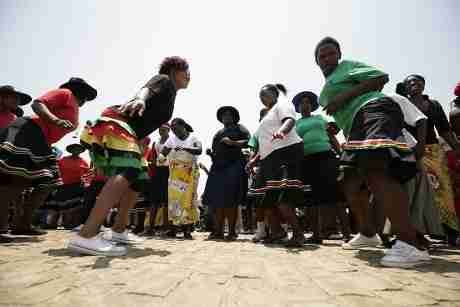
One such trend, prevalent at political gatherings, is the shameless shaking of buttocks. This spectacle has become so normalised that it now seems an inevitable feature of these events. As Tsitsi Dangarembga poignantly observes in Black and Female, “Women continue to be configured by society, including themselves, as assets to be acquired by the masculine community for masculine fulfillment.” In these settings, women are reduced to mere objects of sexual affection, willingly presenting themselves as such. It is disheartening that while women complain about oppressive patriarchal ideologies, many inadvertently reinforce these very structures by engaging in behaviours that undermine the pursuit of gender equity. The sight of women gyrating at political rallies is not new, but the fact that some are paid to do so is deeply troubling. The rapid dissemination of such content on social media further exposes young women to harmful ideals, perpetuating a cycle of moral decay.
While patriarchal societies have rightly faced criticism for their exploitative treatment of women, there are certain expectations, such as moral uprightness, that should be upheld. When women participate in these degrading displays, they affirm the perception of themselves as second-class citizens, mere objects of the male gaze. If women chose to embody moral integrity, political gatherings in Zimbabwe would be devoid of such shameless and provocative performances. Dancing and singing have their place in social gatherings, but women should conduct themselves in a manner that preserves their dignity, rather than making themselves objects of ridicule.
The class disparity exposed by this buttock-shaking trend is another concerning aspect. Women in positions of power are notably absent from these demeaning displays, highlighting the divide between those with agency and those without. The women who engage in these dances often do so out of desperation, struggling to fend for their families and seizing any opportunity, however degrading, that comes their way. Yet, women in office remain silent, perhaps fearing for their positions, which are often precariously dependent on male patrons. Patriarchy, a man-made social structure, safeguards the dignity of even the most marginalized men. It is telling that men are rarely seen engaging in such foolish behavior—this demeaning aspect is consciously reserved for women. Zimbabwean politics, dominated by men, thrives on egocentric power plays, where women’s bodies are commodified for political mileage. The practice of rewarding women with gifts after such degrading performances is nauseating and reflects the deep moral rot in our society.
The trend of dancing women in Zimbabwean politics should prompt us to critically assess the continued retrogression of gender disparities. Have we ever seen a large number of men shaking their buttocks in the same way? The fact that it is primarily women who do this, and that society tacitly approves, speaks volumes about the nurturing of moral decadence in modern-day Zimbabwe.
Christivel Zulu, Ph.D., is an Assistant Professor of English at Wilberforce University. Her research interest is in African feminism and Political Consciousness.