




Once upon a time, the internet held the promise of a vast, free land where information and knowledge abounded as if all the written wisdom of centuries of human civilisation had been gathered together and was accessible at the click of a button.
Similarly, when social media applications came into being, we marvelled at how we could connect with long-lost friends, make new acquaintances, and generate opportunities. We looked at what was then Twitter as a space for rational discourse or for sharing new and insightful information.
For the news media, this was a platform for breaking news. For others, it was a space for creating a sense of community. Remember #ComedyThursday with @DannyThatGuy? Remember the weekly #263Chat conversations on topical national issues?
All that now seems so far back like it was some Age of Innocence.
Paradise Lost
Chinua Achebe cautions that to make sense of any phenomenon you have to ask: when did the rain begin to beat us?
At the very beginning of the internet crossing over from being a communications infrastructure of the US defence system to a platform for American researchers, there was the belief and desire to share academic work. Tim Berners Lee’s invention of the World Wide Web (an application that allowed us to organise information and to create websites) and gifting this to the world for free, saw us in the media organising courses in what we termed Computer Aided Research and Reporting (CARR). Our excitement was with online databases, government records and other information and how these could assist journalists in researching and writing their stories.
In 2004, an American media scholar Dan Gilmor published a book which was the equivalent of our journalism manifesto. The book, “We the Media: Grassroots Journalism by the People, for the People”, celebrated ‘citizen journalism’. It proclaimed that weblogs (blogs) represented grassroots reporting and would wrest power from the established national and global media. We did not know that the tsunami of Big Tech (Facebook, X and Google) would permanently disrupt journalism as we knew it and take away our power to inform and educate. We did not know that truth would be jettisoned by individuals armed with egos, data and a propensity for selective amnesia.
Merchants of “muchasvinura”
On a weekly basis, our people are insulted by some usual suspects with the chant “muchasvinura!” One of the users of the term is a notoriously uncouth senior government official. The others are self-appointed advisers on the “democratic project”.
I do not know the etymology of “kusvinura” other than its literal meaning which is to awaken or open one’s eyes. When our social media heroes shout “muchasvinura” it is in a pejorative sense. Apparently, our people have not suffered enough and need a rude awakening from their slumber of cowardice and inactivity – so argue our all-seeing, all-wise new age guerillas.
The search for relevance
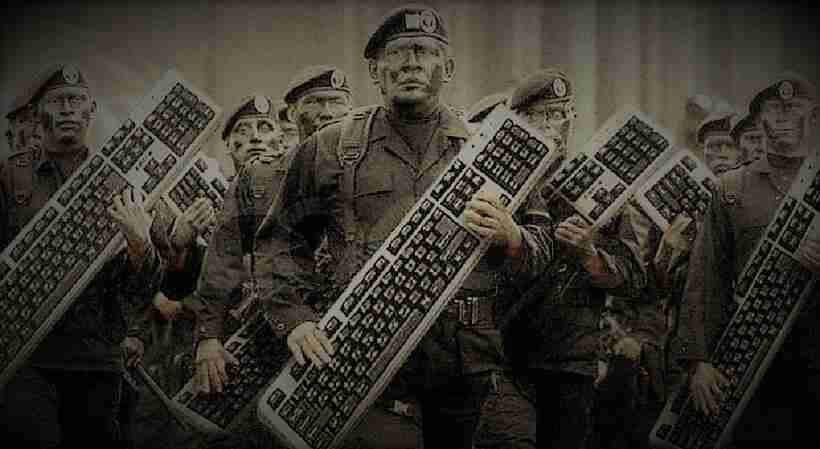
We live in the age of affectation. We posture on social media and make claims about our competencies, affiliations and connections. Behind the scenes is a desperate scramble for resources, especially now that donor fatigue has set in and the “return on investment” on Zimbabwe after two decades is not too visible. What is clear is that the mafia that spoke the language of good governance, democracy and political reforms had a good innings whilst the largesse of donor funding abounded. With civic organisations denuded of resources, social media has filled the vacuum and become the battleground of confusing and contradictory noises by schizophrenic characters.
Without shame, the most prominent narcissists cajole our long-suffering people from the comfort and safety of North America and South Africa. They point to their scars when they were in the trenches and how they single-handedly tried to assist the “revolution”, but they were misunderstood and their efforts unappreciated. They rush to be first to make pronouncements on how 16 million people would have had a different political outcome if they had paid attention to them. That is an ego the size of Mount Nyangani. Amusingly, they do usually forget their digital footprint and contradict themselves. A casual acquaintance with the truth does not bode well for consistency.
When Mbuya Chimwaza wanted to slap the Man from Zvimba
In March 2008 I visited a friend in Harare. He described the economic situation dramatically: “We have now hit rock bottom and are being dragged along jagged rocks.” In that same week I was in Mutare where I spoke to a relative, Mbuya Chimwaza. She echoed the sentiments of my friend, but then said, calmly and bitterly, “Zveshuwa ndikamuona Mugabe ndinoda kumbomurova mbama”. Mbuya Chimwaza was not on Facebook. She was not on Twitter. She was not like our revolutionaries who have decamped to Johannesburg but pretend to be fighting from the centre of Harare. She was wide awake and alive to the author of the mess of the country.
Belling the Cat
A famous children’s tale is forever illustrative. In the story, a group of aggrieved mice agree to tie a bell to a cat’s neck so that they are alerted to the feline’s approach. It takes some little mouse to ask: “But who shall bell the cat?” Of course, there was no volunteer to perform the job – just chatter about what needed to be done.
The moral of the story is: do not insult our people when you cannot come onto the streets of Harare and lead from the front. Whose child’s blood must be spilled first?



