




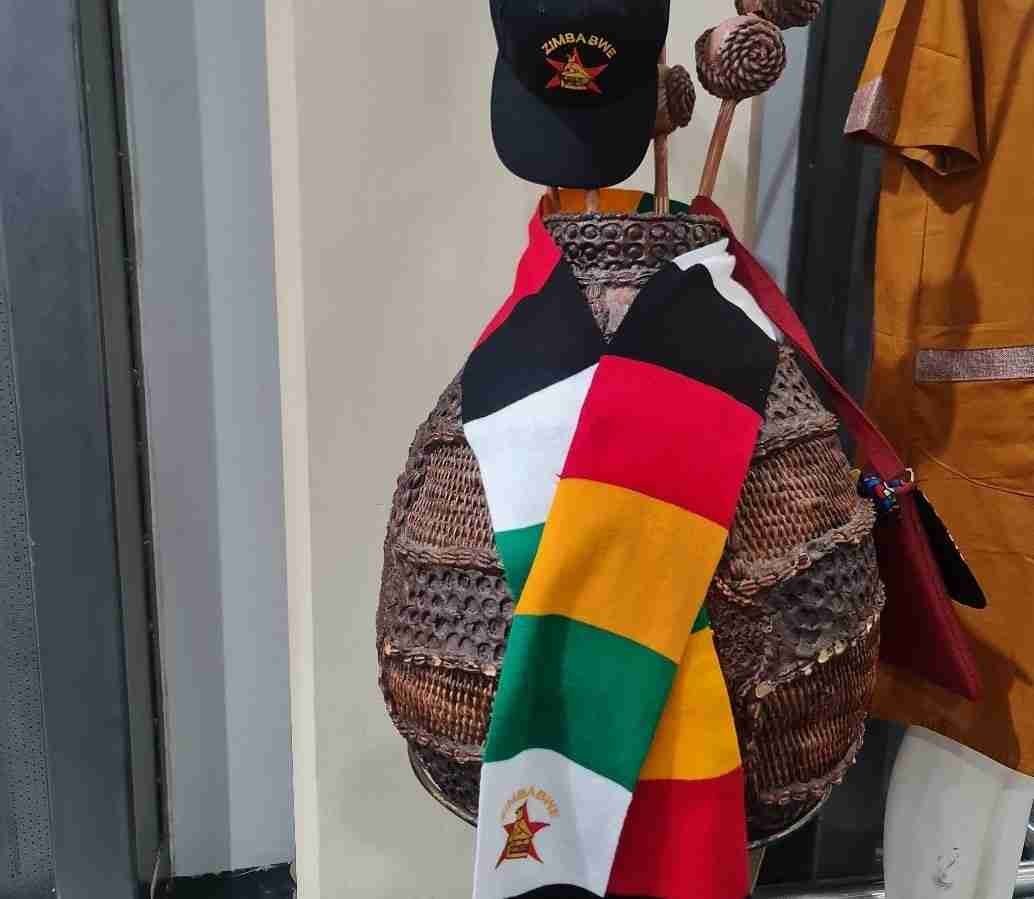
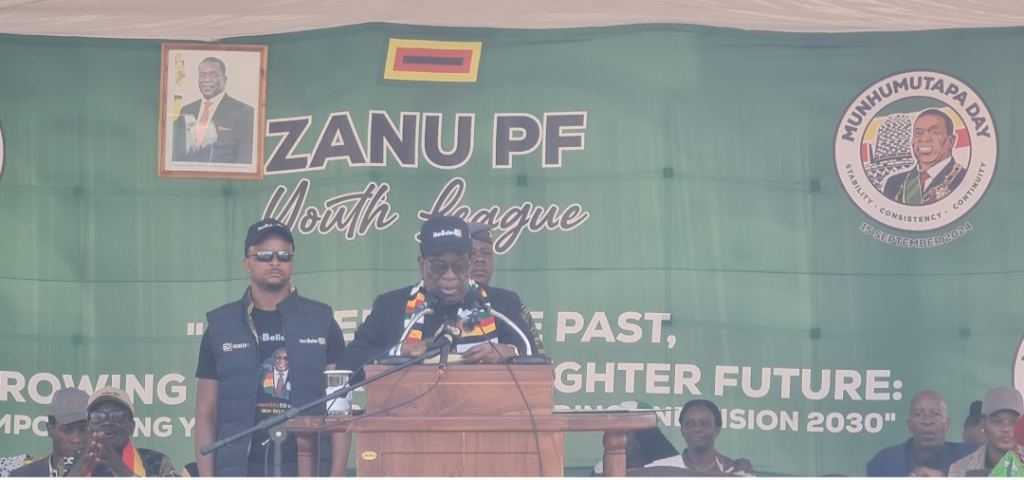
We live in a time of creating false narratives. It is a time of rewriting history and trying, in a very crude manner, to create myths about Zimbabwe’s past and its connection to the present political leadership. As a patriot, I thought I could help my compatriots in the Ministry of Information in this month of September where, by great divine coincidence, we have inaugurated Munhumutapa Day and it is also the birth month of our esteemed tried, tested and refined El Supremo.
The seer who predicted the liberation of November 2017
A long time ago when donkeys had horns, rabbits had long tails and people could fly, a renowned seer in the Empire of Munhumutapa predicted the arrival of people without knees, people without skin, people with eyes the colour of the waters where Pungwe and Zambezi poured out their last breath. Godobori was the name and title of the seer. One day, the WaSwahili traders coming from Kilwa and Zanzibar up north arrived with a multicoloured piece of cloth. After so many years of trading with the VaKaranga of the Mutapa Empire, they could speak the local language. As they reached Munhumutapa’s courtyard, they went on their bellies and crawled toward the king whose name was Nyahuma Mukombero.
Their leader, Ibn Abdul Jinjah, placed at the feet of the Munhumutapa a leather skin bag and clapped. They had learnt well, these scheming traders.
“Owner of lightning, the mountains and the rivers. He whose quiver is forever full of arrows. Founder of the greatest nation on earth. We come in peace. Please receive our gift.”
Mujati, the king’s trusted adviser reached for the skin bag and opened it. There was a gasp of appreciation by all at the assembly. It was a beautiful woven strip of cloth.
Ibn Abdul Jinjah spoke again: “Oh, Conqueror of the lands of the Tavara and Tonga, this here is what we call in Zanzibar a scarf. Our foremost weaver, Kadogo Wasafiri, made this for you.”
Mutapa Nyahuma Mukombero held the scarf in his hands and admired the softness of the wool. The Mutapa looked to the Royal Advisor Mujati and commanded: “Ask what these colours mean.”
Ibn Abdul Jinjah responded: “We asked Godobori what colours we should use in weaving the scarf and he said: ‘have green for the land, yellow for gold, black for the people, red for the bloodshed in the wars and have white for peace’. He also said insert the image of the soapstone bird hungwe that Nyatsimba Mutota had brought from the Dzimbahwe many years ago.”
Godobori came forward to explain further: “The colours do not mean much for us, but centuries from now a man shall rise in the rebirthed Dzimbahwe. His name shall mean strife in ChiKaranga. He of the crocodile totem shall be a leader who carries forward your title Munhumutapa.”
Ngwena is gifted with the revolutionary and patriotic scarf
In 1966 the scarf was found in the Matobo Hills remarkably intact by archaeologists that have chosen to remain nameless. At a meeting in Lusaka in that same year, presided over by none other than His Excellency the Founding Father of Zambia, Comrade President Dr Kenneth David Kaunda, and in the presence of the entire leadership of the Revolutionary Party, Ngwena was handed the scarf.
“But I am only a briefcase carrier for the leadership,” protested the ever-humble and magnanimous Ngwena.
“Your turn to lead shall come. It is critical that succession becomes a culture of the movement.”
Ngwena received the scarf and placed it in the brown briefcase that contained highly confidential papers of the Party. He always carried that case and stood by the side of the then leader.
Ngwena discovers the magic of the scarf
Now the scarf was no ordinary scarf, as Ngwena was to learn. It was a living scarf. It had seen history over 400 years. Whenever he opened the briefcase, the scarf greeted him and spoke to him: “Mangwanani Ngwena. Ian Smith and his dogs are plotting to bomb Nyadzonia. Ensure the leadership is safe. Keep me safe too. Victory is certain. Pamberi neChimurenga.”
The Munhumutapa and the Umbrella
Just as the Magic Scarf had predicted, the evil Ian Smith and his sidekicks Peter Walls and P.K. van der Byl bombed the refugee camp at Nyadzonia. Ngwena held on to the briefcase. He pointed his umbrella at a gunship helicopter that the Rhodesians called the K-Car and released a mortar that hit the propellers. Down went the helicopter and burst into flames on impact. Ngwena put away his umbrella, straightened his tie and headed for the bunker where the detachment commander was hiding.
The Munhumutapa as a Crocodile in the Save River
After 1972, when Dare reChimurenga formally declared the armed struggle, Ngwena decided he could not just stay in the office in Lusaka. He needed to go to the front and boost the morale of the guerrillas. He took the briefcase with him – the scarf was neatly tucked in. Ngwena crossed the Zambezi and walked all the way to the Gaza Province, as they called the Manicaland area of operation.
The Magic Scarf had told him: “Inzwa Dambudzo. I think KK will turn against you and your leadership. You will need to operate from Mozambique. Frelimo will soon chase out the bloody Caetano and the Portuguese.”
Ngwena, ever a good listener and follower of higher powers, met with the detachment commanders in the Gaza area. At one point the Rhodesian Light Infantry surprised Ngwena and the guerrillas but they dived into the Save River. Ngwena opened the briefcase and took out the scarf. It turned into a mini-submarine. All the guerrillas entered the underwater ship and survived.
The courage of Ngwena is on record. We do not need to embellish it.
The return of the Magic Scarf
In 1980 Ngwena decided to put away the briefcase and the scarf. The country was now free. But many years later – November 2017 to be precise – things had happened that upset the spirits of Munhumutapa, Godobori and the Magic Scarf. There was no choice but to correct the wrongs.
This time the Magic Scarf would not be hidden. It would be out draping the shoulders of the Munhumutapa Reincarnate. The nation would be guided by ancient wisdom – its granaries would be full, its soil would be tilled and produce plenty, and its gold and other metals would be exported and bring unimaginable riches to the Empire. The people would sing one song.
The spirit of Nyatsimba Mutota and others lives on! 2030 here we come!



