


Zimbabwe and its neighbours have announced plans to cull elephants. Their number has grown beyond the carrying capacity of national parks, a risk to the environment at a time when the country is dealing with a serious drought. Critics have opposed the plan. But, in this article, conservationist Robin Brown argues that culling is a tough but necessary decision
__
As much as I love elephants, I stand with the Ministry of Environment in Zimbabwe and the Department of National Parks on the issue of an initial 200 animal elephant cull. I am under no illusion that, for the authorities in Harare, this is not an easy decision to make and one that will have many detractors.
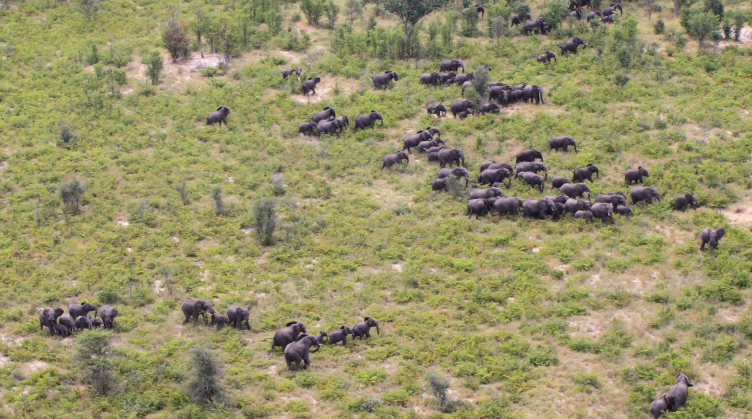
The facts are clear, from many studies undertaken by global academic and field leaders in conservation, on the impact of an overpopulation of elephant. The steady demise of certain tree and plant species and the reduction in the ecosystem’s holding capacity of other species of mammals and birds due to increasing elephant populations is equally well documented. The recovery of the ecosystem to a viable and stable base, is impossible without a reduction in elephant numbers.
What remains unclear is how wealthy countries and well-funded international organisations have failed to assist and support the Government of Zimbabwe and its neighbouring countries in dealing with this growing crisis. There is a deafening lack of support for the country at this time of need. Is it possible there are talks behind the scenes? If so then a more vocal approach is needed to stand with the country at this tough time.
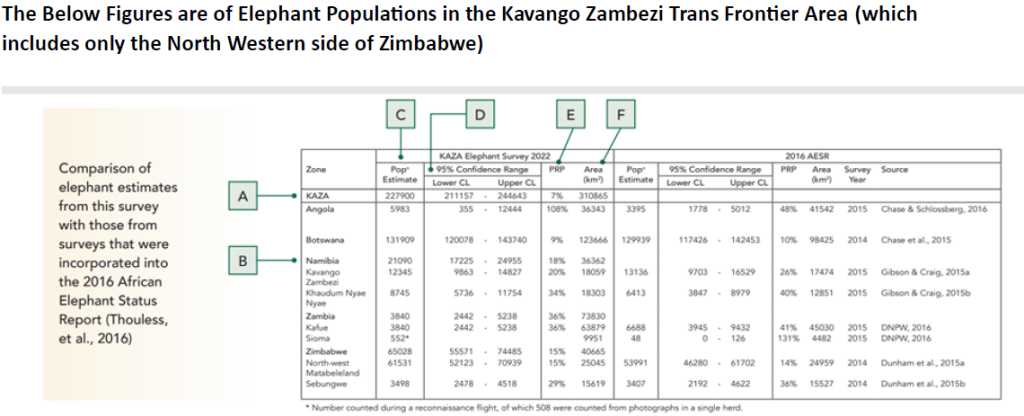
Zimbabwe has the second largest share of the total population of elephant in Africa. A testament to the positive allocation of land for wildlife proliferation over many years. As well as the well distributed land use models used for these wildlife areas, in itself a topic for further discussion.
The country’s Elephant population has grown to an estimated 85,000 figures that are well documented and reliable. In Hwange National Park and its surrounding areas (western Matabeleland) alone, the figures according to a globally celebrated census taken in 2023 are in the region of 50,000 animals.
Each year more than fifteen people are killed by elephants in Zimbabwe (a figure that is reportedly much higher in recent years). Many more people are injured and/or have their livelihoods impacted by elephants. These people are often the communities who are expected to live with and amongst wildlife with little benefit.
Currently the region is facing one of the most severe droughts in modern times and there is a high expectation that there will be a natural die off in wildlife numbers across the spectrum. This has no doubt been exacerbated by the inability of custodians to come to terms with the growth in elephant population in the recent history.
The authorities in Zimbabwe are proposing a cull of two hundred elephant. This alone will have very little impact on the total herd numbers and subsequently on the deteriorating biodiversity. It is estimated by conservationists that to reduce the negative impact on the environment, a number ten times this figure, cropped each year for ten years, would have a real impact.
No humane, animal loving person would like to see this happen. The thought of one elephant dying is sad. The fact remains that it is the viability of the ecosystem that is important in sustainably allowing the future of Zimbabwe’s wildlife to thrive. Without drastic action we will see the steady decline in carrying capacities of wildlife in Zimbabwe and its neighbouring countries into the next generation.
The authorities in Zimbabwe have to make some very tough decisions, at this time they require the support of all clear minded, nature loving people. It is my opinion that those people and organisations with the expertise and funding to assist the Department of National Parks undertake this sad project should come forward. They should be encouraged to work with the department to ensure what needs to be done is done in a humane and professional manner so as to least impact the lives of these incredible animals, the communities that live with them and the tourism industry.
Robin is part of the Zambesia Conservation Alliance, a group that works in wildlife conservation in Zimbabwe and Africa. Read about their work here