







The Confederation of Zimbabwe Industries (CZI) has released its annual manufacturing survey, covering manufacturers of different sizes across the country. Here’s what it tells us about the state of Zimbabwe’s factories.
Growth, but not yet a boom
Manufacturing had a steady year in 2025. Output grew 13%, turnover rose 12%, and employment increased by 6%, with firms adding an average of five jobs each. Capacity utilisation rose to 55.9% from 52.3% in 2024, the fourth-highest level recorded since CZI began tracking the figure in 2009. Factories are producing more, but nearly half of installed capacity is still sitting idle.
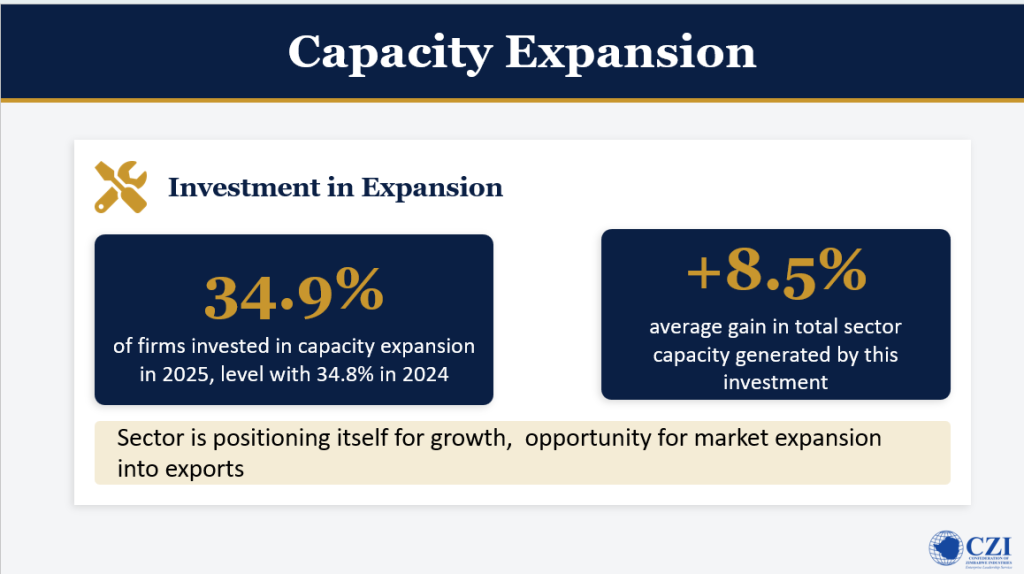
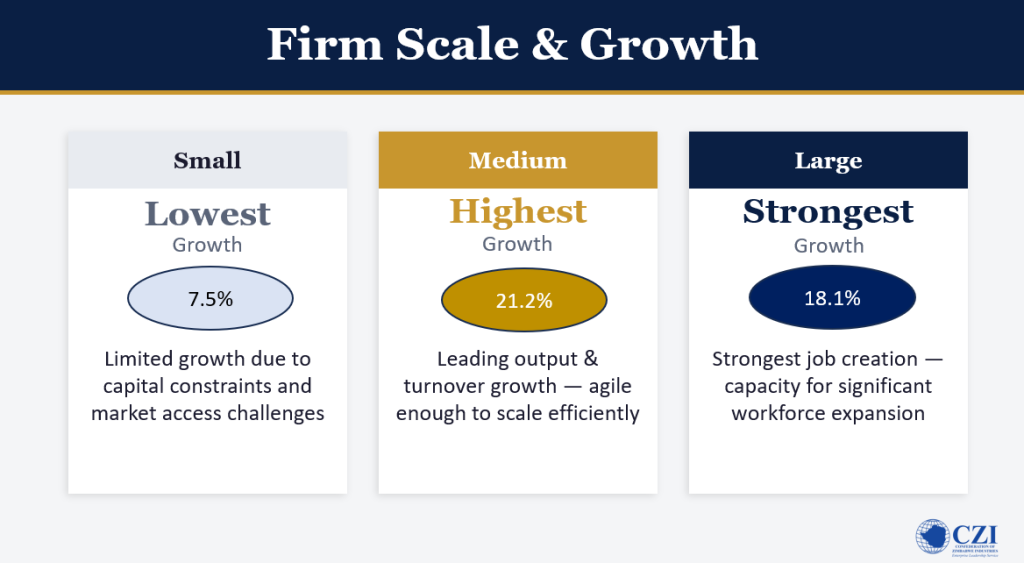
Medium-sized firms were the strongest performers, posting output and turnover growth of 21.2%. Large firms led on job creation, while smaller manufacturers lagged behind, held back by limited access to capital. Almost 35% of firms invested in expanding capacity, showing confidence in future demand.
Made in Zimbabwe, with imported inputs
Zimbabwe may have plenty of local brands on supermarket shelves, but many still rely heavily on imported raw materials. Manufacturers sourced 54% of their inputs from outside the country in 2025, up from 52% in 2023. Nearly 60% of firms said they import because the materials they need are in short supply locally. Exports remain a major weakness. Less than 5% of manufacturing output is exported. Firms cite high production costs, competition, transport costs and limited access to finance as the biggest barriers.
Technology pays, but adoption is slow
Only a third of manufacturers upgraded technology in 2025. Those that did recorded turnover growth of 18.4%, compared to 8.4% for firms that did not. AI adoption remains low at just 12%, mainly because of costs and skills shortages.
A shift away from permanent jobs
Manufacturers are increasingly relying on flexible labour arrangements rather than permanent staff. Some 36% of workers are now non-permanent, up from 28% in 2023, suggesting firms remain cautious despite improving business conditions.
New factories, new products
There are signs of renewal. Nearly 60% of manufacturing plants are less than 10 years old, while only 4% are more than 50 years old. Another 4% were commissioned in 2025. Manufacturers are also diversifying. The average firm now produces two product categories, and six out of ten make more than one product.
The US dollar remains king
Despite claims by authorities of increased ZiG usage, CZI’s survey shows that the share of revenue earned in US dollars rose from 65% in 2023 to 76% in 2025, reflecting the economy’s growing preference for dollar transactions.
Cautious optimism
Manufacturers are broadly positive about 2026. About 63% expect the sector to improve, while 55% are optimistic about the wider economy



