






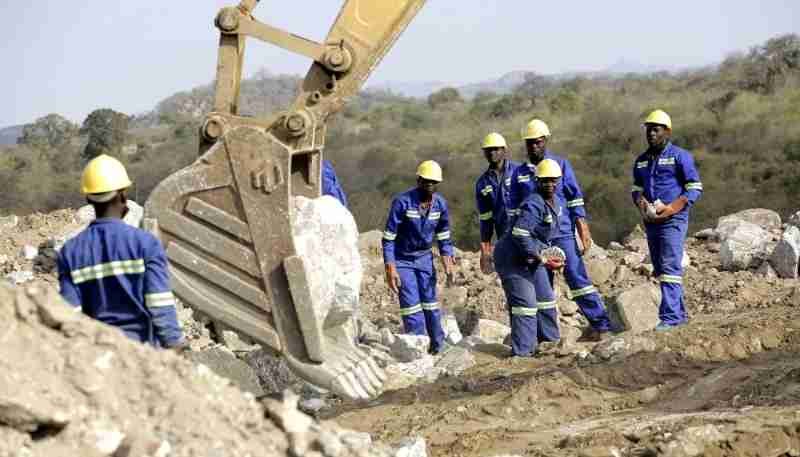
Sandawana Mine, the state-owned lithium producer, says it will miss the January 2027 deadline to move into lithium sulphate production.
Zimbabwe currently exports mostly lithium concentrates but wants miners to move into higher-value processing. From January 2027, producers are expected to stop exporting concentrates and instead produce lithium sulphate. To encourage investment in processing plants, the government charges a 10% export tax on concentrates, while lithium sulphate exports are tax-free.
Sandawana says it has stockpiled 2.9 million tonnes of lithium ore since January but is still short of the US$330 million needed to build a concentrator plant.
“As you are aware, in line with NDS2, we are expected to stop the export of concentrates in December 2026. On that basis, we are also in talks to ensure that we build a sulphate plant, which we intend to commence next year. However, we are fully aware that we are behind schedule,” Mutapa Energy Resources chief executive Innocent Rukweza told MPs visiting the mine.
He said Sandawana had raised just US$20 million from the domestic market, far below what it needs to get the project underway.
For now, the mine relies on a tolling arrangement with Gwanda Lithium Company, which has processed 310,000 tonnes of lithium concentrate to date.
Only one company has so far completed a lithium sulphate plant in Zimbabwe. Huayou’s Prospect Lithium exported Africa’s first lithium sulphate earlier this year after completing a US$400 million processing plant at Arcadia.
Kamativi, a former tin mine, is also producing lithium from old dumps and an open-pit operation under China’s Sichuan Yahua. The company is investing US$200 million in a lithium sulphate plant, expected to start production in July 2027, with annual capacity of 75,000 tonnes.