






Ahead of Zimbabwe’s planned ban on lithium concentrate exports next year, the government has told producers that have not yet upgraded to sulphate plants to process their material through companies that already have that capacity. But the country’s only lithium sulphate plant says it currently has no room to handle product from other miners.
Zimbabwe, Africa’s largest lithium producer, will ban lithium concentrate exports from January 2027 as it pushes miners to process more of the battery metal locally. Currently, producers process lithium into concentrates. From January, they must upgrade to lithium sulphate, a higher-value material used in battery chemicals.
To push for the upgrades, the government charges a 10% export tax on lithium concentrates, while lithium sulphates attract no export tax. Finance Minister Mthuli Ncube said in June that companies unable to build sulphate plants in time should enter tolling agreements with producers that already have processing capacity.
“We can’t expect everybody to come up with a lithium concentrator, it’s expensive,” Ncube said. “So they should sign MoUs with PLZ and Bikita Minerals. To us that will be adequate for as long as they will process their throughput through those two companies.”
But this may not be as easy as government hopes. While several plants are planned, only Prospect Lithium has been built. And the company says it has no capacity to take on lithium from other producers.
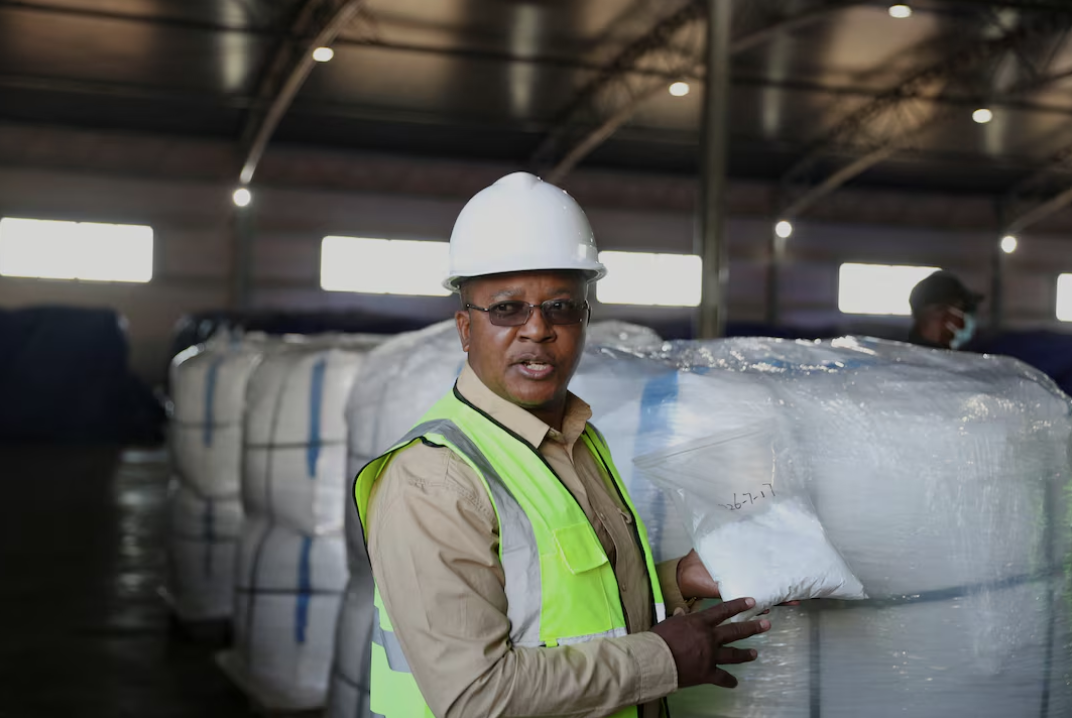
“We don’t have the capacity to process other minerals from outside. Our concentrator plant produces around 400,000 tons per annum, so we don’t have space for other players,” mine manager Mthokozisi Goliath said during a visit by Mines Minister Polite Kambamura last week. “For now, this (sulphate) plant only has capacity that can manage what we produce at the concentrator plant.”
Despite industry calls for more time, Kambamura said government is sticking to the January 2027 deadline. “We cannot talk of extending right now. We would like to urge all producers to stick to that deadline,” he said.
Sinomine’s Bikita Minerals and Kamativi Mining Company, the Zimbabwean unit of China’s Yahua Group, plan their own sulphate plants, although they are unlikely to be completed before January 2027. Chinese companies have invested about US$2 billion in Zimbabwe’s lithium mines and processing plants since 2021, giving them a dominant position in one of the world’s fastest-growing battery metals industries.
(newZWire. addtional Reuters)



