




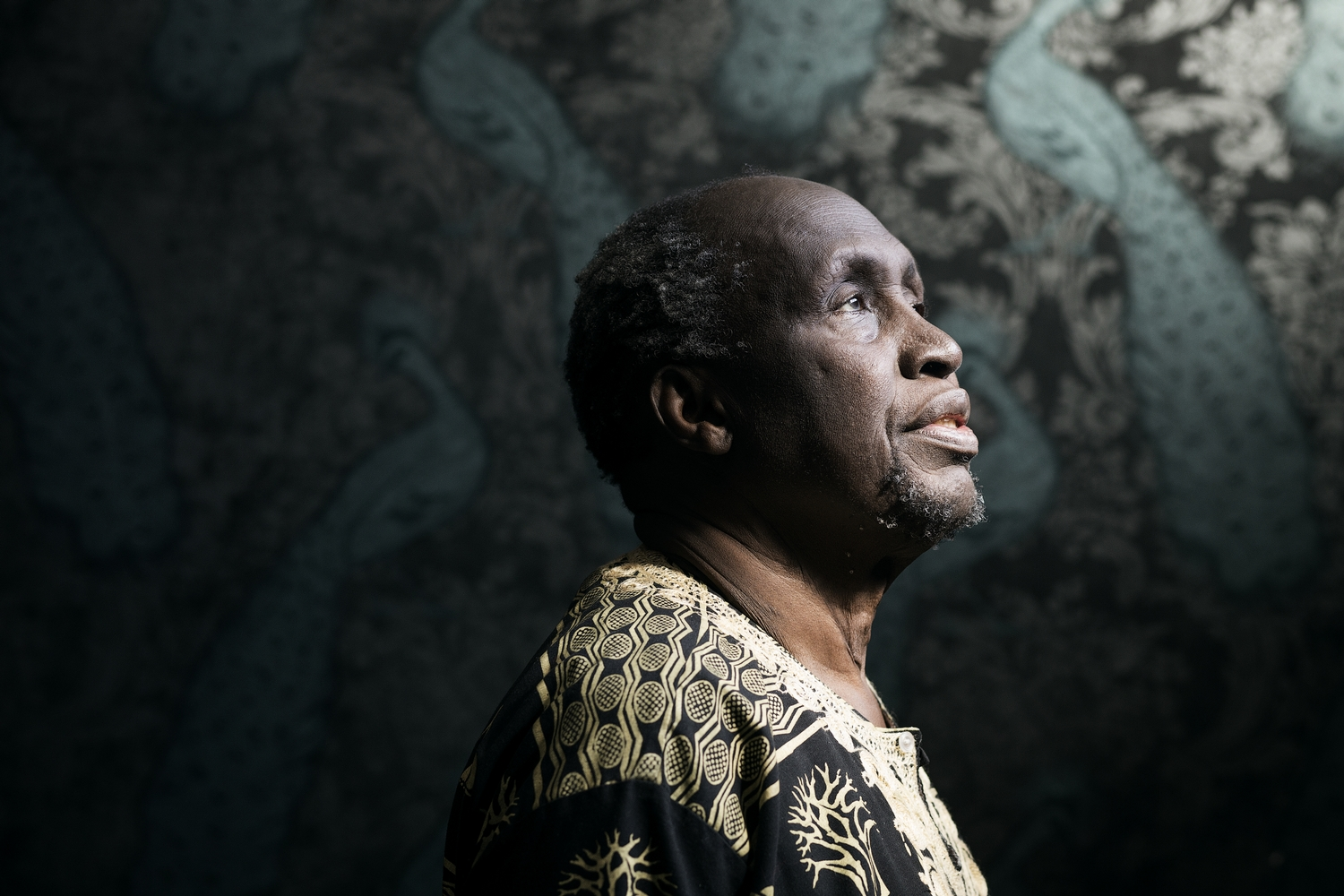
On 1 August 1982, Kenya Air Force private Hezekiah Rabala Ochuka attempted a coup d’etat against the government of Daniel Arap Moi. Ochuka, with dreams of becoming chairman of what he termed the People’s Redemption Council, was in power for a long six hours before his adventure was brought to a halt.
The attempted coup brought into sharp relief the tensions that had beset Kenya after independence on 12 December 1963 – the deferring of the dream that had fuelled the Mau Mau uprising.
In the aftermath of the failed putsch, Moi deepened his repressive tendencies and heightened surveillance. Hundreds of soldiers and civilians were rounded up, assaulted, tortured and imprisoned. An estimated 300 people (soldiers and civilians) died during the attempted takeover.
Academics, trade union leaders and activists were targeted. Writers and intellectuals such as Professor Ngugi wa Thiongo, Professor Micere Mugo, Ngugi wa Mirii, Dr Kimani Gecau and Shadrack Gutto had to flee Kenya.
Whilst wa Thiong’o found sanctuary in the UK and later the US, Mugo, wa Mirii and Gecau were warmly welcomed by the government of Zimbabwe.
Zimbabwe, a society in intellectual ferment
The Kenyan intellectuals were coming into a Zimbabwean society barely 36 months into its hard-won freedom. Still wrapped in the euphoria of independence and eternal gratitude to our benevolent father-president, we were thinking long and hard about the society we could create. We wanted a society that was the antithesis to a Rhodesia that had denied us land, education, housing and decent jobs. We would now put our dignity and identity at the centre of a new society. It was exciting. It was intoxicating.
Who better then to join us in rethinking the nation than those who had witnessed what could go wrong? Into the cauldron of the University of Zimbabwe went our Kenyan comrades. The departments of politics, sociology and English and the faculty of law had been infiltrated by thinkers such as Kempton Makamure (law), Rudo Gaidzanwa (sociology), Masipula Sithole (politics), Musaemura Zimunya and Rino Zhuwarara (English). The government itself had left-leaning senior civil servants with impressive academic credentials.
As if in coordination, the black and African academics in politics, law and English would begin to wage a war to transform curricula. This is where the Kenyan pan-Africanists aided our efforts. In law, committed Marxist-Leninists Shadrack Gutto and Kempton Makamure sought to make the law courses (property, family, tax) speak to the injustice of colonial Rhodesia and the need for redress. For example, in the Law of Property course, they included a contextual understanding of land and property relations on the basis that land had been a central grievance of our liberation struggle. Law could not be abstract, as it was the basis of codifying racialised dispossession and defending exploitative relations.
Jane Austen loses her pride
In the Department of English, pipe-smoking ancient professors insisted that Jane Austen’s works were the rites of passage for the African to understand the English novel. They held on to their canon of Geoffrey Chaucer, William Shakespeare, Henry Fielding and others as the only literature worth studying. But the question was not whether to study Shakespeare or not. It was about centring Africa – to have our stories, our history as the point of departure in the engagement with the Empire. After all, Chinua Achebe’s Things Fall Apart had been a response to the racist British historian Hugh Trevor-Roper’s assertion that we had no precolonial history: “there is only the history of Europeans in Africa. The rest is darkness”.
Kimani Gecau, together with Musaemura Zimunya, Rino Zhuwarara, Vimbai Chivaura and Tawana Kupe, fought relentlessly to decolonise the English Department’s curriculum. They brought in Zimbabwean Literature, African Literature, Caribbean and African American Literature courses and made them central. The Empire fought back viciously but by the time my generation came into the University of Zimbabwe in 1988, the war was nearly won.
We were fundamentally influenced by the lecturers and their courses and many of my peers would end up as leading professors of literature, arts and the media in Zimbabwe, South Africa, the United Kingdom and the United States of America. That is impact.
The cookie crumbles
By 1988 the independence honeymoon had evaporated as the Man from Zvimba and his gang of thieves realised they had unleashed a movement of ideas that could unseat them. The university lecturers and the students, in alliance with the Zimbabwe Confederation of Trades Union (ZCTU), had awoken to the need to confront a parasitic state that had set aside the aspirations of our people.
Enter Ngugi wa Thiong’o
The great Zimbabwean writer Charles Mungoshi was never overtly political, but I remain fascinated that he chose to translate Ngugi wa Thiong’o’s Grain of Wheat into Shona (Tsanga yeMbeu). The preamble to A Grain of Wheat reads: “Although set in contemporary Kenya, all the characters in this book are fictitious . . . But the situation and the problems are real – sometimes too painfully real for the peasants who fought the British, yet who now see all that they fought for being put on one side.”
Together with the Kenyan intellectuals who fled to Zimbabwe, Ngugi had been central to a people-centred movement in Kenya that produced plays that were informed and performed by peasants, workers and intellectuals. This solidarity was scary for the emerging black capitalists and their international handlers. Hence the high price intellectuals paid under the Moi regime.
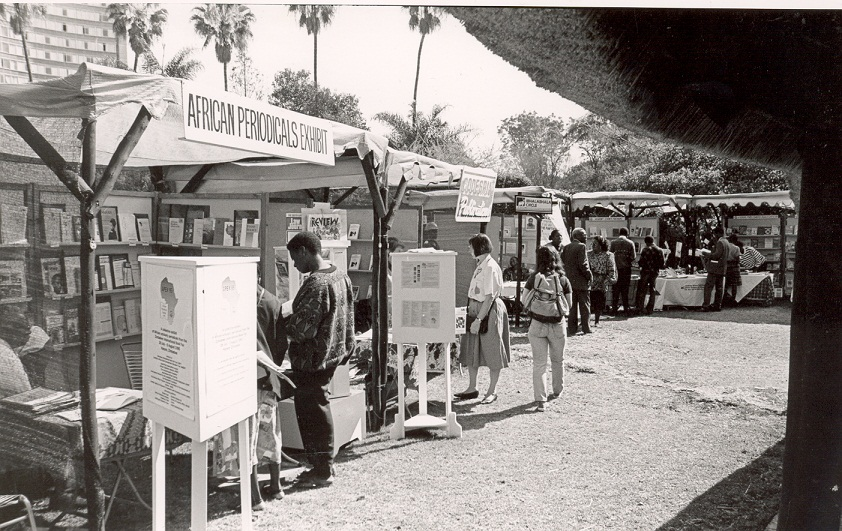
In 1987, the Minister of Education and Culture, Dzingai Mutumbuka, invited Ngugi wa Thiong’o to give the keynote address at the Zimbabwe International Book Fair (ZIBF). Ngugi’s address titled ‘The role of education for a national culture’ was a call to arms:
“…in a class structured society, or in a situation where one nation or race or class is dominated by another, there can never be any neutral education transmitting a neutral culture. For the oppressing class or nation or race, education becomes an instrument of suppression, that is an instrument for the conservation of the prevailing social order; and for the struggling class, race or nation, it becomes an instrument of liberation, that is, an instrument for the social transformation of the status quo. In such a society, there are in fact two types of education in mortal struggle, transmitting two opposed types of culture and hence two opposed consciousnesses or world outlooks.”
Ngugi had nailed the contradictions of this new nation called Zimbabwe – an educational system that looked towards an egalitarian ideal and a government of big-bellied parasites who saw the state as a national cashbox. Something had to give.
The student demonstrations of September 1988 would see the expulsion of Shadrack Gutto from Zimbabwe. His crime? Allegedly aiding protesting students to author an anti-corruption manifesto. Over the years the energy and intellectual vibrancy of the eighties and nineties would begin to fade.
The real ZANU-PF had woken up, and the intellectual spaces needed to be constrained.
Go well, Ngugi wa Thiong’o. We give thanks for the wisdom.
READ MORE FROM CHRIS
Mbinga rent seekers: 142 years after he died, here’s why Karl Marx is still alive
Madiro: The death of basic social etiquette
For the cruel and incapable African state, Trump is a wakeup call



