

Commentaries have long detailed, in graphic detail, how Zimbabwe sabotages itself with destructive economic policies. We know the how, yet there’s little talk on the why. Why do authorities happily preside over this brutal destruction of the formal economy? Is it deliberate? Is it incompetence? Is there a method to it? The answer, writes Perry Munzwembiri, is not as easy as it seems
“Zimbabwe is open for business” is a term bandied about with reckless abandon, particularly by government bureaucrats. So much so, that it’s now reduced to a political soundbite full of nothingness. What’s sadly manifest is the utter lack of thoughtfulness, intentionality, and—more worryingly—action in transforming this otherwise genuine objective to reality.
“Zimbabwe is open for business” is very loosely defined. Who is Zimbabwe open to? Why is it open? And how exactly is the country open for business?
Little wonder, then, that the very proponents of this supposed openness are the same people laying an unimaginable assault on the shrinking pool of legit, formalised businesses. How else do you explain raising the forced surrender threshold for export earnings? Forget the real, fundamental arguments exposing the gaping holes of such a policy—direct hits to profitability, cash flow, liquidity constraints, pricing pressure—and just consider how this shifts exporters’ incentives. What’s to stop them from channelling funds through offshore accounts to dodge this extra tax? Incentives for business and government are now grossly misaligned.
Or, shockingly, how do you reconcile forcing companies to report in ZWG as a functional currency when the government’s own data shows over 80% of economic activity in USD? This misguided policy serves political optics but clashes with economic substance. Its merits, if any, are shallow at best, decidedly destructive at worst. Who cares about global IFRS standards allowing functional currency choice based on the primary economic environment? Zimbabwe is open for business, they say!
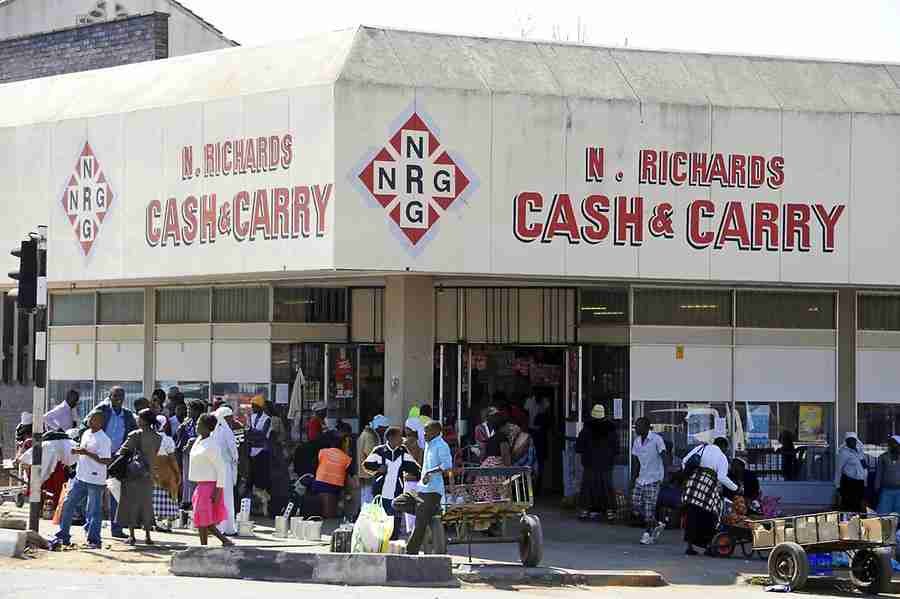
And not least is the sheer number of local taxes and regulations businesses must wrestle with. Take the case of beleaguered OK Zimbabwe: over 20 licenses formal retailers must secure to be deemed compliant. Still, Zimbabwe is open for business. Or so we’re told.
These aren’t just anecdotal gripes—ask the Horticultural Development Council, Electrosales, Simbisa or Delta. The urge to inflict pain on local businesses and citizens alike seems to burn in Harare’s corridors of power like the flame of a thousand suns. This is unfortunate.
This ever-growing scaffolding of bureaucratic regulation—taxes, export surrender requirements, licenses, and whatever else lurks between—has sped Zimbabwe’s march into the abyss of economic irrelevance. If Africa is the least productive continent by a mile, what then is Zimbabwe, especially given its slide since the new millennium? It’s a speck of a market, globally insignificant, yet we keep shooting ourselves in the foot, scoring embarrassing legislative own goals. The political elite won’t admit it, but most goods from Zimbabwe are of declining global importance. This trend will persist without herculean foreign and domestic investment to catch the industrialised world.
Commentaries have long detailed, in graphic detail, the economy’s decimation and how the ham-fisted regulatory approach betrays any sincerity behind the “open for business” mantra. Yet there’s been scant analysis of why. Why would authorities gleefully preside over this brutal emaciation of the economy and corporate sector?
In 2024, corporate taxes made up just 9% of government revenue, while VAT—an anti-poor tax—accounted for 26%. This should be flipped. Less noted, but no less pressing, is why business leaders stay mute amid this ruthless siege. Perhaps the arrests and cinema-style escapes of executives like Willard Zireva and Julius Makoni still haunt today’s captains of industry. Regardless, each passing day and policy screams to the world: Zimbabwe is not open for any business whatsoever.
But why?
Sheer, utter incompetence?
It’s the easiest explanation. Incompetence rears its head in ill-thought-out, uncoordinated policies—a failure to grasp the root causes of Zimbabwe’s economic rot, short-termism, a government of schemers whose political nous catapulted them to heights their competence can’t sustain. These are plausible drivers of the rut we are in, mirrored by half-hearted, half-baked solutions that dodge problems head-on. Consider this, facing a collapsing Zimbabwe Dollar – trading at 379:1 USD officially, far worse on the black market – the RBZ introduced gold coins in July 2022 to curb dollar demand. Priced beyond most citizens’ reach ($1,800 per coin), it was a flashy gesture that ignored the need for both monetary reform and industrial revival. Inflation remained in triple digits, and the parallel economy thrived, showing the move’s futility beyond a short-term headline grab.
Yet incompetence alone doesn’t explain the relentless anti-business bent. Policies like gold coins or forced ZiG reporting scream amateurism, but their persistence hints at more than bumbling—it’s a mask for darker motives.
Chaos can be profitable
To be blunt, Zimbabwe’s elite thrive in crises. The 2007-2008 hyperinflation enriched those with forex access; while land reform enriched loyalists with farms they didn’t work. Authorities have curated a system where disorder—hyperinflation, currency flops—breeds arbitrage opportunities for the powerful. It’s a government engineering chaos to fill its coffers, belying any “open for business” intent. The never ending economic mess aligns too neatly with elite interests.
Uneasiness with a thriving economy and entrepreneurial class?
Arobust private sector threatens ZANU-PF’s grip. Entrepreneurs with wealth and influence could fund opposition as seen with past business figures like Strive Masiyiwa, who left Zimbabwe amid tensions. A thriving economy would shift power from political corridors to boardrooms, diluting a well-entrenched patronage system. A booming business sector, especially urban-based, risks empowering critics.
I would go further to say, excessive licensing or forex grabs kneecap potential rivals, keeping entrepreneurs small, exiled or both. It’s a political survival tactic, not just economic folly. ‘Open for business’ stops at the party line, where history has shown, control is much preferable to prosperity.
A thriving business environment driving ZANU-PF into irrelevance?
A functional economy, fully integrated into global markets, industrialized, and competitive would inevitably render the ruling party’s nationalist rhetoric – sanctions blame, liberation war and land reform glory – obsolete. Think of recent electoral patterns in the region like Botswana, Mauritius, and to some extent South Africa, which saw opposition parties emerge victorious, at the expense of liberation war movements.
Perhaps the authorities are comfortable in a small, controllable pond. Granted, irrelevance isn’t immediate, but it’s a looming threat they pre-empt by strangling growth, nonetheless. A thriving Zimbabwe would bury ZANU-PF’s narrative and power, it appears. However, keeping the economy teetering though unattractive to the rest of the world, preserves its relevance, not the nation’s.
The answer: An intricate web
In my mind, all these reasons interlock, forming a vicious cycle. Incompetence provides cover for looting, which in turn sustains a weak economy that ZANU-PF fears losing control over, ensuring its political survival over irrelevance. The scaffolding of bureaucratic regulation isn’t random, it’s a deliberate cage. The 9% corporate tax vs. 26% VAT split in 2024 isn’t a fluke either: it’s a system taxing the poor to spare a crumbling elite.
‘Zimbabwe is open for business’ rings hollow against a reality of suffocating policies and economic decay. Why this betrayal? Incompetence is real but it’s a symptom, not the disease. ZANU-PF thrives in chaos, looting through disorder while strangling businesses that could rival its power. A thriving economy threatens both its grip and its relevance, so it opts for stagnation over progress. The mantra is a mirage, masking a government that’s open only to its own survival—not the nation’s.
ALSO READ |
Out of fashion and on sale for a dollar: The fall of Truworths traces the long road to Zimbabwe’s retail turmoil
Mega Market MD: Why we need formal retail
Want to open a supermarket? Get ready to run this 25-permit marathon