




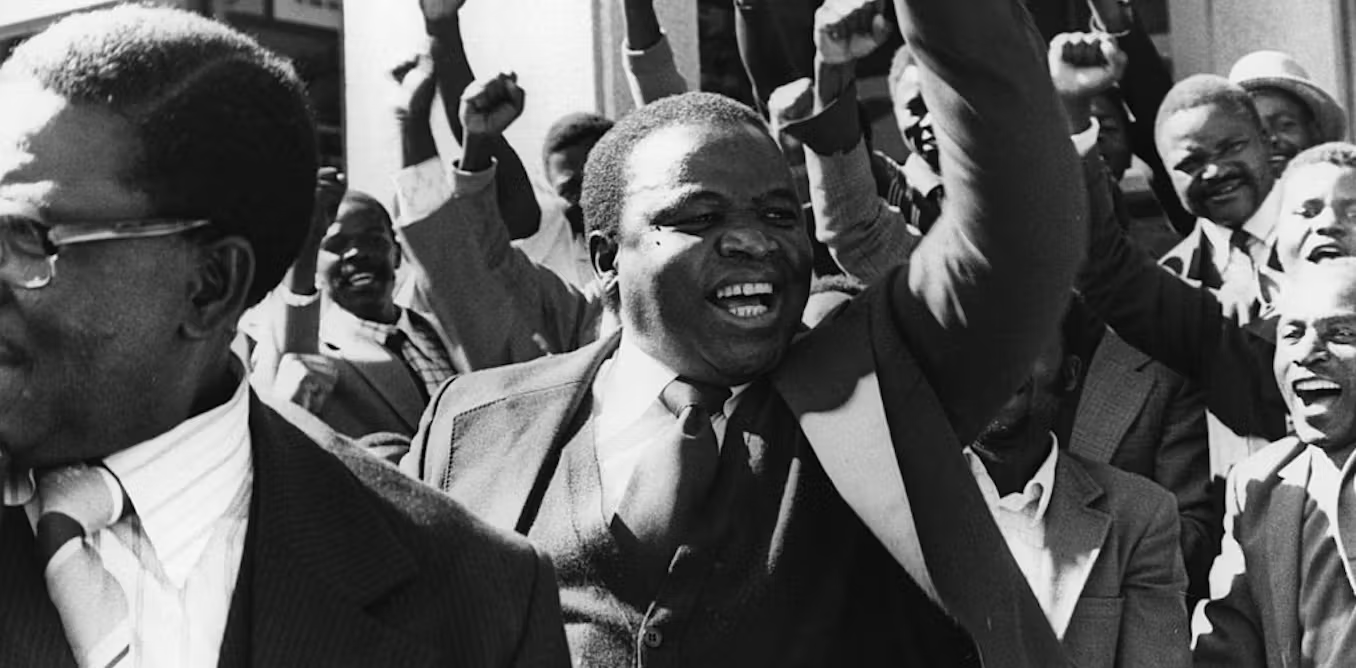
I have been digging into the archives and spending time wondering about things from the past that do not affect the GDP of my household. I have been reading quite a bit of material on the late Zimbabwean nationalist and political leader, Ndabaningi Sithole, who died in the United States of America in 2012. Sithole’s political history has its highs and lows, but I am most fascinated by Sithole the writer and intellectual.
In reading about him, I stumbled across an article in the Journal of Southern African Studies by one Michael O. West, an American academic who focused on a 1947 student strike at Dadaya Mission where Garfield Todd was the principal and Sithole was a teacher. What is intriguing about the strike is that although it led to a nasty confrontation between Todd and Sithole, it is played down in the articles and books on both men. Indeed, Sithole’s influential book on the continent’s anticolonial struggle, African Nationalism, has a foreword written by Garfield Todd.
But first, let us get some background to our two antagonists.
Ndabaningi Sithole – when the Ndau is Ndebele
Bigots have a way of reducing identity to surnames and lineage. I wonder what they would make of Ndabaningi Sithole’s identity. Sithole’s father was Ndau. He left Gazaland, Chipinge, as a young man and settled in Matabeleland. There, he married a Ndebele woman, Canaan Mafu.
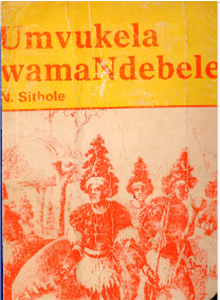
Ndabaningi was born on 21 July 1920 in Nyamandlovu, Umguza and grew up in the same province. An indication of the depth of his socialisation as Ndebele, he wrote the historical novel Umvukela WamaNdebele (1956). In 1954, when Sithole was teaching at Mount Selinda (Chirinda) in Chipinge and won a scholarship to study in the United States of America, there were some grumblings by local folks that he was not a local! A lesson in how we play our different identities strategically. So much for the Ndonga symbol and claims of being a Doda.
Garfield Todd – the New Zealander who became Zimbabwean
History is filled with revisionism. It is also true that people evolve in their thinking and in their actions. There are acres of words in praise of Garfield Todd, from the time he was ousted as Prime Minister in 1958 by the white hardliners in what was termed a ‘cabinet coup’, allegedly for advocating for the extension of voting rights to Africans of certain means and education. There are many good things to say about Todd and people like the late Aeneas Chigwedere and Judith Todd (daughter to Garfield) have done that. Then, of course, there are some folks from the Church of Christ who have lionised Todd in their article and websites. It is all well-deserved for someone who, among many other deeds, materially supported the comrades during the liberation struggle.

It is also true that Todd was a man of his time and exhibited unsettling tendencies prior to his 1958 ouster.
Reginald Stephen Garfield Todd was born in 1908 in New Zealand and emigrated to Southern Rhodesia in 1934 as a Protestant missionary seconded to run the Dadaya New Zealand Churches of Christ Mission School. He improved the initial small mission there, buying land in the area which became the Hokonui ranch – a name recalling the town in the Southland region of New Zealand.
The defiant teacher Sithole under headmaster Todd
So here we are in 1947 at Dadaya Mission School, where our headmaster is Mr Garfield Todd and one of the teachers is Mr Ndabaningi Sithole. The latter had been in Dadaya’s Class of1939 and had gone to study at the Wesleyan Methodist Waddilove Training Institution as well as through correspondence courses. Now he was back at his alma mater, reunited with his principal, and in the new role of a colleague.
This period is the aftermath of the Second World War. Economically, there are fiscal austerity measures in place and these impact boarding school food in terms of quantity, variety and quality. In the wider society, the educated African elite is losing faith in the possibility of a multiracial partnership and the extension of a voting franchise based on property and education.
In 1944, Sithole had expressed in writing the frustration of the African elite at the legal and social barriers to mobility:
We need high education, but high education needs high posts. To educate the African well and then close to him all doors of responsible positions is to turn him into a useless agitator. Doors of commerce, industry and other advanced trades should be opened to those Africans capable of doing the work efficiently. We need schools superintendents and principals, postmasters in Native Areas and many officers for public services. Should provision be made for this, then the New World Order is meaningful to the African…
Brave girls, cowardly boys
In July 1947, female students at Dadaya, angered at being caned, walked out of class in protest. Principal Garfield Todd blamed what he termed a ‘riotous assembly’ on the work of agitators. Thirty students were arrested and convicted, whilst another 170 were expelled. Four teachers, David Mkwananzi, David Ndoda, Jonah Mangwiro and Ndabaningi Sithole, were fingered (hahaha) as the ringleaders and fired.
Several boys and male teachers agreed to testify against Sithole and others. Apparently, they were aggrieved that Sithole had, in a juicy manner, questioned their masculinity.
Vindictive Todd goes to war
Sithole moved to Tegwani Mission. But Todd was not done yet. Although they would later make up and become close partners in the struggle, Todd went to extraordinary lengths to try to get Sithole punished for his alleged role in the Dadaya Mission strike.
Todd demanded that the Native Affairs Department bar the dismissed teachers from the profession for five years, failing which he would close down Dadaya. Enraged that the ‘ring-leaders,’ Sithole and Mkwananzi, had found new teaching positions at other schools, Todd complained directly to the prime minister, criticising the ‘astounding weakness’ of the director of native education handling the case.
Todd also demanded an official inquiry into the strike, but he must have been frustrated by the director of native education whose limited inquiry concluded that the case against the teachers was ‘not proven’ and recommended that no action be taken against them. To raise Todd’s hypertension, the education department’s investigator doubted seriously the credibility of the witnesses the Dadaya principal had presented. Case closed.
Ndabaningi defends himself from Todd’s accusations
From Ndabaningi Sithole’s point of view, he stated that his dismissal was motivated by two factors. He claimed that his initial estrangement from Todd was due to his leading role in 1947 in demanding back pay for teachers who had been granted salary increases by the government. Todd had refused to pass along these increases immediately, saying the money would cover school debts.
And then the intriguing part. Sithole also claimed that Todd ‘hated’ him because of a joint business that had gone sour. In return for helping him and another African acquire a store in the Lundi Reserve, Todd, Sithole said, had demanded a secret partnership in the business. However, when business started going badly, Todd seized stock and also even tried to claim the building. Sithole stated that it was for these reasons that Todd wanted to take him out and not for anything to do with the strike.
Ten years later, the two would be close enough friends for Todd to write the foreword to Sithole’s African Nationalism (1959). Todd even tried to get Sithole to come back to Dadaya, but the man chose Mt Silinda instead, from where he would leave for studies in the US from 1955 to 1958.
Both Ndabaningi Sithole and Garfield Todd are long gone. All we have are some records, some gaps and some conjectures. Still, a fascinating slice of our past especially in a time of erasure of people who do not fit the narratives of those in power.



