




In 1976, Bob Marley released the song War as part of his album Rastaman Vibration. The lyrics were taken from a 1963 speech to the United Nations by Emperor Haile Selassie of Ethiopia.
This song is very poignant at this time when the world is witnessing ethnic cleansing in real time. However, the perpetrator is a protected bully that has been given carte blanche to massacre a whole people and force the remnants into exile. In 1945, the protectors of the bully declared “never and never again”. But here we are…
When a speech becomes a song
Bob Marley’s War has four verses and a simple melody. The first verse goes:
Until the philosophy which holds one race
Superior and another inferior
Is finally
And permanently
Discredited
And abandoned
Everywhere is war
Me say war
In December 1948, in Paris, the United Nations General Assembly gave humanity a beautiful document called the Universal Declaration of Human Rights (UDHR) and whose Article 2 was very clear in what the big powers and the free states were signing up to:
Everyone is entitled to all the rights and freedoms set forth in this Declaration, without distinction of any kind, such as race, colour, sex, language, religion, political or other opinion, national or social origin, property, birth or other status. Furthermore, no distinction shall be made based on the political, jurisdictional or international status of the country or territory to which a person belongs, whether it be independent, trust, non-self-governing or under any other limitation of sovereignty.
Death of international morality
We are witnesses to double-speak and disingenuousness by our erstwhile preachers and teachers of human rights. As television images of starving children and civilians denied medical services flood our screens, the big powers can only cover their private parts with a fig leaf. The hypocrisy in observance of international laws governing warfare has confirmed what we always suspected.
Bob Marley’s fourth verse warns:
That until that day
The dream of lasting peace
World citizenship
Rule of international morality
Will remain in but a fleeting illusion to be pursued.
But never attained
Now, everywhere is war.
War
The price of speaking out: the political economy of solidarity
Except for the Republic of Ireland and its ethical and defiant citizens, we have all been bullied into silence. The threats to our countries’ economies, the threats to individuals and access to educational and business opportunities, and the threats to funding to civic actors mean that we must whisper our true feelings in the corridors and not on the podium.
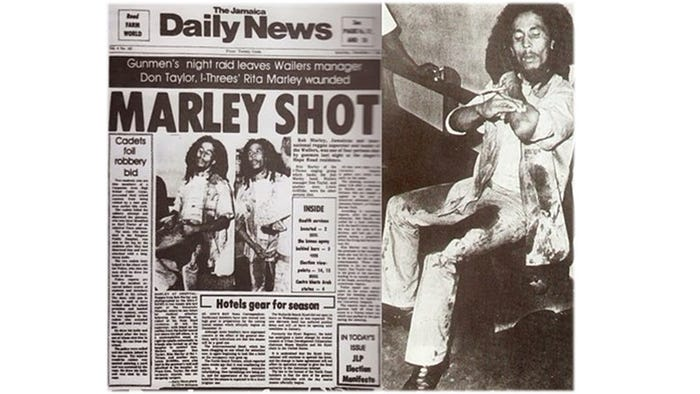
The re-emergence of totalitarianism has occurred at a time when Africa is grappling with a serious ideological and leadership deficit. The generation of Nkrumah, Nasser, Nyerere, Kaunda, Neto, Tambo, Mugabe and Nujoma is gone. For whatever their shortcomings, the leaders understood the interconnectedness of our political struggles. They would have strode on to the international platforms, waved their handkerchief, finger or staff, and condemned genocide, ethnic cleansing and settler colonialism.
We are in the age of the self-serving and vacuous political and business leaders who link foreign direct investment with their personal business interests. They dare not speak out of turn. At the very least, you would have thought that the upheaval in global trade would drive our leaders to accelerate intra-Africa trade, but that is giving too much credit to the watermelons that sit in our government offices.
For those of us outside state power, there is an urgent need to rebirth a progressive Pan Africanism that is underpinned by international solidarity. Bob Marley has the last word:
And until that day
The African continent
Will not know peace
We Africans will fight; we find it necessary
And we know we shall win
As we are confident
In the victory
Of good over evil



