


By John Legat, Non-Executive Director, Imara Asset Management
In 1993, when as an eager, young and excited fund manager living in London, I discovered many opportunities in South Africa and Zimbabwe that, by comparison with other emerging countries in the World, looked too good to be true. I was not the only one, and in time, Zimbabwe became a part of the emerging market indices created by the IFC, the International Finance Corporation, putting the country on the investment map.
Now that I am a rather older and battle-worn fund manager living in Harare, I am excited again when I look at the valuations of businesses that I have now been analysing for years and whose management have become my compatriots.
We cannot solely blame the foreign investor for the lack of interest with the ZSE. Pension funds have historically been one of the largest owners of listed assets in the country, accounting for close to half of their assets. Over the past nine months or so, many pension fund trustees have pressured their asset managers to sell any ZWG asset, even though their businesses are almost entirely in USD; the only aspect that makes them a ZWG asset is their reference share price.
Sadly, the local pension fund industry has had to come to terms with the extraordinary push toward investing in alternative assets that was all the rage three years ago. “Alternative” being anything other than listed equities or money market assets; an asset class that was gaining acceptance globally where such assets existed with a viable model. Sadly, not in Zimbabwe. Most projects that we looked at did not have the legs, and certainly not in the ZWL era. Our professed negativity toward such assets was not popular with our clients. Today, too many pension funds are heavily weighted toward property (which is overvalued in our view) and alternative assets (which have not been written down to reality and have no clear exit mechanism in place), leaving the only liquid assets as money market and the ZSE/VFEX. These have continued to shrink and form a small portion of pension fund assets.
The latest IPEC 2025 Quarter 1 Pensions report is revealing. Listed equities, cash and money market investments make up just 25% of the assets of the country’s pension funds, a tiny amount. As pension funds require liquidity to meet ongoing fund expenses, pension payouts, etc. forget the overvalued and illiquid property assets and unsellable alternatives, sell the listed entities such as Delta or Econet; that’s where the liquidity is. Yet these are precisely the assets the pension funds need to be invested in. Afterall, such businesses pay USD dividends on a regular basis! The property assets and the alternatives pay little return if anything and should, likely, be written down in value to reflect underlying performance. The fact that they are not being valued correctly is only making the situation worse; overvalued pension funds lead to overvalued pension payouts, implying further pressure on the ZSE/VFEX in the absence of reasonable contributions.
The result is a self-fulfilling prophecy. Due to notable selling pressures to meet liquidity needs, prices of assets on both the ZSE and VFEX are very low, and that has led investors to panic. This further fuels the narrative – false in our view – that stock markets are poor at maintaining value, yet history suggests otherwise. The stock market’s daily mark to market attraction can also be its ‘downfall’ leading to overcorrections. On the other hand, there is an incorrect assertion that all other non-listed assets have values that continue to trend higher. In most cases, these are all mark-to-market values adjusted (upwards mostly) in line with exchange rate movements, not reflecting the underlying performance of the respective asset. The intrinsic values of ZSE/VFEX assets have notably increased with way higher yields than you can get from a property investment and they have enhanced exit mechanisms.
____
Not surprisingly, there is disillusionment with the pension fund industry in Zimbabwe, as indeed is the case elsewhere in the World. Pensions, or put another way, savings are a critical part of life, especially toward the end of life when earnings from a long-term career fall away. The problem in Zimbabwe is that monthly payments to pensioners are small and, in many cases, meaningless. For current pensioners this may reflect the poor performance of pension funds because of high It can also be the result of low contribution rates by the employee and the employer during their working career; small contributions mean lower payouts. There is further pressure on pension fund trustees from their members who would rather have the money now, rather than being paid into a pension fund. That of course defeats the object as pensions are tax efficient savings. If anything, contributions need to be increased
A similar exercise could be done in Zimbabwe. Alternatives should be considered in a broader context. Exposure limits, ongoing clearer valuation mechanisms and clear exit structures are critical. A look around most CBDs shows several white elephants. It is only a matter of time, which may already be happening, before the chickens come home to roost. Trustees need to be more vigilant and ask the right questions of their alternative and property managers.
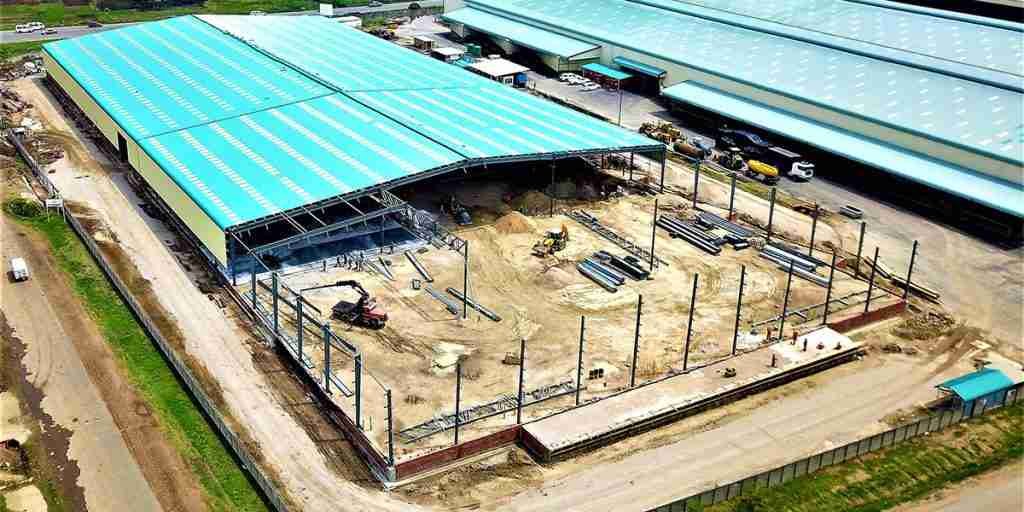
Bottom line, the ZSE has had to contend with disillusioned foreign investors as well as local pension funds who have been selling ZWG assets seemingly at all costs and with little regard to valuations of the assets that they are selling. This is exactly the time when long term contrarian investors, as immortalised by the great and late Charlie Munger or Warren Buffet, step in. To illustrate our point, let’s look at two examples of ZSE listed entities; Delta and Econet. Both companies are predominately USD based; their sales are largely USD, they account in USD, and they pay their dividends in USD. Their share prices however are denominated in ZWG. Both Econet and Delta have, over recent years, invested substantial amounts of capital into expanding and modernising their businesses, and improving their route to market distribution systems. Delta last year added about 30% to its lager beer capacity; so strong has demand been since then that they need to install more capacity to meet the growing demand. Econet has also experienced rapid demand in both the mobile network operations and financial technology (FinTech) segments recording strong growth. In their financial year to end February, voice usage rose by 23% while strong demand for data services saw the traffic increase by 36%. Both companies are reporting strong consumer demand with no sign of a slowdown.
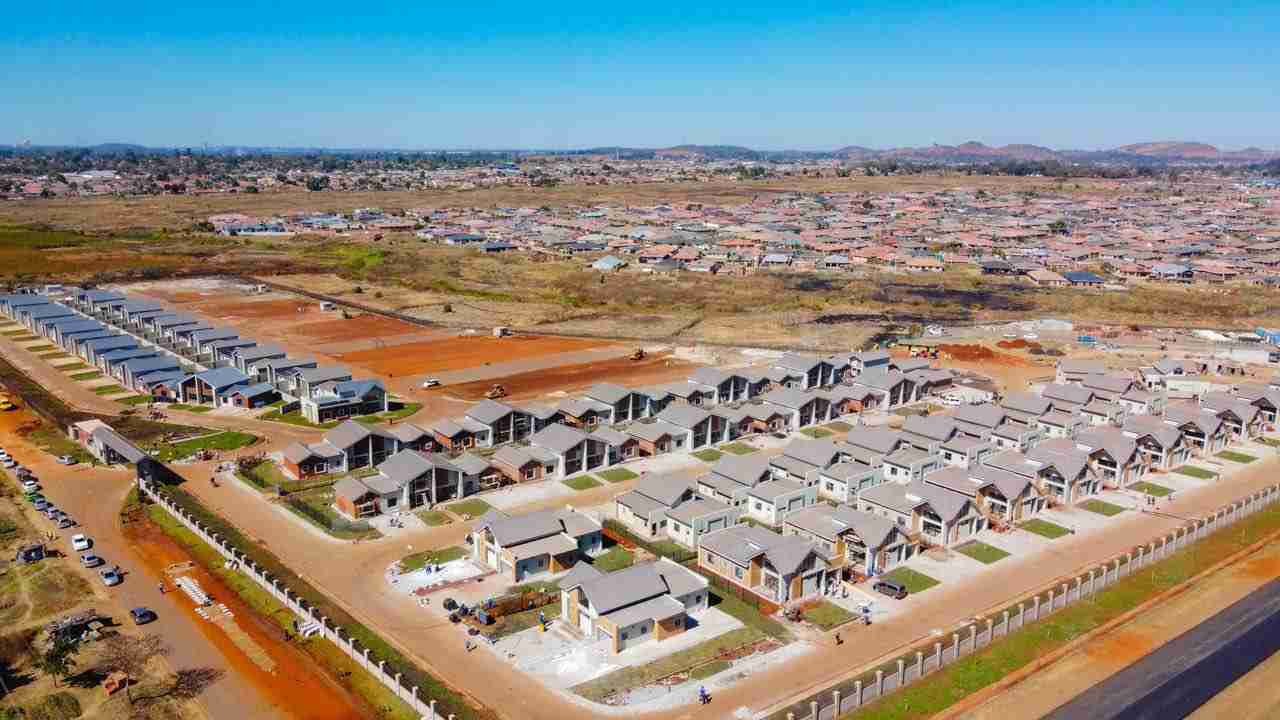
Not surprising perhaps given the strong gold price this year, increased gold output from artisanal miners, the best tobacco season ever with record volumes and decent prices, not such a bad maize crop and increased output of potatoes which are growing in popularity. Platinum, one of Zimbabwe’s largest exports, has seen its price rise by a vital 40% so far this year which will come as a huge relief to Zimplats and Valterra’s Unki mine. Meanwhile inflows of USD from the diaspora are as strong as ever. The economy, largely driven by the informal sector, is growing rapidly as a result. Disposable incomes are not being channelled through the banking sector but into property and new homes, as the cities and towns expand rapidly from their centres. This is proving a bonanza for the building material manufacturers and suppliers and is encouraging fast food companies to expand into the new towns, and manufacturers to supply this market via container outlets and on trucks.

___
Any foreign investor who had not been to visit would be staggered by the changes that have taken place all around the country, whether it be on the farms, in the towns and cities, or the many infrastructure developments including private sector shopping malls or public sector road and airport expansion. In most other countries, such economic growth should have been reflected in their stock markets. Zimbabwe has two markets and neither have performed well and are now arguably cheaper than in the 1990s.
Delta is valued at less than US$500 million, taking an exchange rate of around ZWG33 to the USD. Econet is worth less than US$300 million; both companies have a huge market share and little foreign competition. Innscor’s market value is a mere US$270 million. These are insanely low valuations given the growth that these blue-chip businesses are experiencing. For perspective, with regard these market valuation numbers, Econet has, and will continue to spend US$100m each year on capital investment, funded out of free cash flow; Innscor has similarly been spending US$70 million per annum to expand capacity. That’s how low these market valuations are.
Politics have always worried foreign investors and who can blame them given Zimbabwe’s reputation. Back in 1993, the then President Mugabe was seen at investment conferences in London; Zimbabwe had a one-party State. In 2025, Zimbabwe effectively has a one-party State again, the main opposition having been split apart and some argue, infiltrated, since the elections in 2023. In short, there is some measure of ‘political stability.’ Zimbabwe is being removed from the international sanctions lists, including the US OFAC list in 2024. The UK has been re-engaging Zimbabwe for the last few years, with a recent formal visit to the country by the UK’s Minister for Africa, Lord Collins. Politics may not be perfect, but it is much less relevant today than in the past and should not be of concern for a foreign investor, as was the case in 1993.
We have been undertaking several management visits of late. The underlying message is that growth continues in most sectors, with even formal retail showing early signs of recovery. One of our small/mid capitalisation holdings, is enjoying a better year. One aspect we were amused to hear was that since the bulk of their earnings are local and in US dollars and because they have to pay certain taxes in ZWG, which remains illiquid in the foreign exchange market, they are choosing to export some products which forces them to surrender 30% of their export revenues to the RBZ in exchange for ZWG, which they then use to pay those taxes. Go figure, export simply to earn ZWG! Once again, Zimbabwe scores a first.
We believe that Zimbabwe’s two stock exchanges are perhaps the cheapest they have been for a very long time, if ever, given the USD dividend yields that are on offer. The valuations and recent price history are in no way reflecting the growth and development that we have enjoyed in the economy in recent years, and, as a result, the growth in corporate revenues themselves. Our pension fund clients, who can now use their dollar inflows to buy these great businesses, or indeed wealthy private clients and businesspeople, should take advantage as we believe there is nothing to lose at these levels. If I were a young (or old for that matter) and eager fund manager or analyst based in London, Chicago or Cape Town, a visit to Zimbabwe should definitely be on the agenda.
___
Article is an extract from John Legat non-executive director of Imara.
ALSO READ |
EXPLAINED | The hidden costs that make Zimbabwean property so expensive