


Pedestrian Opinion with Mike Murenzvi
“Play by the rules, but be ferocious.” – Phil Knight
In Public Notice 60 of 2024 issued on Friday, 9 August 2024, the Zimbabwe Revenue Authority (ZIMRA) announced that fuel tankers carrying product across the border using Zimbabwe as a transit country would be required to pay full duty and levies and be refunded on confirmed exit out of Zimbabwe.
This move was brought about by Finance Minister Mthuli Ncube in his Mid-Term Budget Review. He lamented the increased incidents of fuel transit fraud. He stated: “Currently, consignments for traffic in transit are secured by Transit Bonds guaranteed by Insurance Companies and/or Banks. In addition, high penalties for violating the legislation have been adopted.”
“Notwithstanding the current mitigatory measures, incidences [sic] of Transit Fraud continue unabated.”
“I therefore propose to secure duty and levies on fuel imported under Removal in Transit (RIT), by payment of duty at the Port of Entry. Such duty and levies shall be recovered on acquittal at the Port of Exit. This measure, which takes effect from 1 August 2024, will not apply on fuel uplifted from the National Oil Infrastructure Company, Msasa Depot.”
The problem being addressed
Every so often, fuel trucks in transit through Zimbabwe to Zambia or the Democratic Republic of the Congo (DRC) are diverted and offloaded within Zimbabwe. That smuggled fuel is consumed duty-free within the country, with the sellers often charging nearly full price for it and sharing part of the proceeds with the transporters.
In November 2023, former deputy Finance Minister Terence Mukupe and three truck drivers were sentenced to three years in prison and fined US$12,780 each for smuggling approximately 138 000 litres of diesel and falsely declaring the transit at Chirundu Border Post back in 2017. The trucks entered Zimbabwe from Beira destined for the DRC. By the time they arrived at Chirundu, the diesel had been replaced with water.
Existing mitigatory measures
Until now, all transit trucks have been sealed with special electronic seals at the port of entry. These seals are meant to ensure that the contents of the vehicle cannot be accessed and to track the movements of the vehicle from the port of entry to the port of exit. At the port of exit, the vehicle is inspected for signs of tampering. When the customs officers are satisfied with the condition of the vehicle, it is cleared as a proper transit, and the seal is removed for it to cross into the next country. Despite a few incidents of transit fraud, the system has worked reasonably well.
What do these new measures mean?
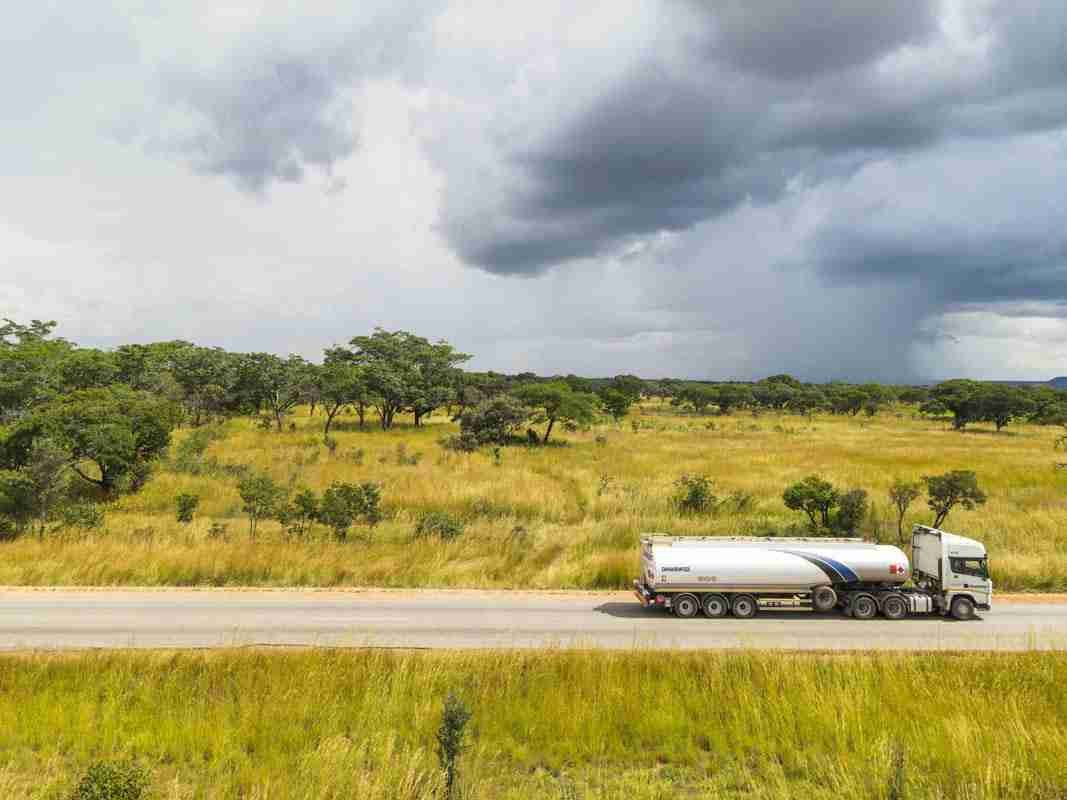
Petrol, diesel, paraffin, and jet A1 (aviation fuel) cross in transit from Beira, Mozambique or other points in South Africa to Zambia and the DRC. This is often done via road tanker trucks. The alternative means for the Beira corridor is to pump the fuel via pipeline into Feruka or Msasa depots and the trucks uplift the product from there.
Now, transit trucks must pay duty and levies for the fuel they are carrying by the time they arrive at the port of entry. These duties and levies are currently, USD 0.517 per litre of diesel, and USD 0.537 per litre of petrol.
What does this mean for truckers? A standard road tanker can carry up to 40,000 litres of fuel. Therefore, the charge translates to about USD 21,500 per truck. This amount is said to be recoverable once the truck has successfully exited the country.
Knowing ZIMRA, as we do, they are very quick to collect money and very slow to refund it. There are likely going to be many hoops to go through before such funds can be released back to the person who paid them.
Who pays the duty?
The Public Notice states that “consignees and/or their representatives should approach ZIMRA at the port of entry to initiate the fuel clearance and payment process.” The consignee is the end receiver of the fuel in the foreign country. A representative of said consignee can be the customs clearing agent or the transporter.
Practically speaking, the transporter bears the costs of the preexisting measures, as they carry the risk of such problems.
Let’s consider a modest fuel transportation company that operates five road tankers. If they receive multiple delivery orders at the same time, they will need to deposit US$107,500 with ZIMRA to clear their trucks. In the case of a large order, the funds will be held by ZIMRA until all deliveries are completed, to facilitate the payment and refund process through an account held with ZIMRA.
A large transport company operates a fleet of over 50 road tankers, each typically running in different directions. It is reasonable to estimate that half of their fleet will need access to these funds, representing an outlay of over US$500,000. What transporter has that kind of money just lying around?
An exporter or consignee would be very unwilling to part with millions of dollars to sit in Zimbabwe, earning no interest, simply to facilitate the delivery of their product when other easier and cheaper avenues exist. Here lies the irony of touting improvements in the ease of doing business, and then placing walls along the way.
Avoidance of Zimbabwe transit
Transiting Zimbabwe has been a nightmare for Southern African Transporters for many years now. A dilapidated road network, high road user fees and taxes, extortionate traffic police, and slow customs processing have been some of the numerous complaints levied against the country.
A few years ago, Botswana and Zambia commissioned the Kazungula Bridge which replaced the ferry crossing from Botswana to Zambia. This bridge effectively cut out Zimbabwe from the South Africa-Zambia-DRC transit route and removed a lot of potential revenue and downstream benefits off the board. This isn’t to say that all traffic on that route has been diverted away from Zimbabwe, but the bridge provided a viable alternative route.
On the fuel side, the Beira corridor is often the cheaper transport route to Zambia and the DRC. However, an alternative exists in Dar es Salaam. International oil companies generally don’t like multiple handling of their product as it increases costs unnecessarily. These measures will push them to consider pumping product into NOIC via pipeline and having trucks uplift directly from Zimbabwe as opposed to the Beira. While this would increase throughput and usage of the pipeline, the cost-benefit analysis lies outside the control of Zimbabwe. We are at the mercy of our government’s decisions.
Is this new measure supported by legislation?
At the time the Public Notice was issued, there was no existing legislation to support these measures. The Notice specifically references only the Minister’s Mid-Term Budget Review Statement and nothing more. This is a classic case of putting the cart before the horse, a worryingly common practice in tax revenue collection. The overzealous and heavy-handed approach of the tax authorities has become the norm. They do this confident that any legal challenge against them will take an inordinately long time to be resolved, ultimately to the detriment of the business challenging their actions.
This heroes’ weekend and the subsequent week will be interesting for fuel transporters. They can expect long delays stemming from an administrative measure with no legislative support.
_______________________________
Mike Murenzvi writes in his personal capacity and his views are not associated with any organisation he is, or may be, affiliated with.
ALSO READ | The Game Plan | In the region’s worst place to run a trucking business, Unifreight is buying more trucks



