


By Bernard Mukwaira
Sub-Saharan Africa remains the region with the largest electricity access deficit in the world—and the numbers are staggering. According to the World Bank’s Energy Progress Report, while 91% of the global population now has access to electricity, Sub-Saharan Africa accounts for 83% of the global access deficit. Eighteen of the 20 countries with the largest electricity access gaps are in this region.
The top three—Nigeria (86 million people without access), the Democratic Republic of Congo (78 million), and Ethiopia (55 million)—together represent nearly one-third of the global electricity access deficit.
In Zimbabwe, only 50% of the population has access to electricity, with a stark urban-rural divide: urban areas enjoy coverage rates three to five times higher than rural areas.
The causes of this widespread energy poverty in Sub-Saharan Africa are multifaceted, involving both supply-side challenges—such as inadequate generation, transmission, and distribution infrastructure—and demand-side barriers, including affordability, low-income levels, and limited consumer financing options.
Zimbabwe’s electricity sector faces a complex set of challenges: insufficient generation capacity, limited rural electrification, low willingness, or ability to pay, and a lack of clean energy production. These issues are further compounded by entrenched, centralised thinking about how electricity should be generated and distributed.
The prevailing model—where a vertically integrated, state-owned utility is responsible for generation, transmission, and supply—has proven inadequate in meeting the country’s growing and diverse energy needs. In response, some have advocated for privatisation and liberalisation, drawing inspiration from the European Union’s unbundling reforms, which separated generation, transmission, distribution, and retail to foster competition.
While unbundling has indeed introduced greater market dynamism, it has not solved everything. The electricity grid remains a natural monopoly, requiring massive capital investment and complex regulatory approvals—barriers that are especially daunting in low-income or underdeveloped regions.
This raises a critical question: Is there a third way of providing cost-effective, scalable access to electricity in countries like Zimbabwe?
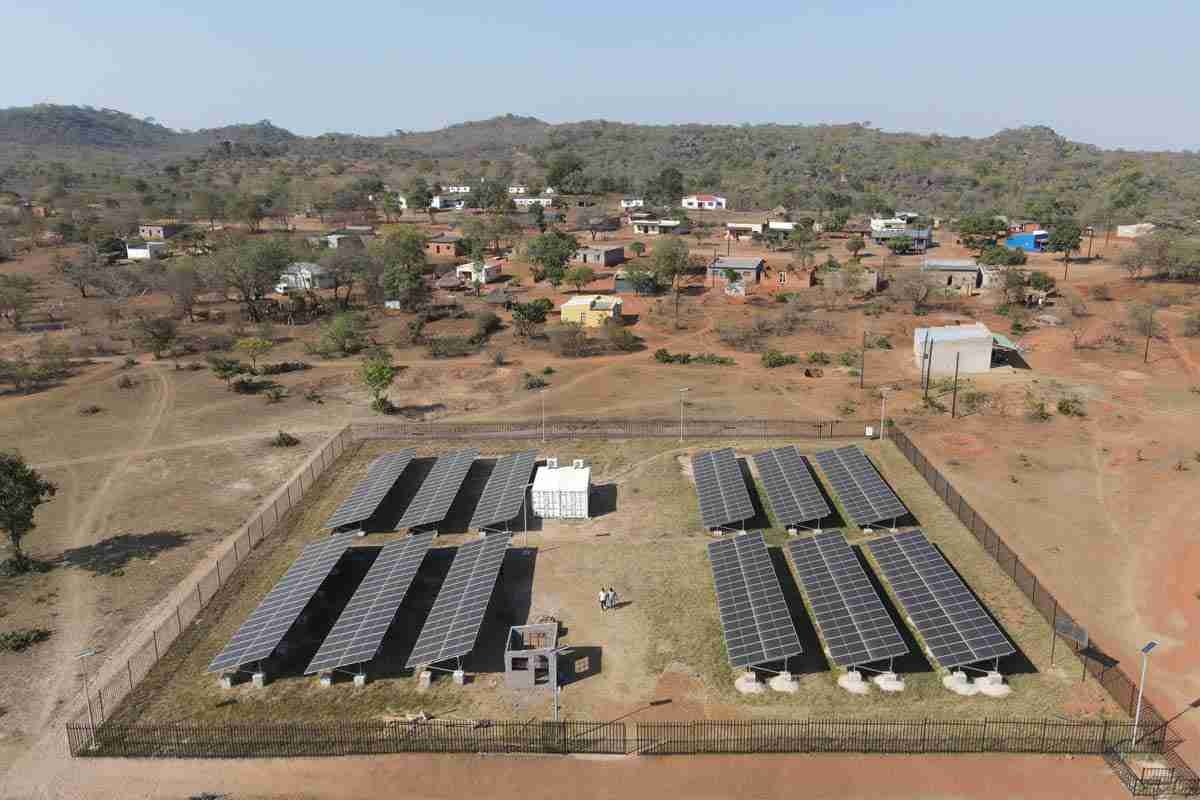
One promising alternative lies in decentralised energy systems, particularly energy communities and cooperatives. These models bypass the need for extensive grid infrastructure by enabling local generation and consumption of renewable energy—often through solar mini-grids or rooftop systems. They are more agile, community-driven, and financially inclusive, offering a path to energy access that is both sustainable and equitable.
Energy Communities
The energy transition and the emergence of renewable energy technologies present countries like Zimbabwe—blessed with abundant sunshine and hydropower potential—a unique opportunity to build a decentralised, inclusive energy system that expands access to affordable electricity. One promising model for achieving this is energy communities.
According to the EU’s Recast Renewable Energy Directive (EU/2018/2001) and the Recast Electricity Directive (EU/2019/944), an energy community is broadly defined as a legal entity that:
- is based on voluntary and open participation and is effectively controlled by members or shareholders that are natural persons, local authorities, including municipalities, or small enterprises.
- has for its primary purpose to provide environmental, economic or social community benefits for its shareholders or members or for the local areas where it operates, rather than financial profits; and
- may engage in generation, including from renewable sources, distribution, supply, consumption, aggregation, energy storage, energy efficiency services or charging services for electric vehicles or provide other energy services to its members or shareholders.
Energy communities can offer what other traditional commercial market cannot and their advantages include:
- providing citizens fair and affordable access to local, clean renewable energy resources and other energy-related services, including vulnerable and energy poor households.
- offering consumers the choice to take control and responsibility for the self-provision of their energy needs, furthering energy democracy.
- creating investment opportunities for citizens and local businesses.
- offering local communities, the ability to generate revenue that stays in the local economy to address socio-economic needs of the community and to invest in energy efficiency.
- generating public acceptance of renewables and other clean energy technologies by allowing citizens to invest and participate in the decision making of the projects.
An energy community in action – Edinburgh Community Solar Cooperative
The Edinburgh Community Solar Cooperative has installed, owns, and manages solar energy systems on the rooftops of 24 City of Edinburgh Council buildings, including schools, community centres, and leisure facilities. These installations have a combined generating capacity of approximately 2 megawatts (MW).
To put this into perspective, the average U.S. household consumes about 10,500 kilowatt-hours (kWh) of electricity per year. A 2 MW solar system, assuming it operates at full capacity for an average of 4 hours per day (a typical solar productivity estimate), would generate roughly 2 MW × 4 hours/day × 365 days = 2,920,000 kWh per year. This is enough to power approximately 278 average U.S. homes annually.
This scale of generation not only reduces carbon emissions but also demonstrates how public infrastructure can be leveraged for community-owned renewable energy, delivering both environmental and social benefits.
The Edinburgh Community Solar Cooperative successfully raised the capital needed for its solar projects through a community share offer. Over 500 individuals from Edinburgh and beyond became members by purchasing shares, with investments ranging from a minimum of £250 to a maximum of £100,000. This democratic financing model not only enabled the project to launch but also fostered a strong sense of community ownership.
The cooperative generates income through multiple streams: the sale of electricity to the national grid, feed-in tariff payments, and payments from Edinburgh Council for solar electricity consumed on-site. Notably, the council has agreed to purchase this electricity at current market rates, fixed for the next 20 years, significantly reducing its energy bills.
Members of the cooperative receive a capped 5% return on investment, ensuring financial sustainability without prioritising profit over purpose. Importantly, all surplus income is directed into a community fund, which supports the cooperative’s broader mission—including efforts to tackle fuel poverty and promote energy equity.
Community-owned energy initiatives, like the Edinburgh Community Solar Cooperative, play a vital role in reducing energy poverty by making clean, affordable power accessible to those who need it most. A compelling example is the Brixton Solar project in London, which operates in one of the city’s more deprived areas. Many residents there are unable to afford traditional energy contracts and are instead forced onto more expensive pay-as-you-go tariffs.
Brixton Solar addresses this challenge by providing residents with a limited amount of free electricity generated from solar panels installed on their own rooftops. Beyond just energy access, the project also empowers the community through educational workshops that help residents reduce energy waste and manage consumption more effectively.
The result is a tangible reduction in energy poverty—residents have more energy to heat their homes, cook meals, and live with greater dignity and comfort. This model demonstrates how community energy projects can deliver not just environmental benefits, but also social equity and economic resilience.
How energy communities can work in Zimbabwe
Recent trends in Zimbabwean real estate—particularly the rise of gentle density through developments like cluster homes—present a unique and timely opportunity for the formation of energy communities. In such settings, a minimum of 30 households can come together to form a cooperative, with each member purchasing a share to collectively fund the installation of solar panels, battery storage systems, and other necessary infrastructure.
While many individual households have taken steps to “energy-proof” their homes, this approach may not be the most capital- or energy-efficient. Renewable energy generation, especially solar, is inherently intermittent, depending on factors like daylight hours and weather conditions. At the same time, energy demand fluctuates throughout the day and across seasons.
This mismatch between supply and demand makes energy storage essential. When generation exceeds immediate consumption, storing the surplus allows it to be used later—when demand is higher, or generation is lower. However, the cost of storage infrastructure can be prohibitive for individual households.
This is where cooperative models come in. By pooling resources, communities can invest in shared storage solutions that are more economically viable and technically efficient. Not only does this reduce individual costs, but it also enhances energy reliability and resilience—making energy communities a smart, scalable solution for modern urban living.
The overwhelming demand for Starlink in Zimbabwe—even in less affluent, high-density suburbs—reveals a powerful insight: people are willing to invest in services that meaningfully improve their lives. Despite the high upfront cost of Starlink kits, its competitive pricing—such as $30 per month for unlimited data via Starlink Mini—has not deterred adoption. This underscores a broader truth: when the value is clear, affordability becomes relative.
Now, consider this in the context of electricity. What could be more transformative than unlimited, reliable power? In high-density urban areas, where energy poverty is most acute, energy cooperatives offer a compelling solution. These community-owned models are particularly well-suited to such environments, where the need is greatest and the potential for collective action is strong.
Take inspiration from the Edinburgh Community Solar Cooperative, which comprises over 500 members who each purchase shares. A similar model could thrive in Zimbabwean cities. Rooftops of local buildings—churches, schools, council facilities, and even beer halls—can be used to install solar panels. The benefits would extend beyond households to local businesses, enabling uninterrupted operations and stimulating local economic growth.
In April of this year, the inaugural Rural Industrialisation Indaba was held at the Zimbabwe International Trade Fair (ZITF), bringing together government officials, private sector stakeholders, traditional leaders, and development partners. The event focused on strategies to transform rural areas into vibrant industrial and economic hubs.
A key enabler of rural industrialisation is affordable and reliable energy—and this is where energy communities can play a transformative role. Historically, the high capital costs of extending traditional grid infrastructure made rural electrification economically unfeasible. However, the rise of renewable energy technologies and the development of mini grids offer a more viable and cost-effective alternative.
By leveraging decentralised energy systems, rural communities can gain access to clean, affordable electricity—powering small industries, creating jobs, and improving living standards. Energy communities not only democratise energy access but also lay the foundation for sustainable rural development and inclusive economic growth.
Government’s role
The government’s primary role in advancing renewable energy is to establish a supportive and enabling regulatory framework. To its credit, significant progress has been made through key legislation and policy initiatives. For example, the Renewable Energy Policy (2019) aims to increase the share of renewables to 26.5% of the national energy mix by 2030, offering incentives such as tax breaks for renewable energy projects. Similarly, the Net Metering Regulations (2018) empower consumers with solar installations to feed surplus electricity back into the grid, promoting decentralised energy generation.
However, further action is needed—particularly in the context of energy communities, which are distinct legal entities. For these communities to thrive, they must be clearly defined and supported by robust legal frameworks. Legislators could draw inspiration from the European Union’s Recast Renewable Energy Directive and the Recast Electricity Directive, which provide comprehensive guidance on integrating energy communities into national energy systems.
To further accelerate the adoption of renewable energy, additional policy interventions should be considered. One such measure is the reduction or complete removal of import tariffs on essential components of solar power systems—such as solar panels, inverters, batteries, and charge controllers. Making these components more affordable is critical if energy communities are to thrive and the broader renewable energy transition is to succeed.
Equally important is the need to liberalise Zimbabwe’s electricity market. The current model—characterised by a vertically integrated, state-dominated structure where the government controls generation, transmission, and distribution—is increasingly unsustainable. A liberalised energy market, by contrast, introduces competition, allows consumers to choose their electricity providers, ensures transparent pricing, and encourages private investment. It also creates fertile ground for innovative energy systems, including energy communities, to emerge and scale.
Opportunities for business
The liberalisation of the power market and the rise of energy communities will unlock a wide array of opportunities for both existing and emerging businesses. Law firms, for instance, will find new avenues in drafting and negotiating innovative energy contracts, as well as handling energy-related disputes and regulatory compliance. Energy companies will be well-positioned to expand their services—ranging from the procurement and installation of solar systems to the operation and management of solar plants.
Moreover, property developers can play a transformative role by integrating distributed renewable energy solutions, such as energy communities, into affordable housing projects. This approach not only addresses Zimbabwe’s housing shortage but also contributes to solving the persistent energy deficit—creating a win-win scenario for communities and investors alike.
The liberalisation of the energy market and the emergence of energy communities hold immense potential for job creation and economic diversification. These developments will give rise to a host of new private sector roles, including power traders, metering providers, aggregators, balance responsible parties (BRPs), and independent retailers—all essential to a dynamic and competitive energy ecosystem.
As highlighted by Hendrik Broering in a compelling LinkedIn post, these roles demand a strong foundation in digital capabilities. Key technological infrastructure includes:
- Trading platforms: Interfaces such as ETRM systems and market APIs that enable participation in day-ahead, intraday, and balancing markets.
- Forecasting and simulation tools: Advanced analytics to model demand, price fluctuations, and renewable energy output—crucial for informed trading and risk management.
- Aggregation and Virtual Power Plant (VPP) systems: Software that integrates and optimises distributed energy resources (DERs), allowing small-scale producers and flexible loads to access energy markets at scale.
- Automated bidding and dispatch optimisation: Algorithmic engines that generate real-time market bids based on forecasts, constraints, and commercial strategies—vital for short-term market operations.
- Retail and settlement systems: Back-office platforms for billing, balancing, and customer engagement, especially important for new market entrants.
- Market and system operator interfaces: Tools for seamless data exchange with system and market operators, covering scheduling, imbalance settlement, and regulatory compliance.
Together, these digital tools form the backbone of a modern, liberalised energy market—enabling innovation, efficiency, and broader participation across the energy value chain.
The views expressed in this article are those of the author and do not necessarily reflect the views of his employer or the B20 South Africa Energy Mix and Just Transition Taskforce



