




Common Law with Mike Murenzvi
“Bad laws are the worst sort of tyranny.” – Edmund Burke.
Just a week into the operational enactment of the Digital Service Withholding Tax (DSWT), outcry over the excessive nature of the tax reached the Ministry of Finance. What followed was a flurry of instructional letters, press statements, and public notices limiting and clarifying the operation of the tax. One would hope that the clarifications would make the tax easier to understand and apply. This is not the case.
Here, I will examine the legislation in its current form and the subsequent implementation instructions from the ministry and the Zimbabwe Revenue Authority (ZIMRA).
The budget statement
In his budget statement, the Minister couched this new tax as an enhancement of the taxation of electronic commerce (e-commerce), whose aim was to plug leakages arising from the inefficient system currently in place.
“Mr Speaker, Sir, the rapid expansion of the digital economy has enabled offshore digital platforms to supply services directly to domestic users without establishing a physical presence in the country. These include e-hailing platforms, digital streaming services, satellite-based internet services and a range of other online content, advertising and e-commerce platforms. These entities are generating significant income from domestic consumers and businesses.
However, the current tax framework does not adequately capture income accruing to non-resident Digital Service Providers or VAT payable on such services, resulting in substantial revenue leakages.
…I, therefore, propose to introduce a Digital Services Withholding Tax at a rate of 15%, in place of VAT on imported services, for payments made to offshore digital platforms, including e-hailing fees, online content charges and satellite-based internet access fees.”
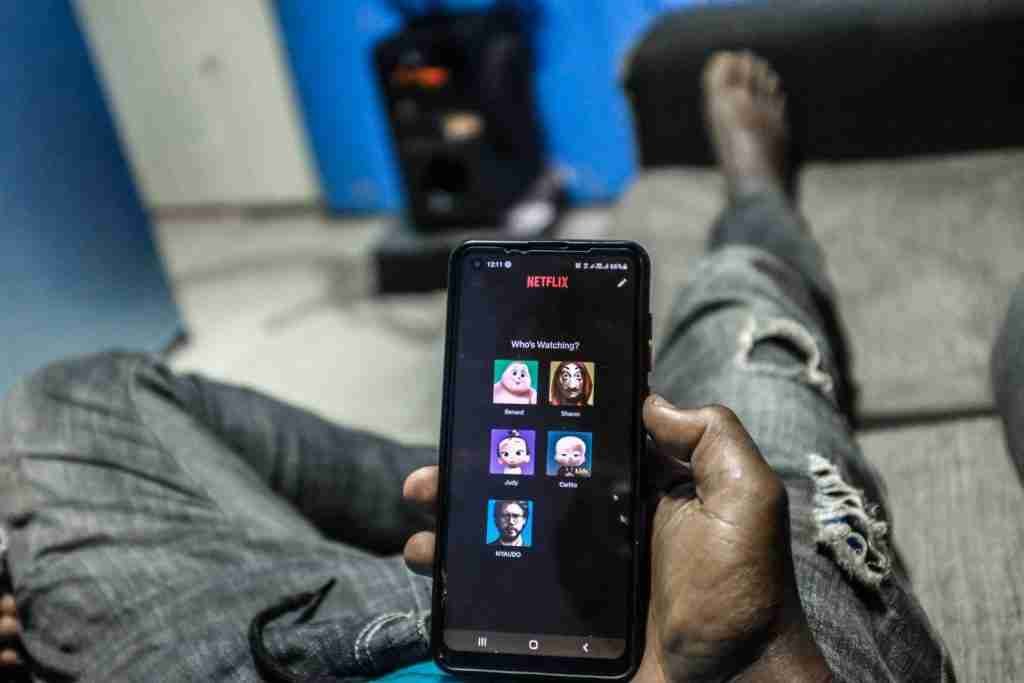
In short, your payments to foreign services like Starlink, Netflix, Amazon, Spotify, YouTube, etc., will automatically attract a 15% tax to be collected from you by your financial institution.
Tax structure
The DSWT is structured in a manner that mandates the payment services provider to settle an amount lower than requested on payment, e.g. a charge of $100 should be settled as $85, with the $15 DSWT going to the fiscus. The issue being the fiscus wants its 15% of the amount settled.
Naturally, a short payment will not fly with the e-commerce platform. They want their payment in full. So, the crafty solution implemented is to add the tax on top of the payment. The service provider is happy and collects full payment, while the fiscus is happy, it collects its full 15% tax. Only the consumer/payer is unhappy because they are now paying 15% more for the same service.
Legal structure and poor drafting
While the Minister’s statement seems clear in layman’s terms, in that it is targeting payments to various online platforms and services, this needed to be translated into legal language for appropriate amendments to the Finance and Value Added Tax Acts to ensure proper implementation.
Between the Ministry of Finance and the Attorney-General’s Office, there are groups of people known as legal drafters whose job is to translate policy and instruction into legal instruments that capture the essence and leave nothing to chance. The wrong wording or syntax in that translation can make a law very bad or useless. This makes legal drafting an extremely important function in the law-making process.
In this case, the drafters went to work and created a mess, from excessive language to glaring omissions. It’s a dog’s breakfast. Sadly, none of this was picked up by the Ministry or our Parliamentarians, who are the final gatekeepers before passing laws and the draft became law.
The text of the amendment in the Finance Act, 2025, reads as follows:
44 Substitution of section 13A of Chapter 23:12
With effect from the 1st January, 2026, section 13A of the Value Added Tax Act [Chapter 23:12] is repealed and substituted by the following— “13A Certain imported goods and services deemed to be locally supplied; digital services tax
(1) In this section—
“electronic commerce operator” means an operator selling, providing or delivering services from outside Zimbabwe by the use of a telecommunications network or electronic means (and whether mediated by computers, mobile telephones or other devices) to customers or users in Zimbabwe.
(2) Despite section 13, whenever payment is made for goods and services in Zimbabwe that are supplied from outside Zimbabwe by a company or other entity domiciled outside Zimbabwe, or of electronic services by an electronic commerce operator domiciled outside Zimbabwe to a person resident in Zimbabwe, such supply shall be deemed to be a supply made in Zimbabwe to which subsection (3) applies.
(3) There shall be charged, levied and collected throughout Zimbabwe for the benefit of the Consolidated Revenue Fund a digital withholding services tax that shall be withheld by any intermediary from any amount to be remitted outside Zimbabwe in respect of a supply referred to in subsection (2) in accordance with the Second Schedule.”
It is from here that problems arise, which I shall now break down.
Understanding the text and its implications
The bold title of the amendment, “44 Substitution of section 13A of Cap. 23:12” simply describes what is happening in the detail below it. It is a substitution of an existing section 13A of the Value Added Tax Act [Chapter 23:12]. This is further expanded in the line below it with an effective date of the new section 13A being 1 January 2026.
Next is the new title of section 13A, “Certain imported goods and services deemed to be locally supplied; digital services tax”. This mouthful says a lot about what the section seeks to tax.
Subsection (1): This subsection defines an electronic commerce operator, which, in simple terms, is a foreign-based entity that provides electronic services to customers or users in Zimbabwe. This term is crucial to the operation of this tax.
Subsection (2): This subsection now gets into the details of how the DSWT operates. Normal rules of VAT state that if something is imported, VAT is paid on the goods or services. Depending on the nature of the goods or services, this VAT may be at the new standard 15.5%, 0% or totally exempt. There is a whole section 13 in the VAT Act dedicated to imported services and the mechanics of VAT on them, where a VAT-registered company pays VAT on those services rendered in Zimbabwe by a foreign supplier.
The DSWT comes in over and above the VAT on imported services. The drama begins with syntax and the normal meanings of words and how they are written.
The first part of subsection (2) says, “Despite section 13…” Section 13 deals with the “collection of value-added tax on imported services, determination of value thereof and exemptions from tax”. This means that DSWT is payable over and above VAT on imported services.
The next part says, “whenever payment is made for goods and services in Zimbabwe that are supplied from outside Zimbabwe by a company or other entity domiciled outside Zimbabwe,…”. By simple English understanding, this refers to ALL foreign payments for goods and services, regardless of method or reason for payment. If one is paying for goods or services, the DSWT applies.
Remember, the budget statement spoke of specific online services, but this has gone above and beyond through an unlimited catch-all term, “goods and services”. There are no exceptions listed, so this applies equally to medical bills, school fees, and anything really. Payment made in Zimbabwe can be defined as a payment made through a Zimbabwean financial institution by whatever method, e.g. telegraphic transfer, letter of credit or Visa/MasterCard.
The third part of this subsection reads, “…or of electronic services by an electronic commerce operator domiciled outside Zimbabwe…”. This now speaks directly to the Minister’s intended target per his budget statement, but it has been overshadowed and rendered irrelevant by the first part of the clause. The fourth part of the subsection reads, “…to a person resident in Zimbabwe,…”. This is instructive. The recipient of the goods or services must be a Zimbabwean resident as defined in the VAT Act.
The last part of the subsection reads, “…such supply shall be deemed to be a supply made in Zimbabwe to which subsection (3) applies.” This means that the transaction shall be taken as if it happened in Zimbabwe, regardless of any other rules pertaining to foreign supply.
In combination, this subsection says DSWT applies to all payments to a foreign company or entity for goods, services, and e-commerce to a Zimbabwean resident made through a Zimbabwean financial institution and shall be taken as if the transaction happened in Zimbabwe.
This means that ALL your card-based payments while outside the country are included.
Subsection (3): This subsection says that DSWT will apply to the transactions falling under subsection (2) and “shall be withheld by any intermediary from any amount to be remitted outside Zimbabwe…”. This empowers financial institutions to withhold the tax on behalf of the fiscus and pay it to the tax authorities in the specified manner. As mentioned earlier, financial institutions are generally unable to reduce the value of instructed payments, and so they will deduct the tax from the payer’s account in the same manner as bank charges.
What are the effects?
The DSWT, in its current form, has various negative effects, chief of which is an increase in the immediate cost of all imported goods. Also, the tax is non-deductible, so it hits the bottom line of end users of the goods and services. Furthermore, it discourages foreign card use by individuals and companies and pushes them to either use cash in foreign countries or acquire cards from foreign card service providers and fund them through offshore cash deposits or other questionable means.
The associated risks of theft and robbery to individuals while in foreign countries grow exponentially with the extensive use of cash. Many developed countries are now largely cashless, thus adding layers to the transactions.
Over and above that, it increases the propensity of tax avoidance or evasion through cash or foreign card use, which will negatively impact the fiscus.
Glaring omissions
Surprisingly, the amendment skipped a crucial element, the rate of the DSWT. The fact that the tax is housed under VAT doesn’t automatically mean that the rate of DSWT is 15.5% (standard VAT rate) or the 15% per the Budget statement. Without explicitly stating the rate of DSWT in the Finance Act, this means that the effective rate at present is zero. Legally, the effective rate of DSWT is zero.
Tax law in Zimbabwe is split into two main parts. The tax rates are generally specified in the Finance Act, and the operational details are specified in the various other tax acts, e.g. Income Tax, Customs and Excise, Value Added Tax, etc. In some cases, the tax rates are specified within the specific tax Acts, especially items which are deemed exempt or zero-rated. Without a corresponding rate of tax specified, the legal implication is a rate of zero percent. There is no tax to charge or withhold. Comparative reference can be made within the same VAT Act to section 50A, which deals with VAT withholding tax. In that section, it says that the rate of withholding shall be as specified in the Charging Act (Finance Act).
Out of an abundance of caution, fuelled by the litigious nature of the Zimbabwe Revenue Authority (ZIMRA), financial institutions have implemented this tax, based on the budget statement’s 15% or the new VAT rate of 15.5% on all foreign card payments. This will likely expose these institutions to future claims of restitution for taxes incorrectly deducted.
It should be noted that the old section 13A mandated that “the obligation to charge and account for tax shall be that of the supplier [of radio and television services or services by an electronic commerce operator from outside Zimbabwe] or his or her duly appointed representative in Zimbabwe.” This meant that the supplier would raise a local invoice that included a relevant charge of VAT, as is done by many other local businesses.
Another critical omission is the absence of reference to the other sections of the VAT Act on which goods and services are liable to this tax and at what rates. So whether the purchase ordinarily attracts VAT or not, this tax applies regardless.
Ministry instruction to ZIMRA
Following initial outcry, on the 5th of January 2026, the Permanent Secretary in the Ministry of Finance, George Guvamatanga, wrote a letter to the Commissioner-General of ZIMRA, Regina Chinamasa, stating that DSWT was introduced “in lieu of VAT at the standard rate applicable on payments made to offshore digital platforms.”
He goes on to state that “Clause 44 of Finance Act 7 of 2025 erroneously states that the Digital Services Withholding Tax will apply ‘whenever payment is made for goods and services that are supplied from outside Zimbabwe’. The tax should, however, be applied on imported services only, while VAT on imported goods will be chargeable at the time a consignment is imported into the country.”
He goes on further to direct ZIMRA to “implement the tax in line with the policy intention,” and “immediately advise withholding agents, including financial institutions, of the above directive with a view to eliminating potential double taxation of goods, pending rectification by the Office of the Attorney General.”
The Ministry has admitted to their error and has now directed ZIMRA to enforce the spirit of the law and not the letter thereof.
Ministry press statement
On 7 January 2026, the Minister of Finance issued a press statement titled “Clarification of the Digital Services Withholding Tax Introduced by Finance Act No. 7 of 2025.” He states that the DSWT was introduced to improve collection of VAT on imported services, and not as an additional tax by shifting the collection point of the tax. He reinforces the scope of the tax in similar fashion to the letter from the Permanent Secretary and expands on it by defining goods within the digital framework as being electronically supplied or digitally mediated services.
The Minister goes on to say that taxpayers who were already accounting for VAT on imported services correctly and consistently will not be liable for DSWT on the same transactions and that the measure was not intended to result in double taxation.
The mode of payment is also clarified as applying to all forms of payment made through Zimbabwean financial intermediaries, not just Visa or international online card payments. He addresses initial market communications from banks that read the law (correctly) as applying to all international card payments, by saying their interpretation is “inconsistent with the policy or legislative intent.” Engagements with financial institutions are ongoing to ensure consistent and correct application of the tax, with detailed administrative guidelines to be issued by ZIMRA later.
At no point in the statement does the Minister acknowledge that the Ministry made an error and stood by that same error throughout all the stages of enactment. He speaks of policy and legislative intent as if everyone else is getting it wrong on something written in black and white. Neither does he broach the subject of correcting the relevant clauses of the Finance Act to match this intent.
ZIMRA Public Notice 05 of 2026 – Digital Services Tax (VAT)
On 19 January 2026, ZIMRA finally issued a public notice giving administrative and operational guidance on the application of the DSWT. This guidance was in line with the Ministry clarifications and directives.
The tax authority prefaced the public notice with a background of the previous section 13A and its new form, without getting into the specifics of the parts of the section that it was directed to ignore. It goes on to state that because of the trade being deemed to have occurred in Zimbabwe, the foreign suppliers whose annual revenue exceeds USD 25,000 must be registered for VAT in Zimbabwe in accordance with the VAT Act and charge and account for it as normal.
The notice goes on to describe e-commerce transactions and give examples of them. VAT on imported services not supplied electronically must be accounted for by the recipient per section 13 of the VAT Act, while those supplied electronically are treated under section 13A (DSWT) and the financial institution or intermediary is responsible for withholding the tax from the payment being processed.
The guidance delves into the charging of VAT by foreign suppliers of electronic services by saying all prices charged must be inclusive of VAT, and the suppliers can claim the tax withheld as a credit on their VAT returns for net payment to Treasury.
Intermediaries have been instructed to charge the payer 15.5% DSWT (standard rate of VAT) on qualifying transactions where the foreign supplier is not registered for VAT in Zimbabwe, and withhold by application of a tax fraction, the corresponding amount from payment to a supplier that is registered for VAT in Zimbabwe. The VAT zero-rating and exemptions that apply to various services locally also apply equally to DSWT.
The guidance issued by ZIMRA, while instructive, pushes a heavy burden onto financial intermediaries. They are now pseudo-tax administrators who must decipher the nature and purpose of payments and the registration status of the suppliers/payees, to know when to charge or withhold DSWT appropriately.
While this may be easier with conventional business payments, where invoices and other supporting documents are submitted with payment instructions, this is not the case with card payments. By their nature, card payment requests come with very little information because of the speed and efficiency required. They contain basic information like the name of the supplier (or their payment agent), the currency and amount to be paid, the date and time of the transaction, and reference and identifying numbers. The actual details of the purchases are not included.
Add to this, you have websites like Amazon that provide both physical and electronic goods and services. Somehow, the financial institutions need to miraculously know when to apply DSWT and when not to. It’s an impossible feat that has only one solution: charge DSWT on all card payments and deal with claims on a case-by-case basis for reversal.
Continuous clarification
In a recent interview, the ZIMRA Head of Technical Services – Domestic Taxes added more fuel to the fiery mess by saying this tax was essentially VAT and following the principle of VAT, it is the end user who pays the tax. The job of the supplier is to simply collect it on behalf of Treasury. On this basis, the banks and financial intermediaries are the collection agents, whether the supplier charged VAT or not.
On addressing the issue of suppliers of mixed goods and services, he said that there are still issues to be clarified, and further guidance will be issued at a later date. In the meantime, taxpayers can approach their financial institution with supporting evidence of their payments, i.e. invoices, where they feel they have been incorrectly charged and upon verification, the refund will be processed by the institution.
Where do we stand?
We have an overreaching tax that is legally not in effect, but has been implemented in limited form by tax authorities and financial institutions who fear backlash from tax authorities.
What are the solutions?
Since the Ministry and ZIMRA have doubled down on the implementation of the DSWT, albeit in a limited manner, the available remedies are limited.
The Minister of Finance should draft a new Finance Bill to correct the issues arising from the overreach and the omission of a rate of DSWT, and subject this to parliamentary processes. Parliament is currently in recess and reconvenes in February. This is imperative as a matter of law.
Alternatively, the Minister may take his time to rethink the tax and its intended targets and effects and introduce it comprehensively and hopefully correctly in the mid-term budget review in the second half of the year. During this period, he should issue a note on the suspension of the tax due to its flaws. This option is highly unlikely.
There are two other temporary alternatives available to the Minister for corrective measures. Either the President is asked to intervene and use Presidential Powers to effect temporary amendments for a period of up to six months while parliamentary processes are being pursued.
The other is where the Minister issues a statutory instrument (SI) of the corrective amendments valid up to the next 28 sitting days of Parliament if parliamentary processes engaged lead to a Bill that has passed its second reading during that period and a substantive law within 6 months of that second reading. Failure of which will render the amendments void from the beginning. Due to the stark deficiencies of the current legislation, it is highly likely that any DSWT collected from 1 January 2026 to the date of a corrective legal instrument is also void and subject to refund.
Parliament is currently in recess and reconvenes on 10 February 2026. Its ordinary sitting days are Tuesday to Thursday; therefore, the 28 sitting days effectively lapse sometime in May because there will also be an Easter recess tucked into its schedule. Six months after that is a date in November as the final deadline for enactment of substantive law on this issue.
Given the available options, it is highly likely that we will see the temporary alternatives being invoked to allow the fiscus to immediately start collecting on this tax. One only hopes that the corrections are comprehensive and restrict application to the intended purpose of the tax without placing onerous requirements on financial intermediaries.
Final word
This is a badly drafted tax law that has exposed major deficiencies in legal drafting capabilities and parliamentary review processes. This has far-reaching negative implications for the economy, which has already seen the authorities issuing limited application directives.
This is not a case of unintended consequences, but rather, an oversight bordering on negligence and, at worst, malicious taxation. The pressure to feed the fiscus should not force unnecessary and overbearing taxes on the nation. It is actions like these that fuel tax avoidance and evasion and erode confidence in established systems, as a lack of clarity on taxation often leads to significant penalties being meted out on unwitting taxpayers.
_______________________
Mike Murenzvi writes in his personal capacity, and his views are not associated with any organisation he is, or may be, affiliated with.