



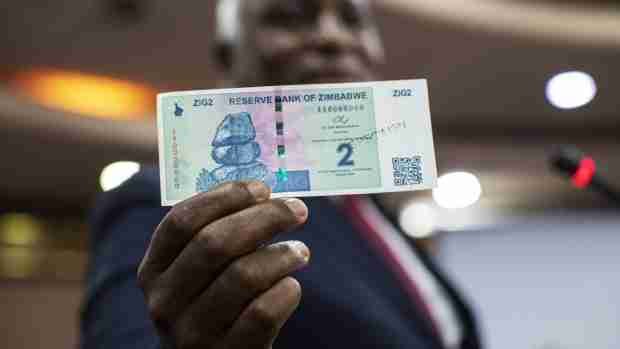
Reserve Bank of Zimbabwe governor John Mushayavanhu has slotted nicely into the shoes of his predecessors – trying to defend the currency with reserves of dishonesty.
As the ZiG follows the path other currencies have taken, Mushayavanhu has also taken the path previous RBZ governors have taken. He told the Sunday Mail this weekend why the currency is struggling – a lack of confidence and demand for US dollars. The market, he suggested, is not acting rationally. People are just ignoring how strong the fundamentals are, he feels.
In reality, Mushayavanhu is simply continuing a long tradition that he found at RBZ – from Gideon Gono’s grandiose “failure is not an option” tales, to John Mangudya’s Shaggy strategy; it wasn’t me, it was someone else.
Dishonesty One: It’s those saboteurs
Mushayavanhu insists the ZiG is falling “due to the speculative tendencies by economic agents”. He says the “parallel market has somehow been found to be an alternative market for accessing foreign currency”.
The “somehow” implies this has happened via magic, and not market forces driven by RBZ’s own policy decisions. Like his predecessors, the governor says central bank “is aware of the behavioural implications of the economic agents”. Basically, it’s those saboteurs again. We have heard this before.
Dishonesty Two: It’s just demand
According to Mushayavanhu, the ZiG is in crisis, falling sharply on the parallel market, because of “transitory foreign currency demand pressures in the economy in preparation for the next cropping season”.
This demand has, somehow, not been reflected in the official exchange rate, which has remained stuck in a tight band, trading at double the value it has on the more widely used black market. He promised a willing-seller willing-buyer market, determined by the market. This hasn’t happened.
Dishonesty Three: You people just don’t believe in the ZiG
According to Mushayavanhu, the ZiG is sagging because of “perceived negative sentiments on the sustainability of ZiG, as opposed to real monetary and financial dynamics.”
In English; he says the ZiG is down because people just don’t believe in it, not because of supply and demand.
Firstly, Zimbabweans have reason to sid-eye the ZiG and those running it, given over two decades of currency chaos. It is RBZ’s job, not the people’s, to restore that trust. Secondly, by claiming that “real monetary and financial dynamics” are healthy, he is dishonestly ignoring the rise in money supply over the past few months, shown in RBZ’s own data. He also ignores the fact that businesses cannot access dollars on the market, as stated by CZI, the country’s largest business group.
Dishonesty Four: The currency shouldn’t be falling, we have enough USD
Mushayavanhu wonders why the currency would be falling “at a time when the country has been recording historical levels of foreign currency receipts, which clearly shows that the pressures are a result of adverse expectations in the forex market”.
In English; we have enough USD to back the ZiG, it is only falling because people expect it to.
He mentions that forex earnings are up 13.4% from January to August. He doesn’t mention what has been spent on imports over the same period, or government’s own forecast that the currency account surplus – the gap between our exports and imports – will narrow significantly this year, or the impact of the 58.1% rise in food imports in the first half of the year.
As long as businesses cannot get dollars at the bank, they will look for it elsewhere – in the real willing-buyer willing-seller market. Who wants to buy forex from a shifty dealer in a back alley of the Avenues when they could buy it in a bank?
What’s he doing about it?
Mushayavanhu is “injecting” – that word again – US dollars into the market.
In July, RBZ put in US$50 million to clear a backlog. In September, RBZ added another US$64 million in September. Mushayavanhu says RBZ will keep doing this, and will use reserves to “stabilise the currency in the event of severe market disruptions that threaten economic stability.” After all, he says, we have enough in reserve. “With a more than 300% coverage ratio, the Reserve Bank is currently providing a more than adequate ZiG cover.”
Apart from injecting US dollars into a black hole, perhaps RBZ should also inject some honesty in their assessment of the crisis. Only then would “economic agents” start to think of letting go of “perceived negative sentiments”.
ANALYSIS | It wasn’t me: Of Shaggy and the men in charge of the Zimbabwe dollar



