


Mutumwa Mawere, who has died at 66 in South Africa, was one of Zimbabwe’s most influential, and controversial businessmen of the 1990s.
He began his career at the World Bank’s International Finance Corporation (IFC), before leaving in 1994 to start Africa Resources Limited (ARL), which he later said peaked at about US$300 million in value.
What followed was a whirlwind of deals that helped reshape Zimbabwe’s corporate landscape, and eventually brought him into a bitter clash with the State. Below is a breakdown of the rise, the deals, and the fall.
How did he build his business empire?
Mawere expanded fast and wide, taking up interests from banking, mining, manufacturing, agriculture, logistics to media.
In 1997, ARL set up Shipping Consolidated Holdings, a warehousing and forwarding business with operations in Zimbabwe and Durban. That same year, he bought 100% of CST Cellular Private Limited, later renamed Firstel Cellular. He was also key founding FBC Bank in 1997.
In November 1997, ARL listed on the Zimbabwe Stock Exchange through a reverse takeover of the Acacia Group, becoming TH Zimbabwe Limited (THZ). SMM became the controlling shareholder and sold 30% to institutional investors. In 2002, ARL unbundled THZ into General Beltings and Steelnet, which included TPI, BMA Fasteners and Hastt Zimbabwe.
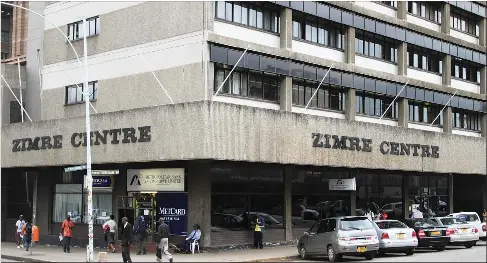
In 1998, Mawere launched Ukubambana-Kubatana Investments (UKI), aimed at raising diaspora capital. In 2000, he took part in the IPO of Zimre, one of several state firms privatised in the 1990s. Through ARL and Endurite Properties, Mawere bought government’s stake and became Zimre’s largest shareholder.
ARL later unbundled Zimre to list Fidelity Life. He then merged Nicoz Insurance and Diamond Insurance to form Nicoz Diamond, which also listed on the ZSE.
In 2001, he entered agriculture through FSI Agricom, and took a major stake in CFI Holdings, owner of Farm & City. He also set up UKI Securities, later bought by Fidelity Life Asset Management, another Zimre subsidiary. Other businesses included Petter Transport and Logistics, Shipping Consolidated Holdings, and Tandem.

___
The big one: how he bought Shabanie Mashaba Mines
Mawere’s crowning deal, and the beginning of his troubles, was the takeover of Shabanie Mashaba Mines (SMM), then the country’s biggest asbestos producer. The transaction became known as an example of “financial engineering”.
In the mid-1990s, British firm Turner & Newall (T&N), under pressure from the global anti-asbestos lobby, decided to sell its businesses, including Shabanie in Zimbabwe.
In 1995, Mawere proposed a deal: he would buy T&N’s subsidiaries – the asbestos mines, Turnall Fibre Cement, Tube and Pipe Industries – plus a Zambian company. Talks began in September 1995. In 1996, they agreed on a price of US$60 million, to be paid over five years, funded by export proceeds from the mine. As security, T&N would receive SMM shares.
Why was the deal controversial?
Government accused Mawere of benefiting from a State guarantee and failing to pay for the mine. In Parliament, Patrick Chinamasa told MPs that Mawere had “not paid a dime”. Mawere denied this, saying the confusion arose from a US$60 million loan from Belgium’s KBC Bank, arranged two years after the takeover. The RBZ ordered that the loan be channelled through the Minerals Marketing Corporation of Zimbabwe (MMCZ) because it would be serviced from SMM export proceeds. A government guarantee was issued in favour of KBC. Mawere later claimed the loan was used to support the establishment of local banks; NMB, Heritage Investment Bank, and Universal Merchant Bank.
He said the loan was repaid in 2002, after SMM generated US$177 million. The government disputed this, saying he defaulted.
What did Mawere say about the State guarantee?
In 2009, Mawere wrote: “It is important to note that since 1997, the Zimbabwean economy has been on a downward spiral and no foreign bank was willing to take the Zimbabwe risk without a government guarantee.”
How did politics enter the picture?
Politics and business are rarely distant in Zimbabwe. For Mawere, his empire was growing at a time when ZANU PF was looking to consolidate its hold on the economy, looking to create a new cadre of loyal black capital. Mawere believed some politicians felt excluded from his deals, saying then: “Daggers were out for me.”
In 2009, he wrote on the incident that may have removed what political cover he may have had. He was informed that he had been elected, without his consent, as ZANU PF Secretary for Economic Affairs for Masvingo. He turned it down: “I told them I could not accept the post as I was not a member of ZANU PF.” He also told them he had taken South African citizenship, and no longer Zimbabwean. No doubt, this angered many within ZANU PF. He cast himself as a self-made man. ZANU PF disagreed; one headline at the time called him “ungrateful” for ZANU PF support.
“My decision to decline the post after several warnings that it would cost me dearly has led to a sequence of events that have seen me being targeted personally and all the assets deemed to be under my control being taken over by the state,” he later said.
What happened to his companies?
Government “specified”, or froze, his firms, accusing him of externalising millions, failing to pay workers and creditors, and defaulting on payments to the State, including ZESA
An administrator, Afaras Gwaradzimba, who had ironically worked with SMM before, was appointed. When it turned out that there was no law allowing the takeover, government simply made one; the Reconstruction of State-Indebted Insolvent Companies Act.
After being split up and sold off, many of the companies still stand today, under different shareholders. Shabanie Mine inevitably collapsed due to the end of the global asbestos market, worsened by debt and mismanagement. ZimRe changed hands from government to Hamish Rudland, whose Day River Corporation later sold its stake to the Mutapa Investment Fund in 2024. ZimRe remains the major shareholder in CFI. Building materials manufacturer Turnall, turned away from asbestos exports after its 2002 listing, and is now majority-owned by investor Mega Market.
What was his relationship with other businessmen?
Despite being seen as a black empowerment success story, Mawere faced hostility from parts of the indigenisation lobby. Former Midlands governor Cephas Msipa criticised the SMM deal for excluding workers and communities. Mawere said: “They did not understand why a person based in South Africa could end up buying such a big company and they were left behind.”
Businessman Phillip Chiyangwa accused him of working for foreign interests. Chiyangwa came up with a rejoinder to Mawere; he formed the Native Africa Investment, a dig meant to accuse Mawere of not being “native” enough.
What was that Gideon Gono beef about?
In 2000, Mawere accused Gideon Gono, then CBZ boss, of illegally using his name in a transaction involving an alleged “slush fund” that ran at the bank. After Gono became RBZ governor late in 2003, Mawere told The Independent that Gono was also part of what he saw as an assault on his empire: “I knew it was going to be revenge time, but I did not know he could go to this extent.” Gono dismissed this as “madness”.
In one email to Mawere, Gono wrote: “Ndinotenda nemashoko ako mwana waamai. Ichokwadi kuti ndanga ndichishushikana mupfungwa nokuedza kutsvara ndangariro dzangu kuti ndinyatsoyeuka kuti patakatadzirana ndepapi asindichishaya kupaona kana kuparangarira. (Thanks for your message, my brother. I have indeed been troubled, searching my thoughts to remember where our dispute began, but I failed),” said Gono.
Their beef was broader, going into policies that helped bring SMM down. RBZ’s forex retention policy, under which exporters like SMM could only keep a quarter of their export earnings in forex, hurt the company. Its permit to sell its own asbestos was also cancelled, for which Mawere blamed Gono.
According to one account on one of Mawere’s websites: “As a direct consequence of the RBZ’s targeting, SMM was unable to use its forex to pay its foreign creditors of which Petter Trading Pty Limited (Petter), a company incorporated and operating in terms of the laws of SA, was the largest. Petter approached the SA courts to obtain an order to allow it to collect from (SMM agent) SAS what was due to it but could no longer be paid by SMM. The order was granted on 6 May 2004.”
Was Mawere close to Emmerson Mnangagwa?
Over the years, Mawere was repeatedly linked to Emmerson Mnangagwa, claims he denied.
Mawere said he had worked with Mnangagwa, when he was Acting Finance Minister, on the attempted privatisation of Sabi Mine, which was later sold to Canadian investors.
He recalled meeting Mnangagwa at Meikles Hotel in Harare: “He briefed me on the decision that the cabinet had made regarding the Sabi Mine privatisation. He also expressed an interest in learning more about empowerment.”
Mnangagwa later invited him to Kwekwe, where Mawere briefed politicians and businesspeople on empowerment models from South Africa. The two later toured South Africa and the United States, speaking to Zimbabweans in the diaspora about investing back home. “Because the meetings were captured in the media, a perception was created that Mnangagwa was my business Godfather,” Mawere wrote in an article for New Zimbabwe.
The troubles down South
In South Africa, Mawere ran into a string of legal problems. In 2013, he was charged with defrauding the National Lotteries Commission, accused of diverting R4.4 million meant for a heritage hall-of-fame project to fund a lavish book launch. Following the allegations, his bank accounts were frozen.
In 2021, Absa attached one of his luxury properties over loan defaults, while the Industrial Development Corporation sued him for unpaid debts.
In his later years, Mawere became a familiar talking head on South African television and would often post cryptic commentary on his Twitter feed.
Most recently, a stroke and a series of legal and family troubles left Mawere desperate and powerless, a far cry from his peak years at the centre of a vast commercial empire.
In March 2025, he wrote to the South African government: “It is with a heavy heart and a deep sense of frustration that I bring to your immediate attention the tragic and inhumane ordeal of Mr. Mutumwa Dziva Mawere, a South African citizen who is currently being held against his will at his own home—62 Cambridge Road, Bryanston, Sandton—by none other than his own brother, Shavirai Piniel Mawere and his wife, Patience Mawere.”



