
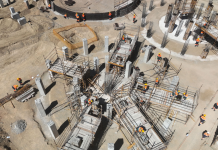



Karo Platinum has completed earthworks at its new mine in Ngezi and is in advanced talks to raise an additional $165 million to complete the project, which has faced significant delays due to low platinum prices.
MD Bernard Pryor says the company has so far spent $140 million on developing the mine, which will be Zimbabwe’s third-largest platinum producer upon completion.
“Earthworks are always challenging, but we’ve completed them to 100%,” Pryor said during a call with analysts on Thursday. The project will have a 132 kV powerline, while the Chirundazi Dam has been built to supply water. “It’s a big project, but everything that we need is in close proximity,” he added.
Karo has opened a tender for a mining contract to begin stripping overburden and prepare for mining. “This is a large contract; we need a highly competent mining contract to move an extensive amount of material, some 1.4–1.5 million BCM (bank cubic metres) per month,” said Pryor.
On funding, Tharisa Financial Director Andrew Henwood says: “We are in advanced talks with a lending syndicate, South African and African banks. We are targeting $165 million of that funding.”
Karo has already raised $37 million through a bond on the Victoria Falls Stock Exchange and may extend the facility. It may also raise between $50 million and $100 million through a gold streaming agreement, where a buyer provides upfront capital for a share of gold produced as a by-product.
“As far as the timing is concerned, we are looking at first ore in mill starting 15 months after we close the fundraising,” Henwood said.
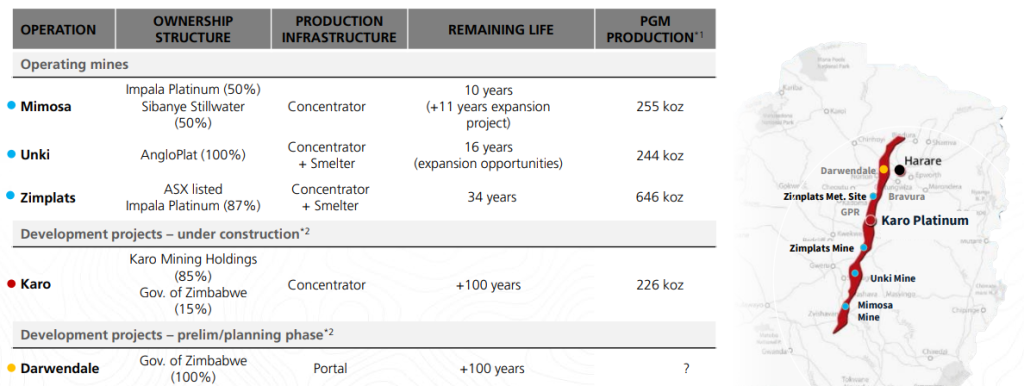
Sitting on the Great Dyke, Karo will include a 10-year open-pit phase and a 30-year underground mine, producing 226,000 ounces annually—behind Zimplats (646,000 oz) and Unki (244,000 oz). Karo had hoped to complete the mine in 2024, but had to push back timelines due to the collapse in global platinum prices, which has stalled investment across the industry.
Phoevos Pouroulis, CEO of Tharisa, said: “While we have slowed development at the Karo Platinum Project in line with capital availability, we have nevertheless continued work on infrastructure, water dams and further optimisations including commencing with studies for the future underground mine development, while presenting the opportunity to non-traditional financiers, who like us, see the long-term benefits of the uniqueness not only of this Tier 1 project but of the applications PGMs will play for decades to come.”
The Zimbabwe government has a free 15% stake in the mine, and has an option to buy a further 11%.
ALSO READ | ‘Winter is almost gone’: Zimplats CEO believes the worst may be over for crisis-hit platinum miners



