




Presenting his monetary policy statement last Thursday, central bank governor John Mushayavanhu displayed one talent that seems to be a requirement for Zimbabwean reserve bank governors – denial.
He had a clear explanation for why many retailers are struggling: they’re just bad at business. Never mind the multiple retailers scaling back, or the ones shutting down entirely and skipping town. The government, he assured us, is blameless.
“These are management issues. We know it,” Mushayavanhu said.
Sure, some mismanagement may exist. But if Mushayavanhu’s logic holds, it must be epidemic across the entire retail sector. And yet, the government’s own research says otherwise.
Let’s rewind to 2023. As the retail crisis worsened and prices soared, the government sent out a team—including the Competition and Tariff Commission, the National Competitiveness Commission, and the Consumer Protection Commission—to investigate.
Their verdict? The biggest problem was the government’s own policies: “Formal retail shops are mainly sourcing their products in Zimbabwean dollars and settlement of accounts can be done in 15-60 days, which then discourages manufacturers and wholesalers of products to supply to the formal markets, especially when the Zimbabwean dollar is losing value.”
Fast forward to January 2024, and the national statistics agency ZimStat surveyed retailers. It found: 62% of them described their financial position as bad, 57% described the operating environment as poor, and over half said they had low stock. This, again, showed a deeper malaise across the sector, not isolated to one player.
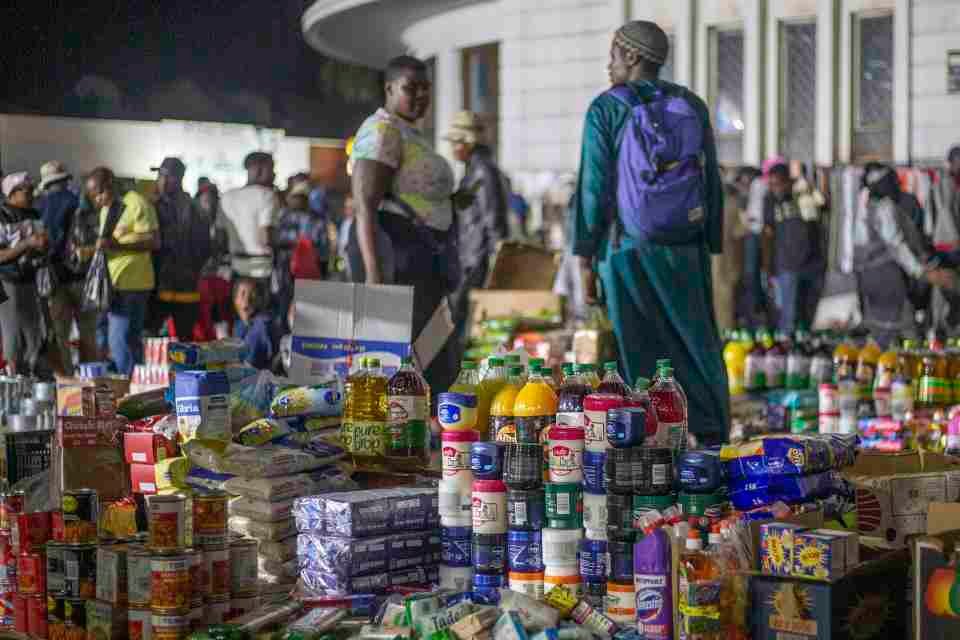
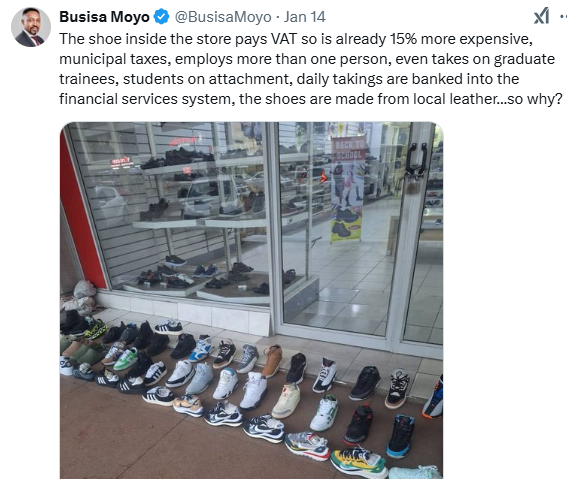
In 2022, Truworths warned of policies that “rendered (our) products expensive in USD terms and lowly priced in Zimdollar terms.” The company later shut down stores and went into corporate rescue. In 2023, Metro Peech, one of Zimbabwe’s biggest wholesalers, collapsed. Its corporate administrator, Oliver Mutasa, pointed to “competition from the informal sector, which is not subject to similar regulatory compliance.”
At the half year, with its sales falling, Pick n Pay pointed to the problem: “The authorities controlled the in-store exchange rate used by formal retail players, while informal players used higher exchange rates.”
And just last December, Choppies packed its bags and left. Their reason? “Over the last two years, there has been a significant shift to the informal retail sector, leaving the formal retail sector to battle a reduction of up to 30% in footfall and having to compete with the informal sector.”
Many others have followed, from N Richards to Mahomed Mussa, two wholesale doyens who have shut down some of their trading space.
Mushayavanhu’s ‘shadow banks’
It wasn’t just in retail that Mushayavanhu showed his dexterity. He is also angry that businesses are not banking their money.
“The Reserve Bank has noted with concern the increasing abuse of safe deposit boxes and the proliferation of ‘shadow banks’. It has been observed that some businesses are not banking all or most of their cash receipts and are, instead, keeping such cash in safe deposit boxes held with financial institutions and security companies,” he said.
Why might businesses be reluctant to bank their cash? Could it have something to do with two decades of eroded confidence in the banking sector? Of course not. It’s just random bad business habits.
Meanwhile, it was reported at the weekend that the ZRP lost US$623,000 to an officer who dipped his fingers into the police’s safety deposit box. Perhaps Mushayavanhu should start his lectures on proper banking practices at PGHQ.
ZiG or nothing
And then, some more denial.
The USD now dominates the economy. Naturally, businesses want to report their financials in dollars. But Mushayavanhu is forcing them to report in ZiG, even if it makes their books look like creative writing exercises. He says: “This requirement is consistent with the increase in the number and value of transactions settled in ZiG since its introduction on 5 April 2024.”
Denial, for public officials, should normally be a career-limiting trait. It means problems cannot be solved, because everybody is cosplaying Paul Matavire. They see nothing. But, for Zimbabwean central bank governors, denial is a qualification of sorts, a long-cherished tradition expected of anyone who walks into that building.
ALSO READ |
It wasn’t me: Of Shaggy and the men in charge of the Zimbabwe dollar
Want to open a supermarket? Get ready to run this 25-permit marathon



