



Zimbabwe is seeking $2.6 billion in bridge financing to clear arrears with international creditors, the African Development Bank (AfDB) says, but a controversial new law seen by critics as a threat to civil society is a risk to debt relief talks.
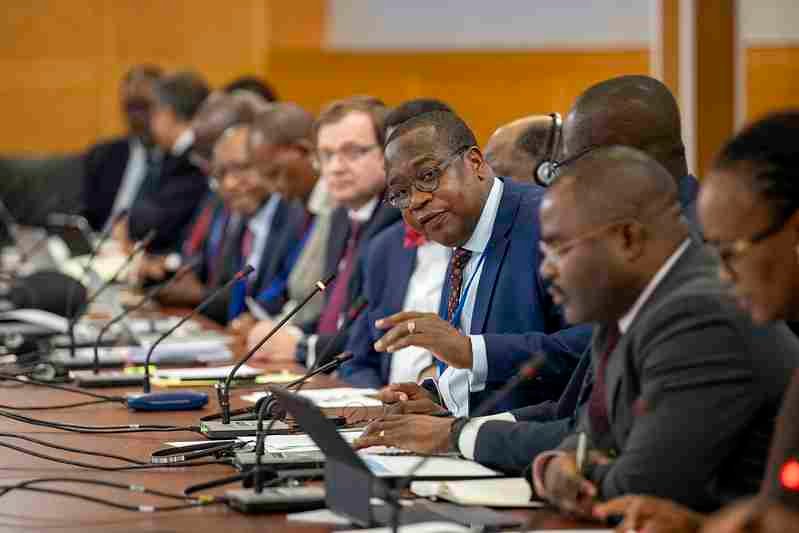
Finance Minister Mthuli Ncube is leading Zimbabwe’s delegation at the IMF and World Bank Spring Meetings in Washington, where he is pushing for a new Staff Monitored Programme (SMP) with the IMF.
“The government of Zimbabwe has proposed a plan to secure bridge financing of $2.6 billion to clear arrears to international financial institutions,” the AfDB said in a statement on Wednesday.
Zimbabwe owes foreign creditors US$21 billion, with arrears making up a significant portion. These arrears prevent the country from accessing low-cost loans from institutions like the World Bank and AfDB— credit that other countries rely on for large-scale infrastructure projects such as roads and rail.
The bridging finance would be a temporary loan for Zimbabwe to pay off its overdue debts to international lenders. Once it clears these arrears with the $2.6 billion in bridge funding, Zimbabwe would take a step towards being allowed to borrow cheaper loans from the global financial institutions.
The Ministry of Finance says Zimbabwe is close to finalising a new SMP with the IMF, saying: “Zimbabwe has reached a concession with the IMF on a Staff Monitored Programme, paving the way for economic development and progress towards Vision 2030.”
The SMP is an informal agreement between a country and the IMF. Under the programme, the country agrees to follow a set of economic policies, and the IMF monitors how well the country is sticking to them. However, the IMF does not provide any money under an SMP. Instead, it helps build trust with international lenders — a key first step toward debt relief.
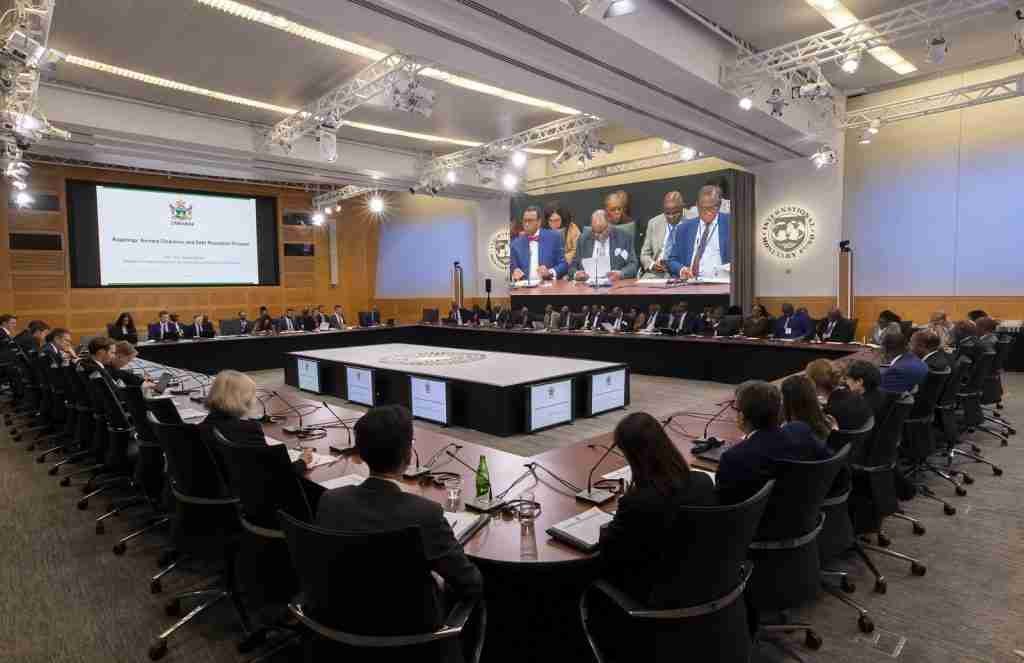
A roundtable on Zimbabwe’s arrears clearance and debt resolution has been held on the sidelines of the Washington meetings. It was chaired by AfDB President Dr. Akinwumi Adesina, who is leading Zimbabwe’s debt resolution process. Also there were IMF African Department Director Abebe Selassie, World Bank Vice President for Eastern and Southern Africa Ndiamé Diop, and representatives from France, the UK, Germany, the Netherlands, SADC, and facilitator Joaquim Chissano.
At the meeting, Adesina said Zimbabwe has made “a lot of progress, against all odds,” and said the request for bridging finance could be considered by the end of the year. But he says that progress may be hurt by concern over Zimbabwe’s recently enacted Private Voluntary Organisations (PVO) Amendment Bill.
“The recent assent to the PVO Bill is a significant setback and poses a risk to the arrears clearance and debt resolution process,” Adesina warned.
The government argues that the law is necessary to prevent money laundering and ensure security and accountability, but critics say it expands state control over NGOs and stifles civil society. The European Union has suspended support to some governance programmes in response to the law’s enactment.
Chissano says challenges remain in democratic governance, including freedom of expression, judicial independence, and elections.
“These challenges show that dialogue is still needed for reforms to take root. They also show that political reforms are not a linear process,” Chissano said.
ALSO READ | Adesina: It’s time to look at Zimbabwe with new lenses. Even wars never last this long



