


Common Law with Mike Murenzvi
“In levying taxes and in shearing sheep it is well to stop when you get down to the skin.” – Austin O’Malley
In an uninspiring, tax-heavy 2025 national budget speech, Finance Minister Mthuli Ncube proposed several measures to harness the immense, expansive informal sector. For many years, the government has battled with dealing with the informal sector, especially on how to tax it. Past plans included enforcing withholding taxes when formal businesses trade with the informal sector, special surcharges on informal imports at the border, and presumptive taxes.
These plans have had a minimal effect on harnessing revenue to the fiscus. The borders have proven to be porous, allowing massive importations to happen with no duty or other taxes being paid to Treasury. Instead, money flows to other people’s pockets. Withholding taxes were being avoided and circumvented through cash payments and unrecorded sales as formal businesses needed the trade. Presumptive taxes were hardly ever collected as there was no proper system implemented to register the informal business. By and large, because of the informal nature of the sector, the businesses are transient and can easily be fly-by-night operations.
Tuckshops: Retail king pins
Tuckshops are grocery outlets that often stock most household goods at low prices and trade almost totally in cash. Their stock is fast-moving and has little shelf time. Because of this, they are an easy outlet for manufacturers looking to get a very quick turnaround on their products. Very few tuckshops have any credit terms with their suppliers, all transactions are cash on delivery. The big thing is that they stock international brands and products at a fraction of supermarket prices.
The bulk of the goods that fill tuckshop shelves are grey imports. They pay very little duty, if at all. A facilitation fee is paid the to import processor who then ensures that the money reaches the right hands to let the goods slide through the border. Whether some goods pay duty for appearance purposes, or whether they pay nothing at all, is up to the customs officials. With all these shortcuts, it’s no wonder that reports of counterfeit goods being sold are so high. Cheap counterfeit supply plus no duty equals cheap counterfeit on the shelf to the detriment of the customer.
With all these advantages, and more, formal shops can’t compete with tuckshops.
Declaration of war
The Minister has now thrown down the gauntlet and launched a full declaration of war on smuggled goods and tuckshops. In his budget statement, he proposed that the following goods be deemed as smuggled unless documentary proof of import, and payment of duties and taxes can be provided:
- Alcoholic and non-alcoholic beverages
- Cement
- Clothing and footwear
- Dairy products
- Diapers
- Electrical appliances, cables, and accessories
- Ploughs and parts thereof
- Processed meat
- Rice and pasta
- Sugar
- Tyres and motor spares
- Washing powder and detergents
Anyone who fails to provide the required proof will have their goods seized by the State under existing customs and excise laws. Furthermore, the Zimbabwe Revenue Authority (ZIMRA) has been tasked to undertake more post-clearance audits for this purpose, with a monthly report to be presented to the Ministry.
Effectively, most of the stock in tuckshops shall be deemed to be smuggled until proven otherwise.
Other taxation measures
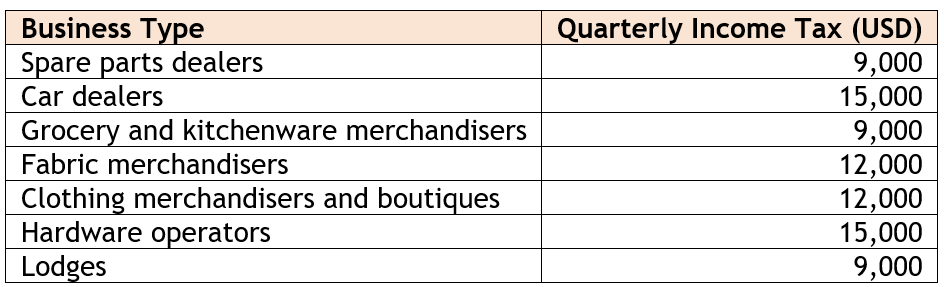
Various allied industry operations will be required to register with ZIMRA as taxpayers or risk being shut down or charged exorbitant assumed quarterly taxes until they comply.
Furthermore, the same operators will also be required to register for fiscalisation as this will give ZIMRA an electronic trail of transactions.
Possible countereffects
While this militant approach to formalisation of businesses may have its arguments, it also increases the rent-seeking opportunities of those in charge of implementing and policing it. The whole regulatory value chain from border to inspection and monitoring is rife with people who are there to “facilitate” lower charges, feign compliance, and look the other way.
The monthly post-clearance audit reporting will need to be looked at. We have seen in the past the Consumer Protection Commission reporting that they inspected nearly 30 shops in the space of a month and found less than 10 non-compliant outlets. A cursory glance at a block in downtown Harare will tell you that there are more than 30 shops in some buildings, all trading the same products in the same way. Some report results are a mockery of the process they are supposed to represent.
Quis custodiet ipsos custodes? Who will guard the guards?
_______________________
Mike Murenzvi writes in his personal capacity and his views are not associated with any organisation he is, or may be, affiliated with