




OK Zimbabwe hopes a 15% recovery in sales volumes is a sign that business has turned a corner, after a 29.2% drop in the year to March.
Zimbabwe’s retailers have suffered from low sales over the past two years, the impact of government exchange rate policies that have made supermarkets more expensive than informal shops. This has led industry leaders to warn of the “forced death” of formal retail as customers deserted their stores for unregulated stores.
The price distortions drove OK’s sales volumes lower for the March full-year. “During this period, formal retailers were compelled to use the official exchange rate which created market distortions and gave impetus to the informal sector that was not bound by similar regulations,” OK reports.
While sales were falling, operating costs rose by 107%, driven mostly by power charges, utilities and property operating costs. This was made worse by the costs of running generators due to power cuts.
OK has, however, seen some recovery over the past three months. “Notable volume gains have been recorded in FY2025 Q1 on the back of the successful implementation of the group’s volume recovery strategies,” OK says. However, customer count is down 10%, and volumes have been sustained by bigger shopping basket sizes, up by 22% in the quarter.
CEO Max Karombo says: “On average, we serve 120,000 people per day in our stores. So we’ve come down to between 100 000 and 110,000 people per day. However, they’re spending more, picking more units in our stores.”
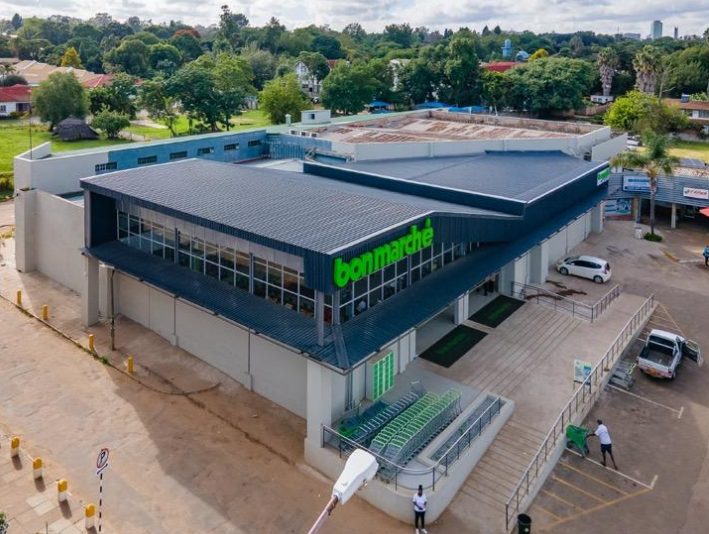
OK’s recovery plan includes developing strategies for different market segments and improving its stores for customers. OK has 66 outlets, made up of 53 OK stores, nine OK Mart outlets, nine Bon Marché shops, and 3 Food Lovers stores. OK makes up 60% of the company’s revenues, followed by OK Mart with 25%, Bon Marché with 13% and Food Lovers contributing 2%.
Says OK: “The business intends to sustain this volume growth trajectory through consistent availability of product, continuance of the fair price campaigns and shopper experience optimization across all brands.”
How has the ZiG changed operations? The company still gets most of its sales in local currency. “While the full impact of the introduction of the new currency (ZiG) is still being assessed, foreign currency collections have declined in favour of the ZiG,” OK says.
ALSO READ | From the shop floor: What OK’s CEO says about the shifting retail market and strategy



